
Held at the Queen Victoria Museum and Art Gallery on 3 & 4 February 2026
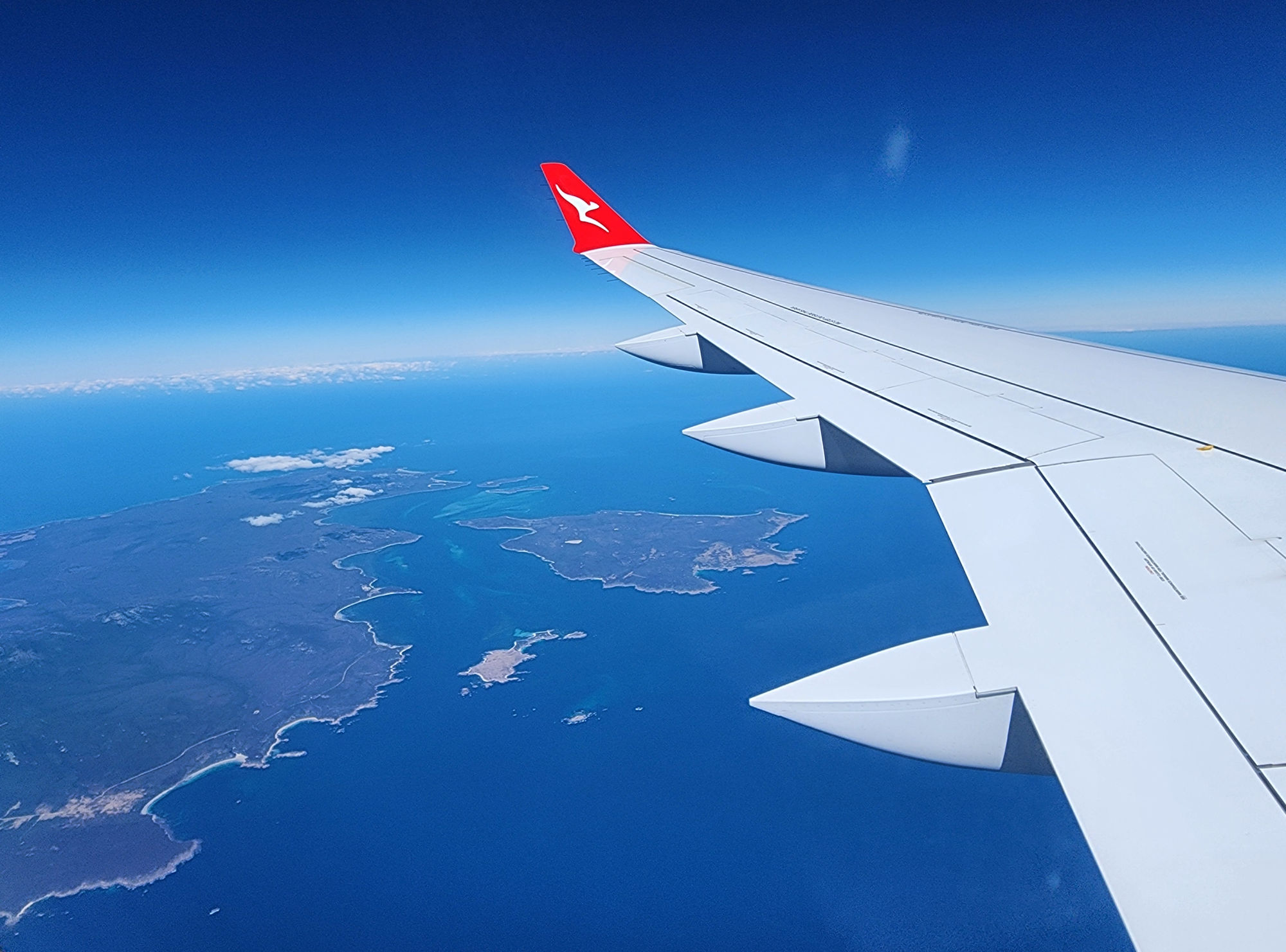
I’ve just gone through my images from the trip to Launceston for a most enjoyable APS 2026 conference and I’ve attached a handful here starting with a beautiful view over Bass Strait with Cape Barren Island & Clarke Island below.
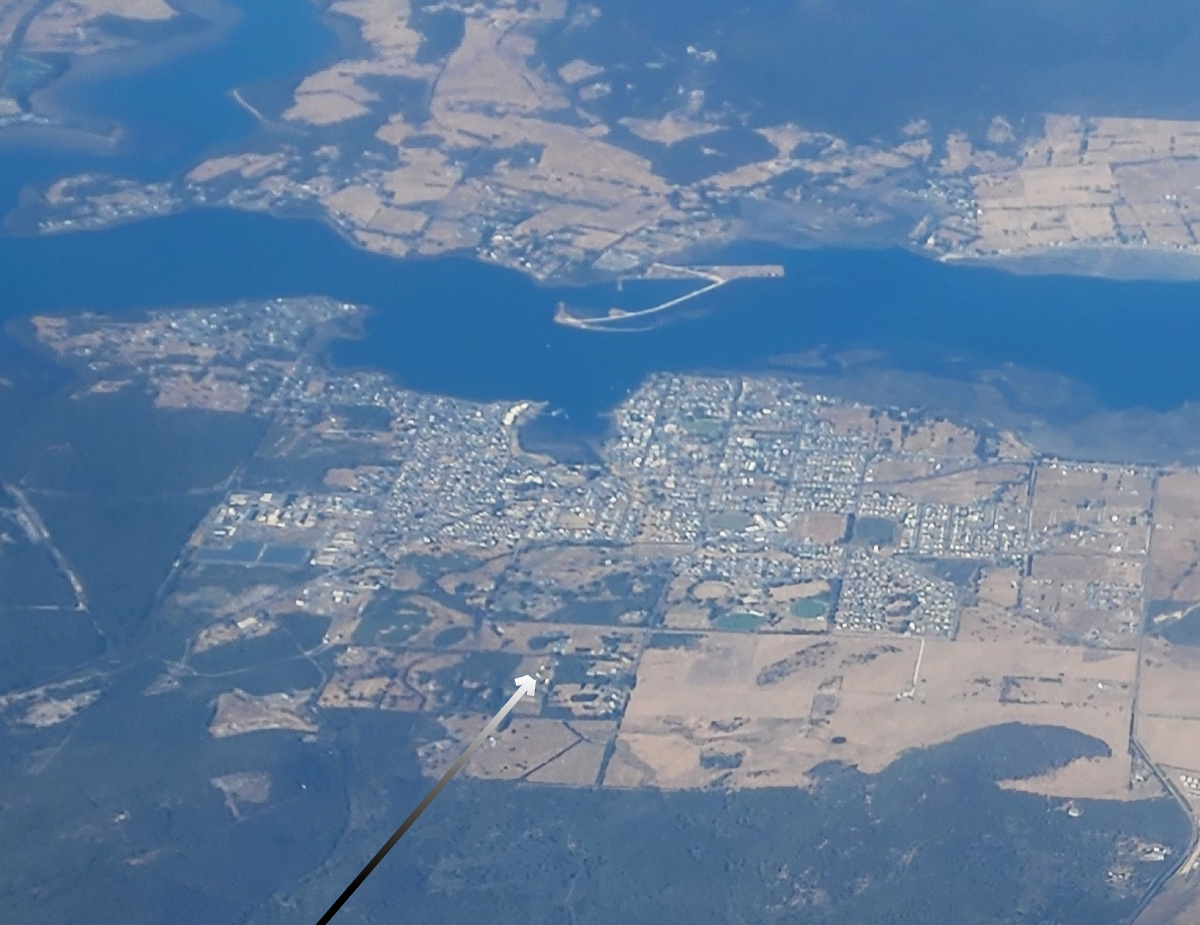
Looking down on York Creek Observatory near George Town north of Launceston where some of us went on the Monday night (2 February) to see Mervyn Millward’s observatories and partake of generously supplied food and drink.
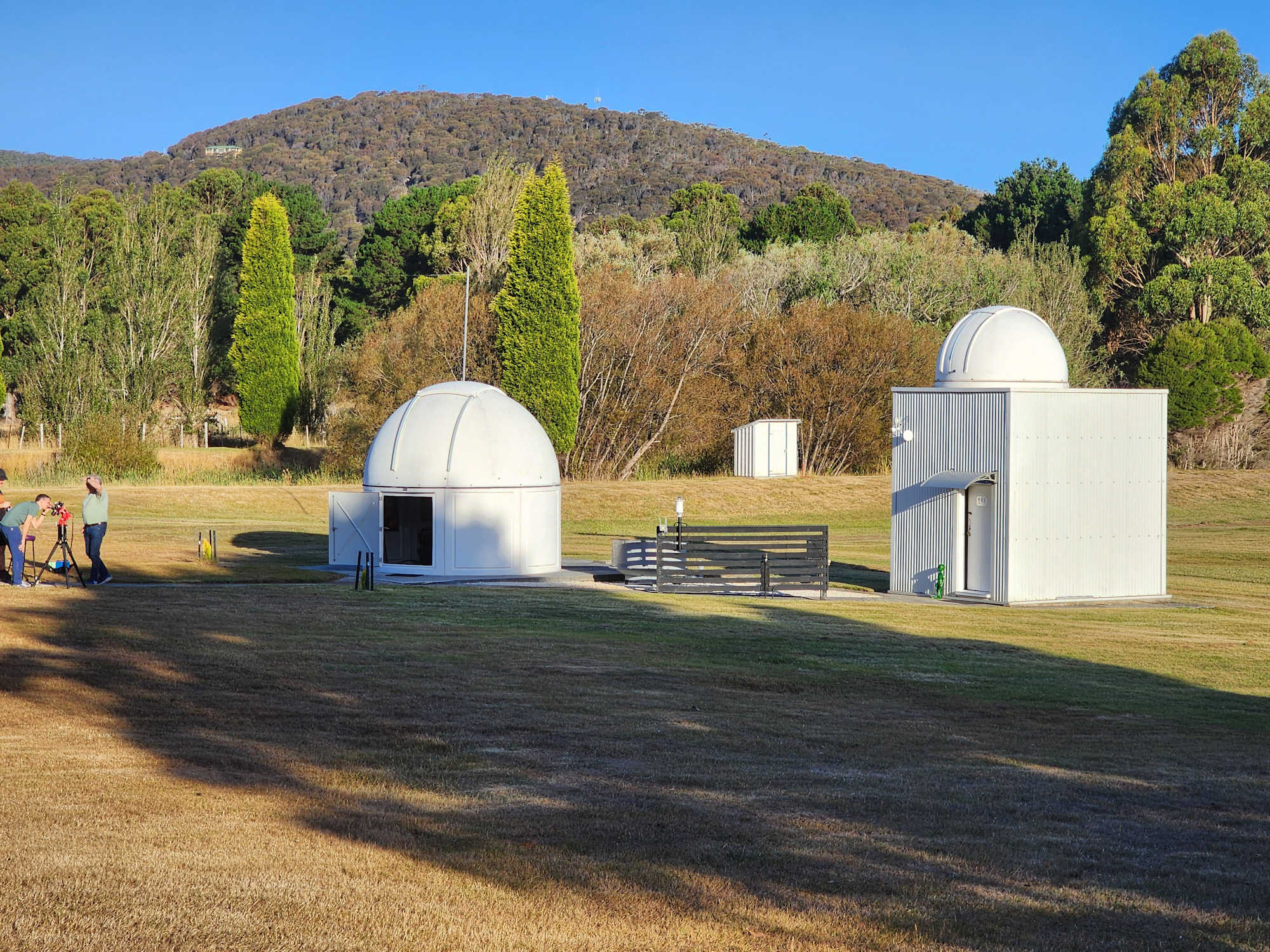
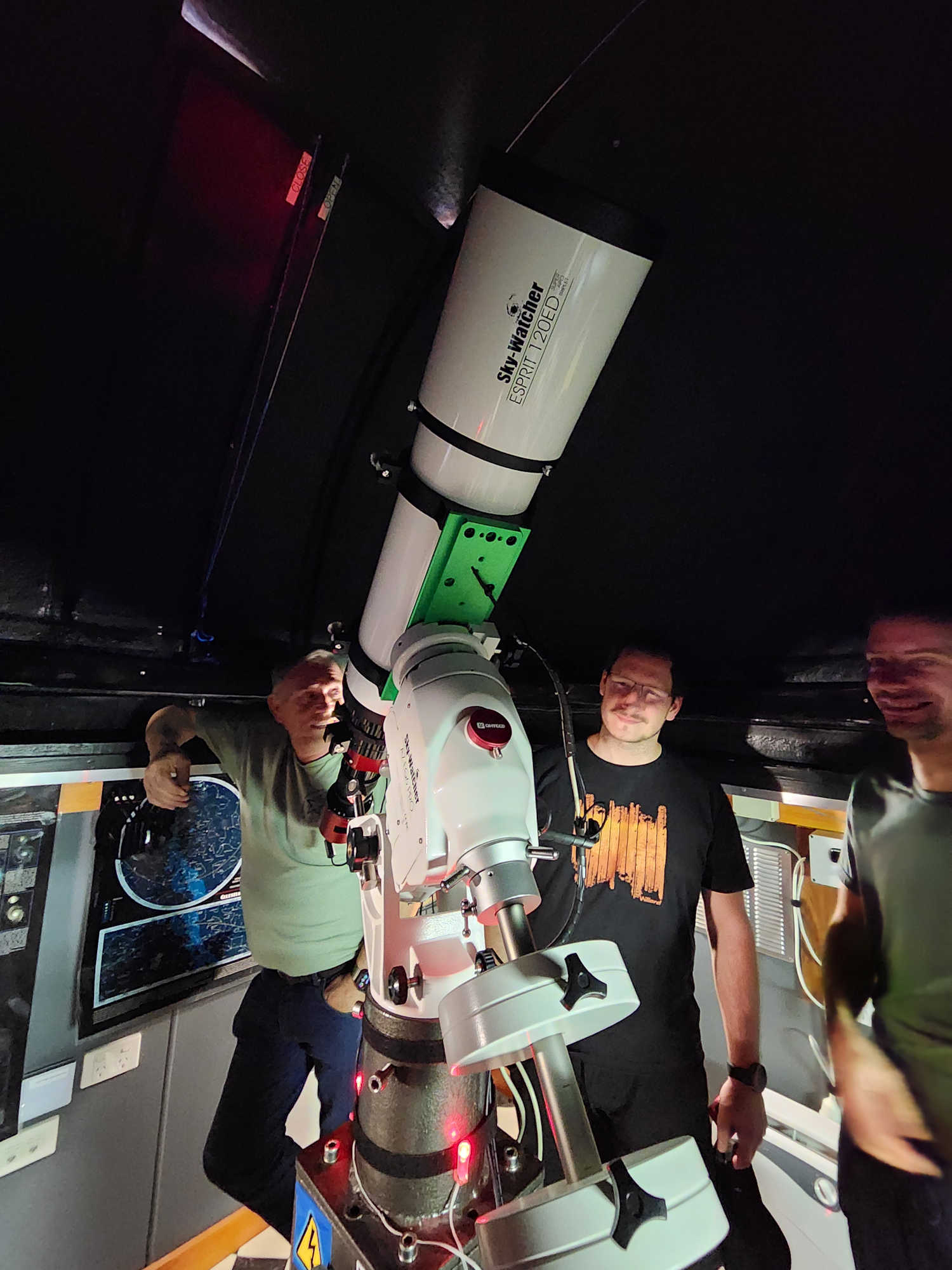
Mervyn’s site was a beautiful location for some APS members to relax, as did our friends Kirk Johnson and regular APS conference attendee Scott Niskach from Cosm/E&S (Salt Lake City, USA). Some members had come north from Launceston on a bus organised by Chris Arkless at the Launceston Planetarium.
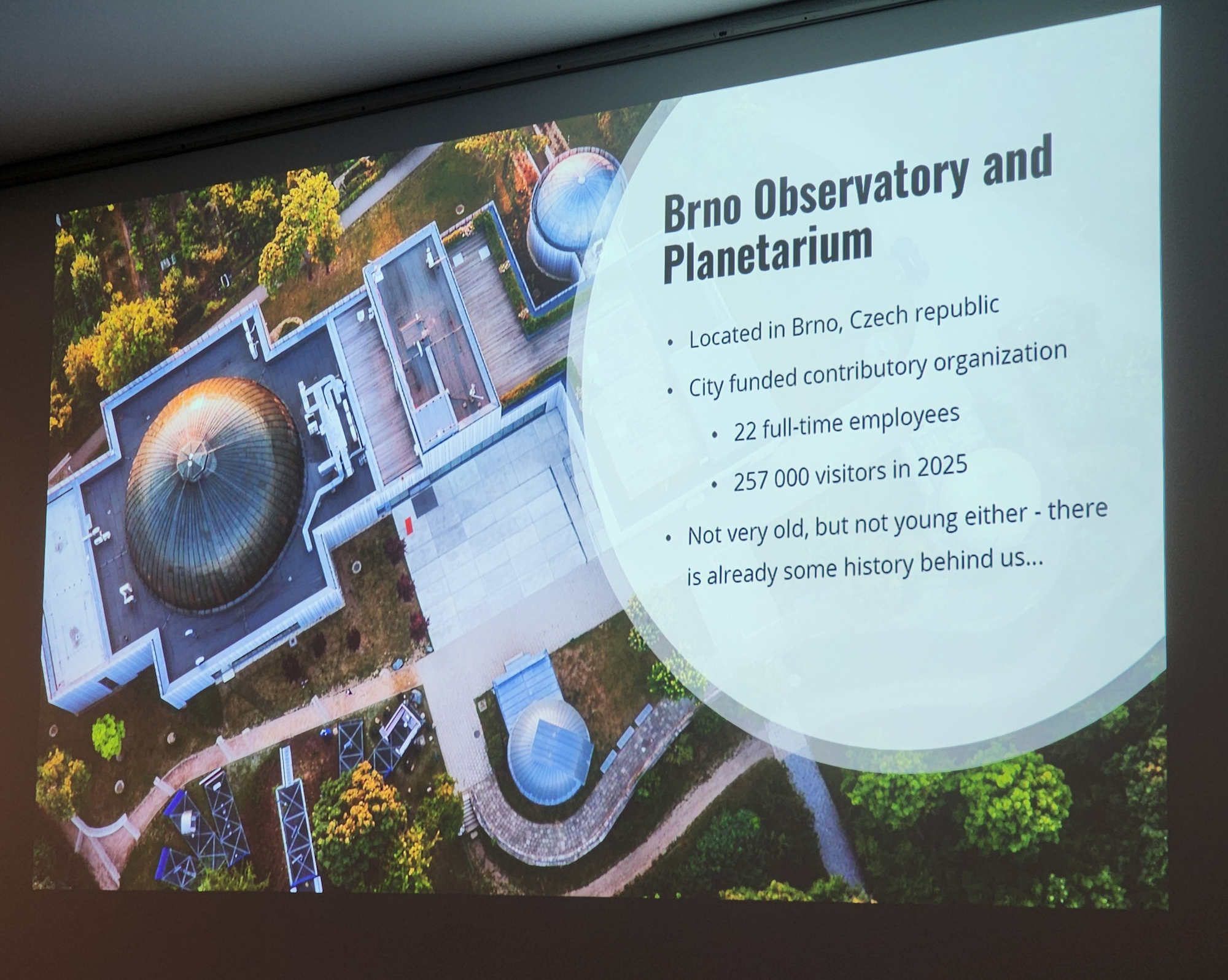
from the Brno Observatory and Planetarium.
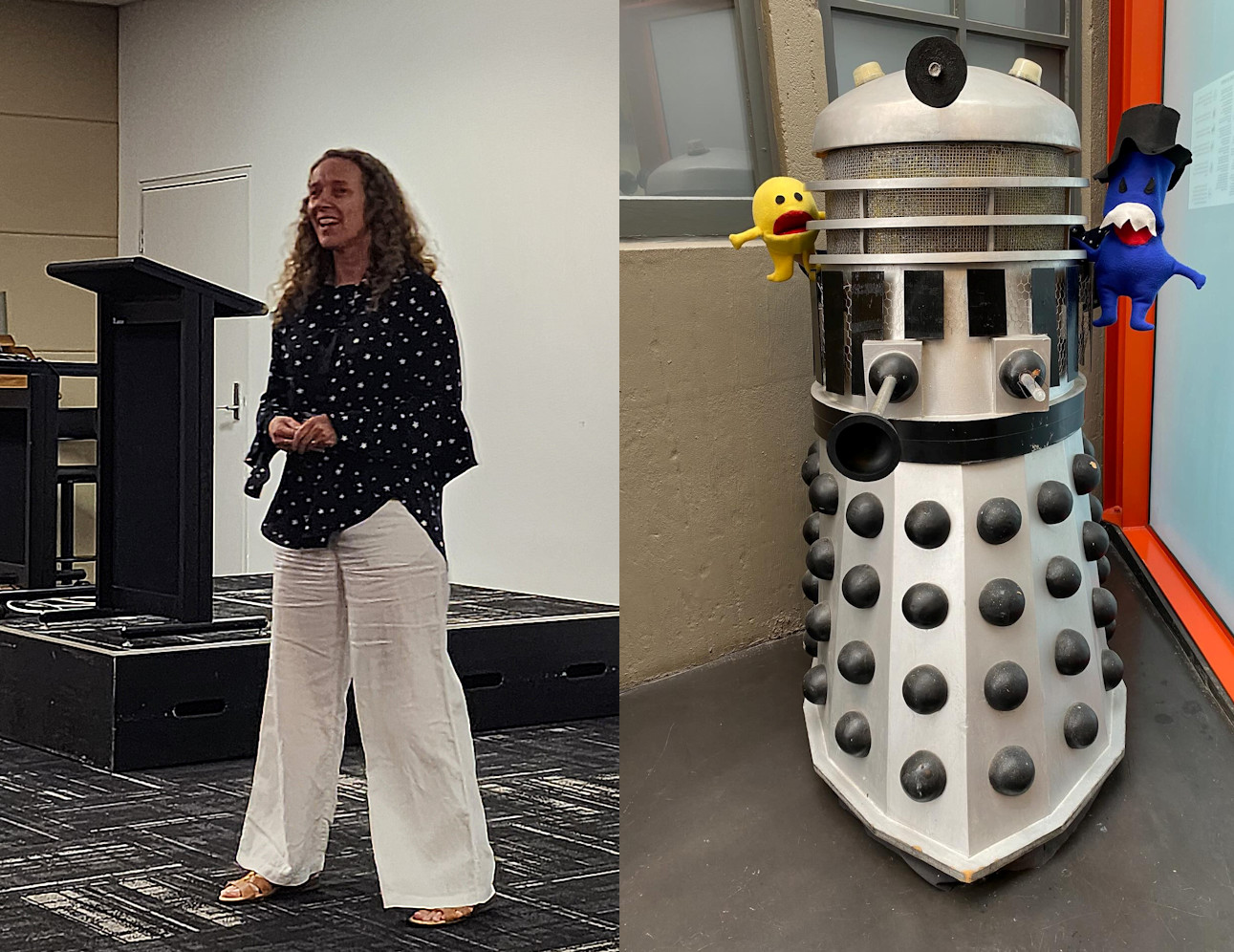
There were numerous non-dome presentations over the two days of the conference with Eileen O’Hely (below) starting off those with “Fun Astro Teaching”.
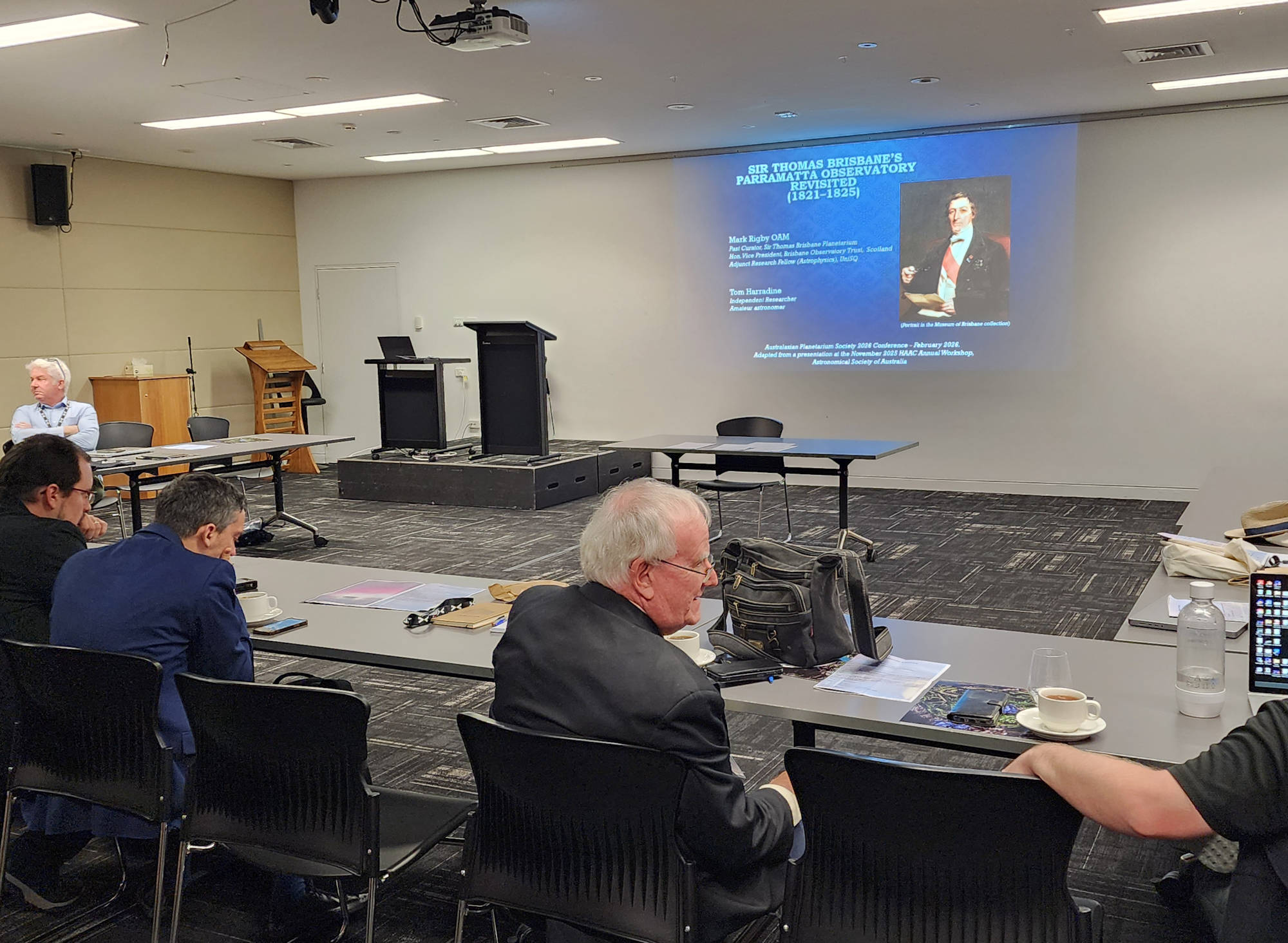
Sir Thomas Brisbane and Parramatta Observatory.
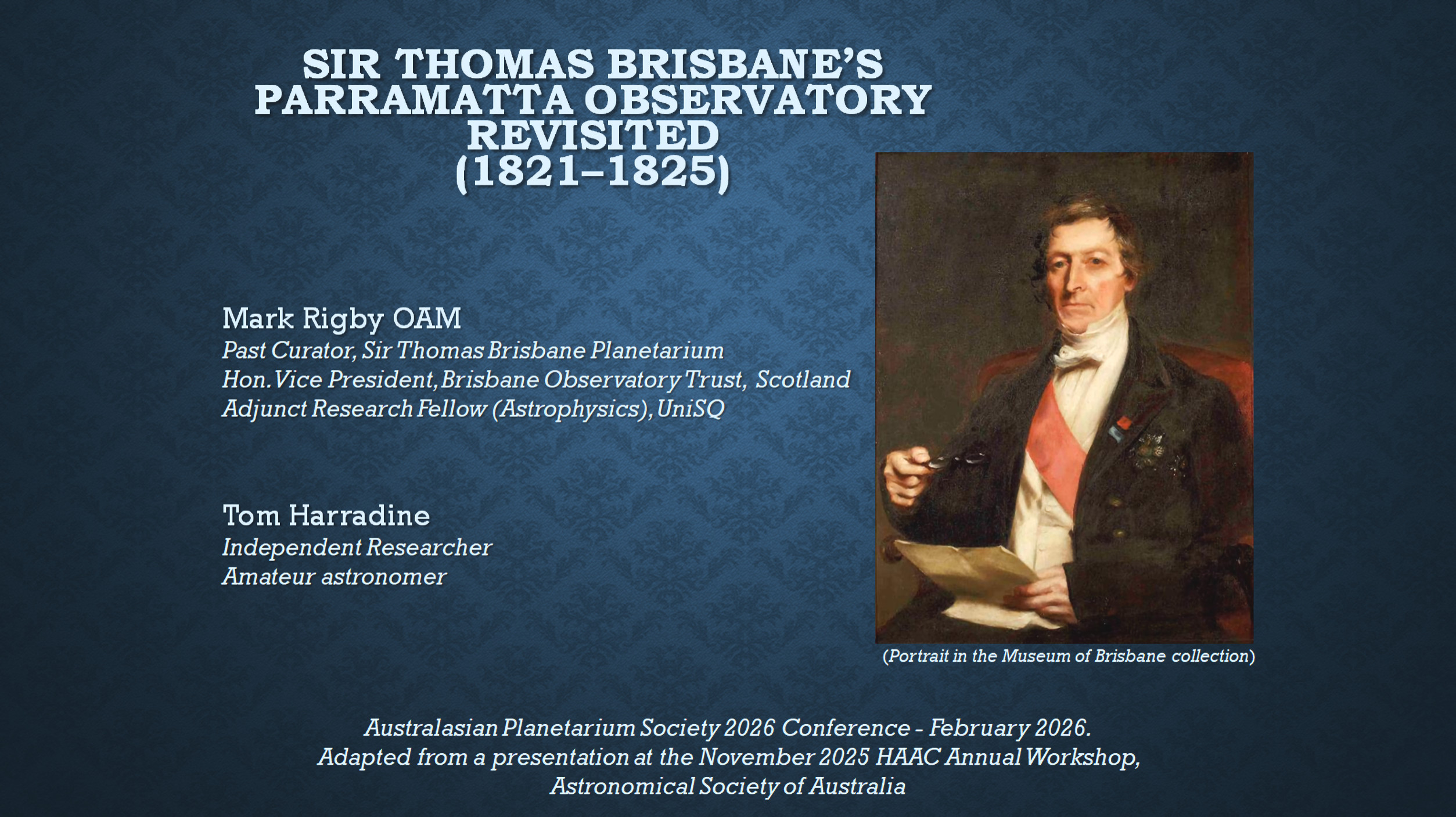
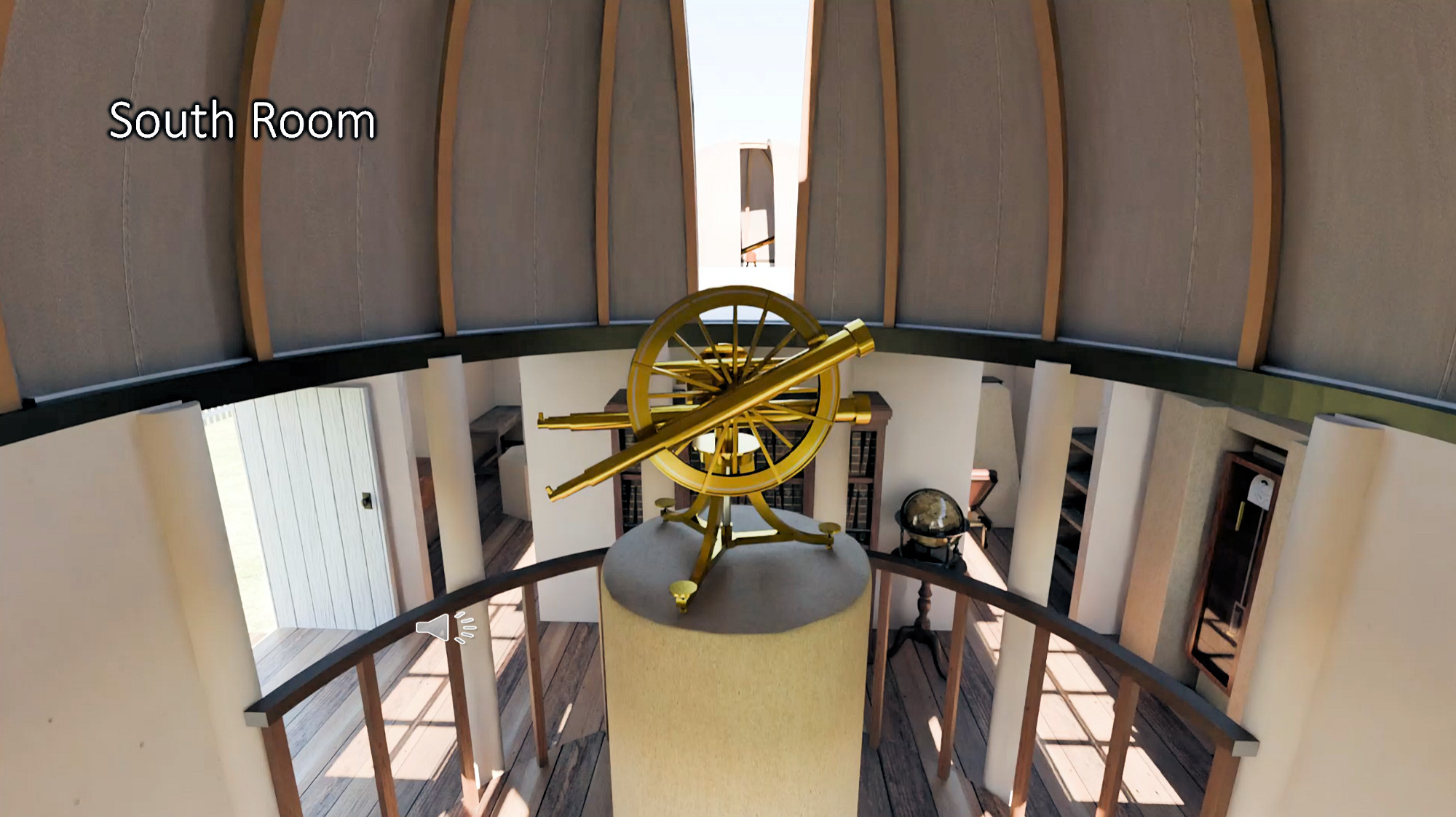
The opening slide below was in a presentation about Sir Thomas Brisbane the man and his career by Mark Rigby followed by a tantalising hint of the extensive research done by Tom Harradine on Parramatta Observatory’s history and the observational work using primary sources and site visits in Australia and the UK, as well as examination of instruments. It included a recreation and virtual tour of the observatory and description of the instruments pre-narrated by Tom.
Amanda Kruger addressed an important subject: “Leading with Inclusion: The Hidden Power of Affirming Staff Diversity”.
Our new friends all the way from Brno Observatory and Planetarium in the Czech Republic provided us with details of their planetarium and their production “Edge of the Sky”, which had been shown in full length a few days earlier at the Dome Under Film Festival in Melbourne Planetarium.
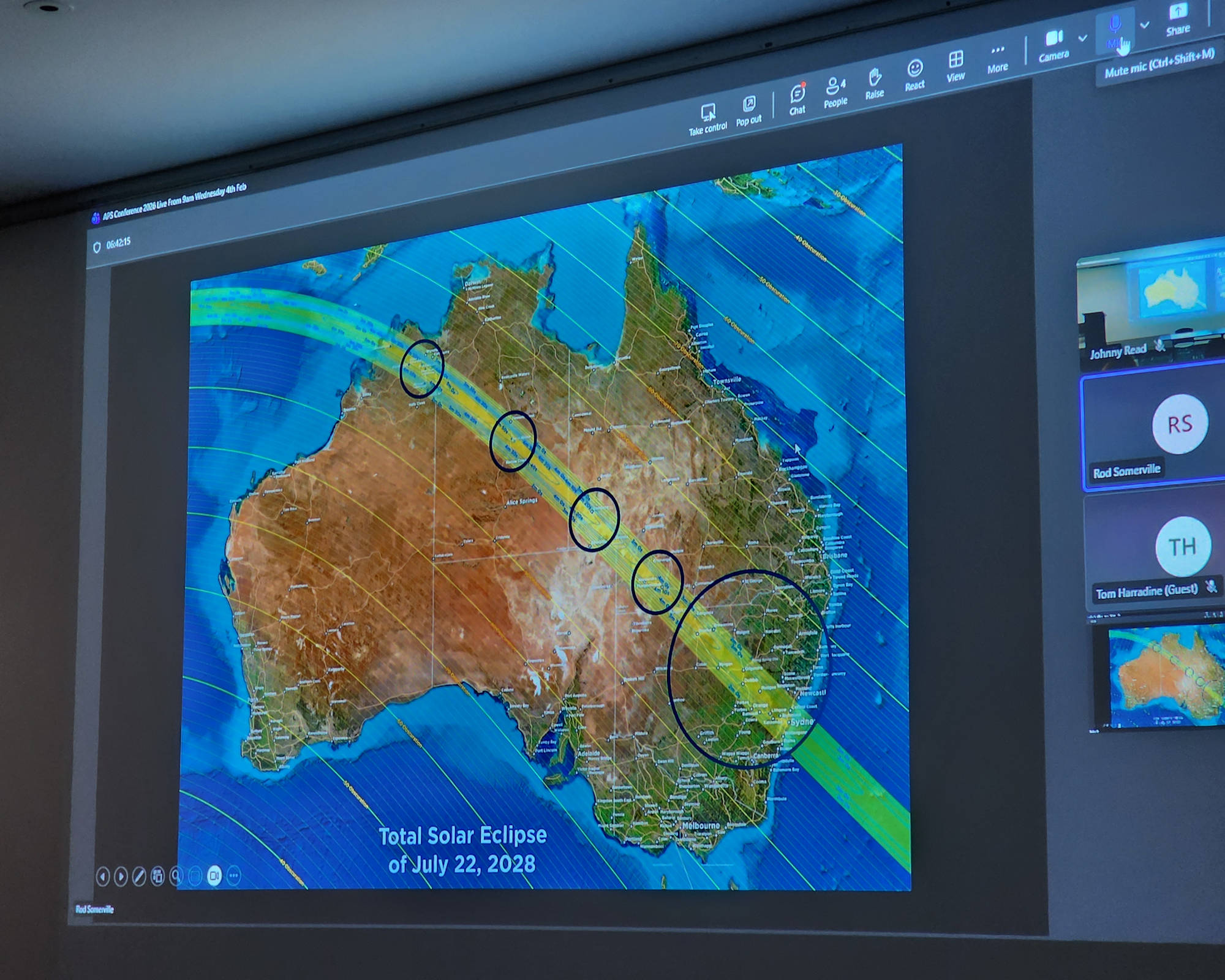
Rod Sommerville gave us a detailed look at weather prospects and observing practicalities along the path of totality spanning Australia and New Zealand for the 22 July 2028 total solar eclipse.
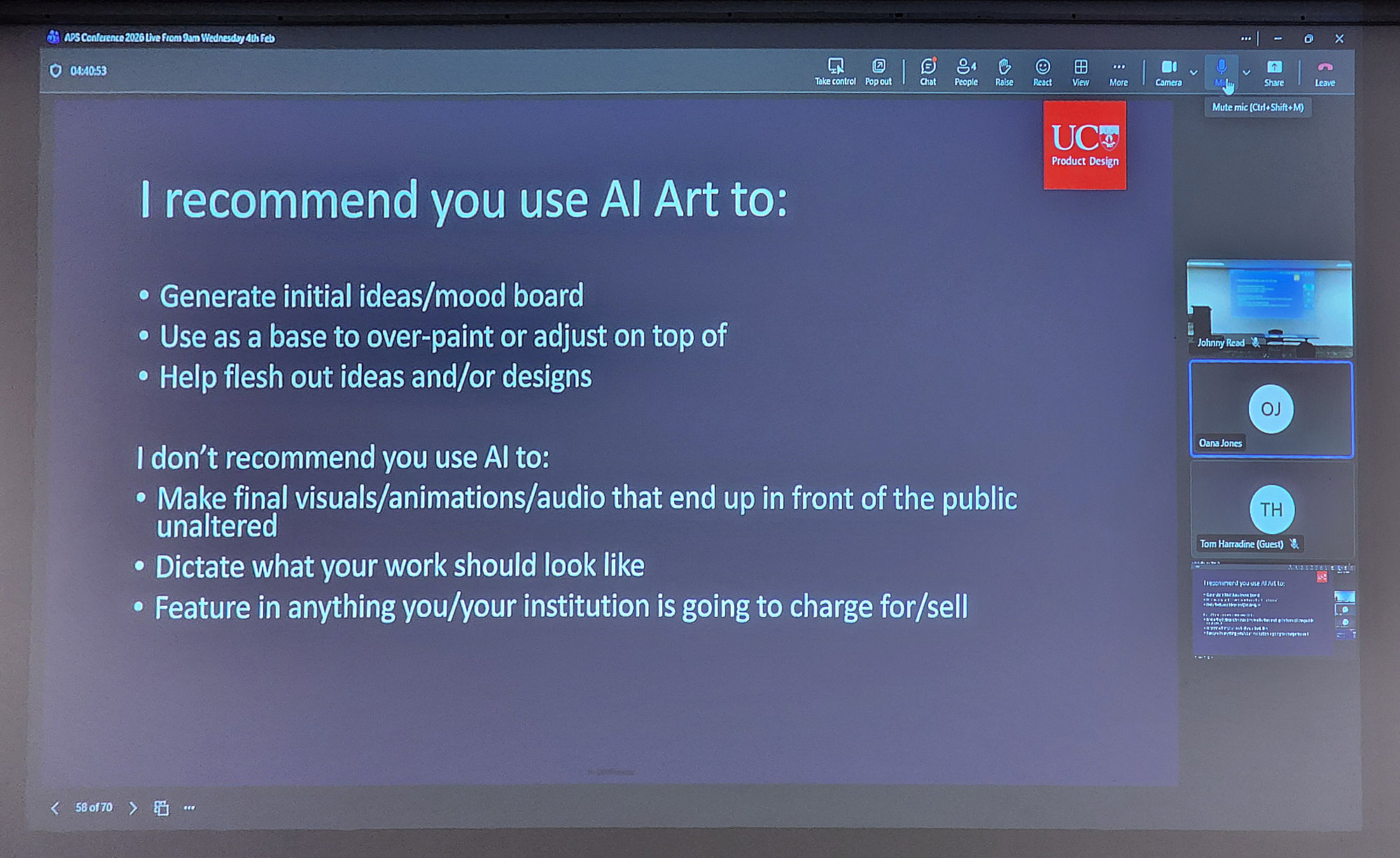
Oana Jones demonstrated some of the pitfalls of using AI for producing art. However, it can be a major time saver. Like lots of things, there are pros and cons.
Perhaps some of the others who attended APS 2026 may add follow-up posts and images related to their presentations, e.g. there was Tanya Hill who presented “Solar System Adventure: the eight planets” and Joe Bean of the Wilderness Society who explored “Dark Skies Sanctury Tasmania” and provided much interesting data.
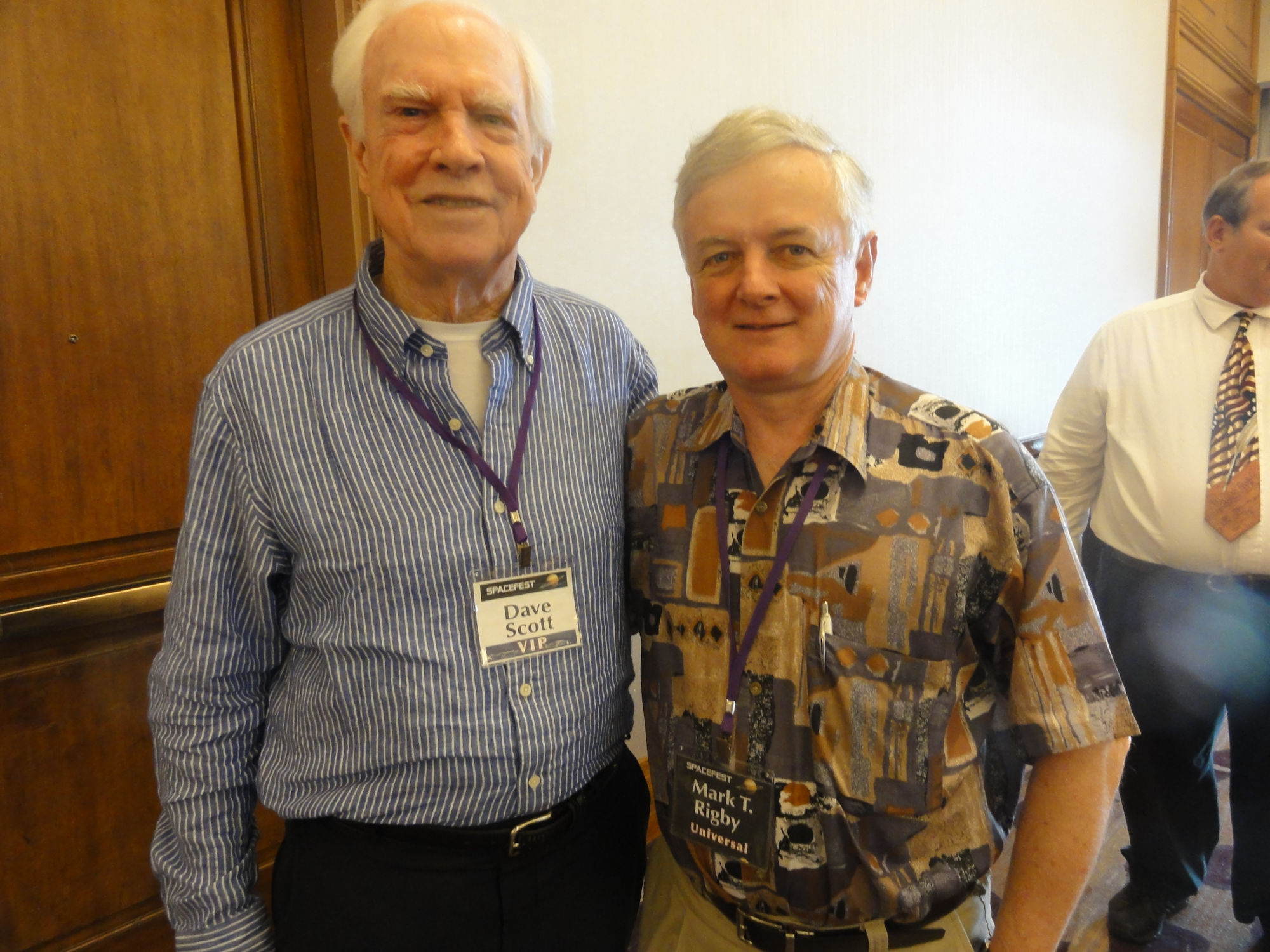
The conference also gave me an opportunity to use an Xbox controller for some unprepared free flying with Digistar in view of the upcoming Artemis II mission. It’s always nice to fly down to and take a close-up look at my favourite landing site (Apollo 15) from below the level of the mountain tops. The mission’s 93-year-old Commander David Scott (below) is the only astronaut still alive to have flown a Lunar Module down to the surface.
Maybe one day, I’ll do a longer, in-depth exploration of the Moon in a dome. It is, after all, the only other world we can look at with the naked eye, binoculars, or small telescopes and see such a wealth of detail.
The conference wrapped up in the late afternoon on Day 2 with “Golden Sunbirds – Space rock in the dome”, an immersive live music performance which is intended to be performed around Australia.
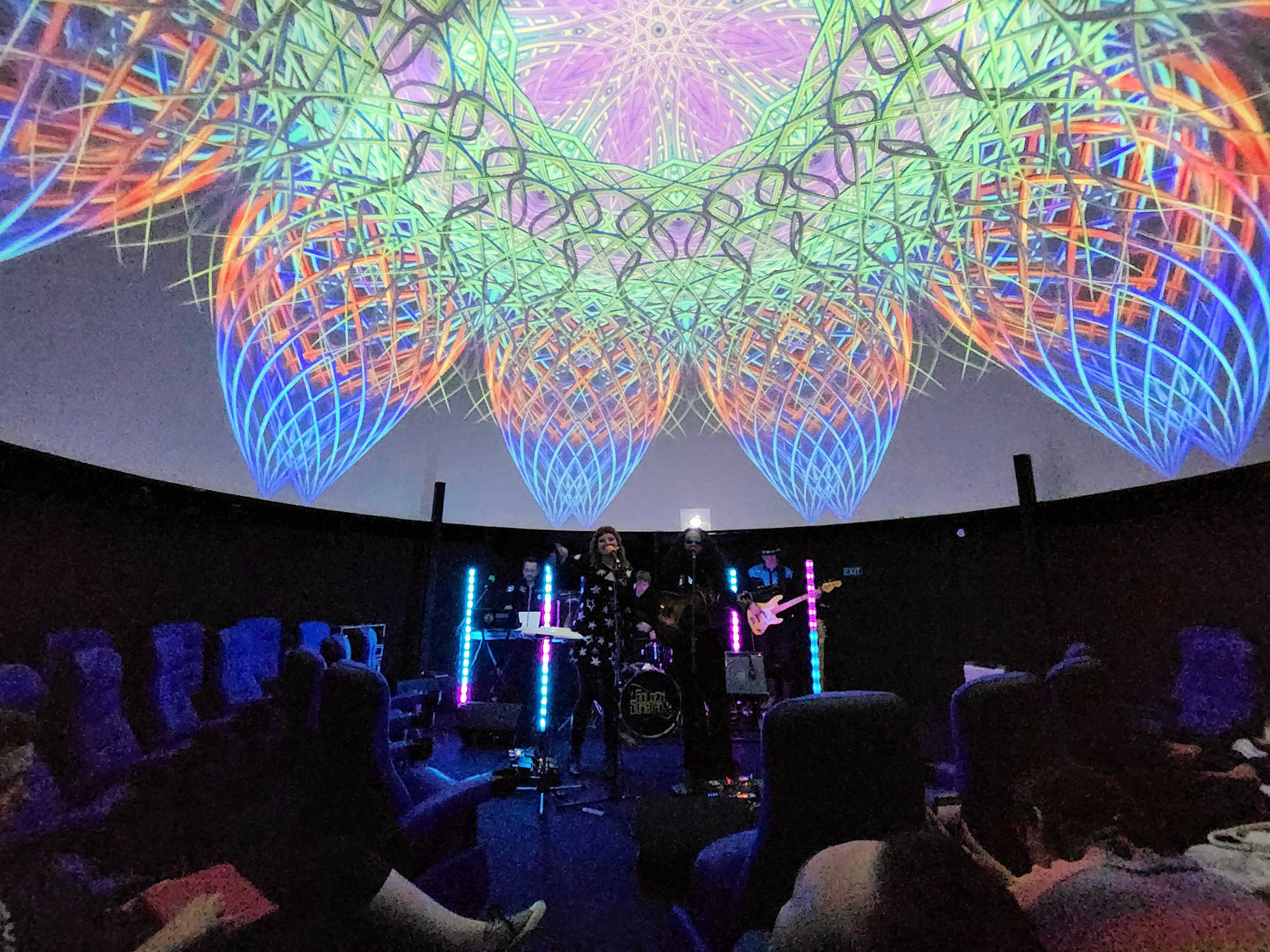
Many thanks to Chris Arkless and Johnny Reid at the Launceston Planetarium, Queen Victoria Museum and Art Gallery, for hosting us.
I hope to see many of you again at APS 2027!
Mark T Rigby OAM
Retired planetarian – I think!
 Australasian Planetarium Society