
South Bank, Brisbane
The total lunar eclipse on the evening of Tuesday, 3 March 2026 was observed by many across our region. In Brisbane, ABC 612’s Queensland Evenings radio program with Kelly Higgins-Divine decided to do an outside broadcast from 6:30pm to 9pm AEST from South Bank’s Riverside Green.
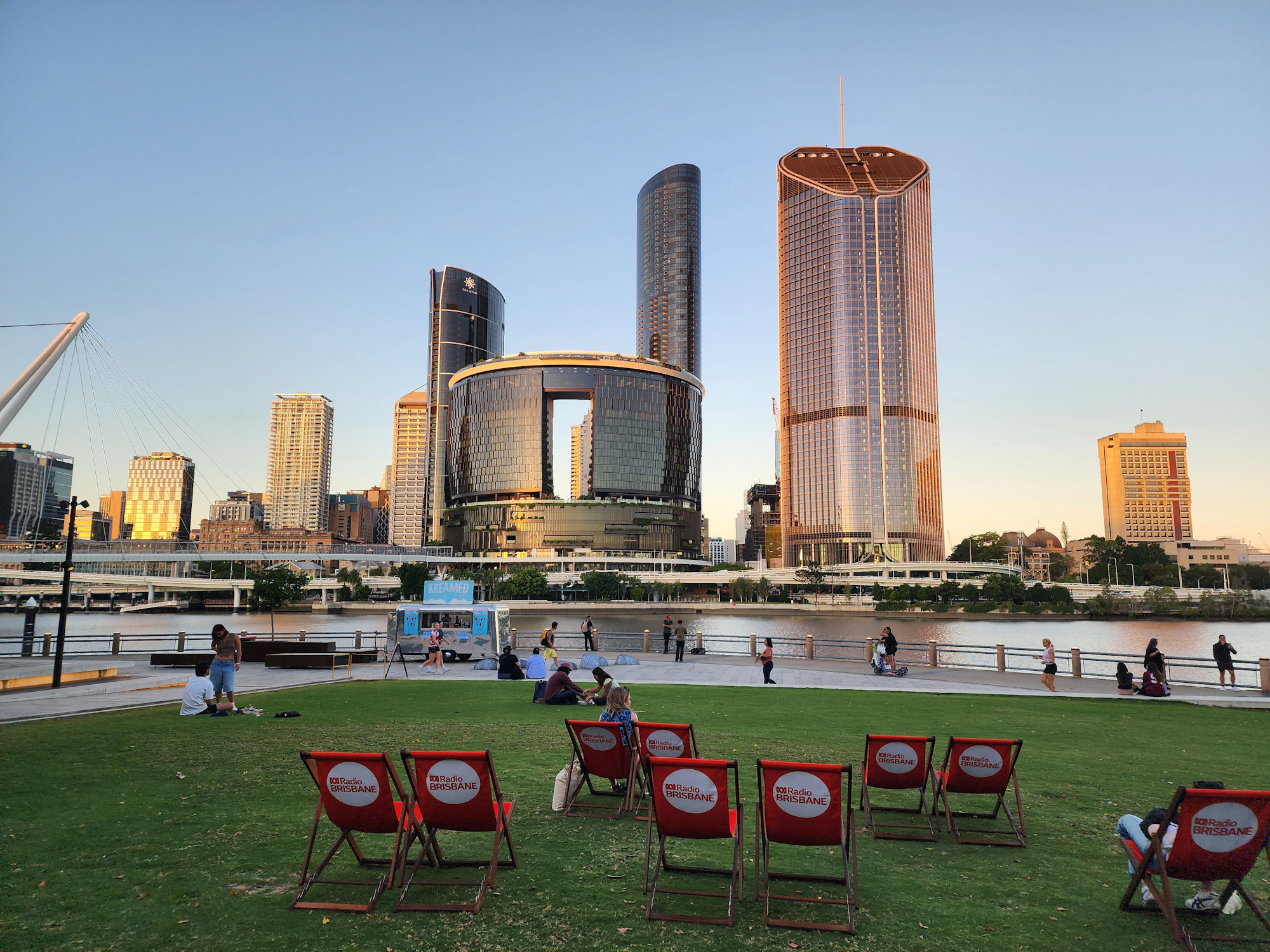
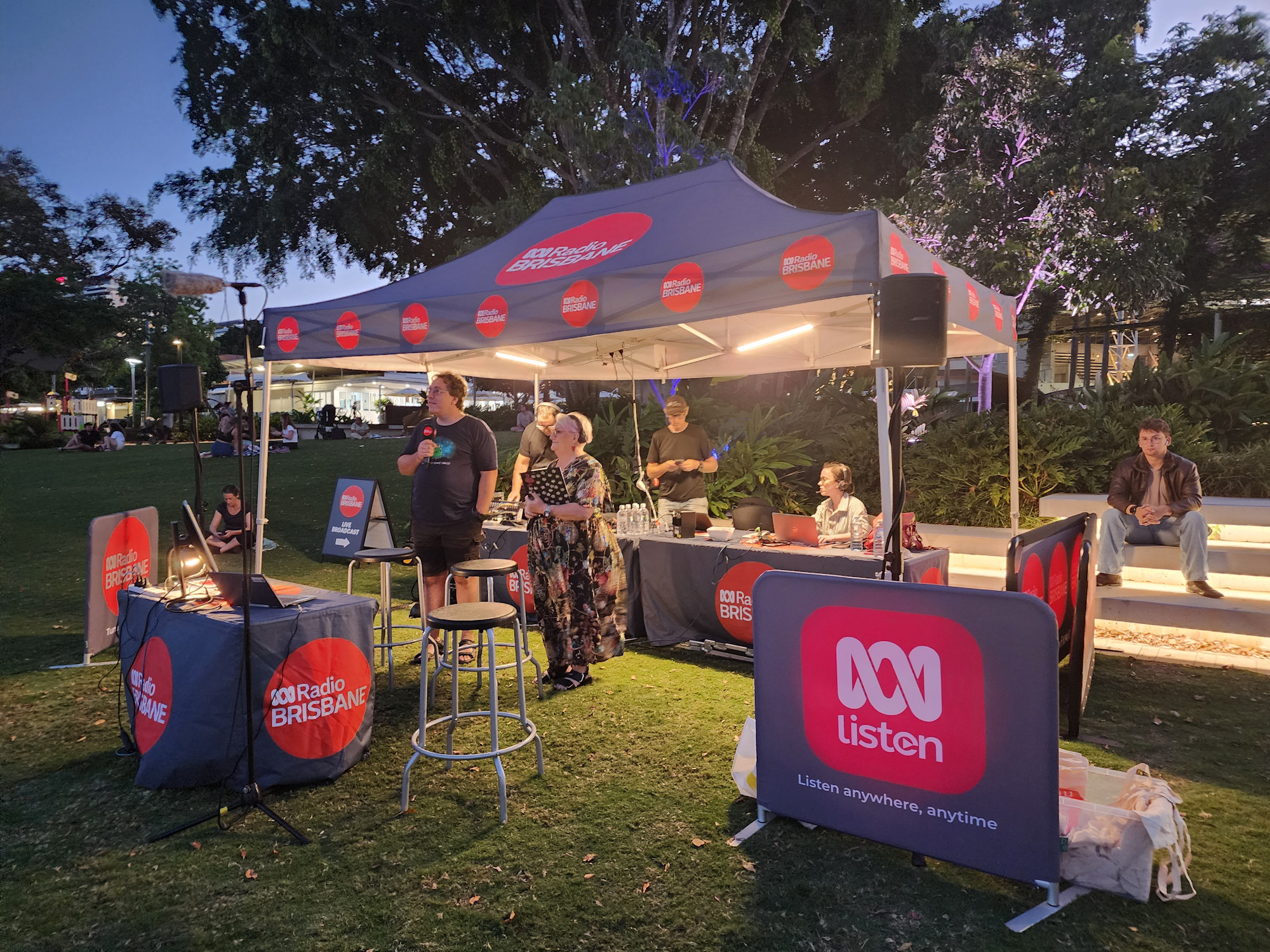
The ABC team set up a marquee for their broadcast equipment as well as some ABC deck chairs, although there was plenty of lawn that the public filled up as the broadcast progressed.
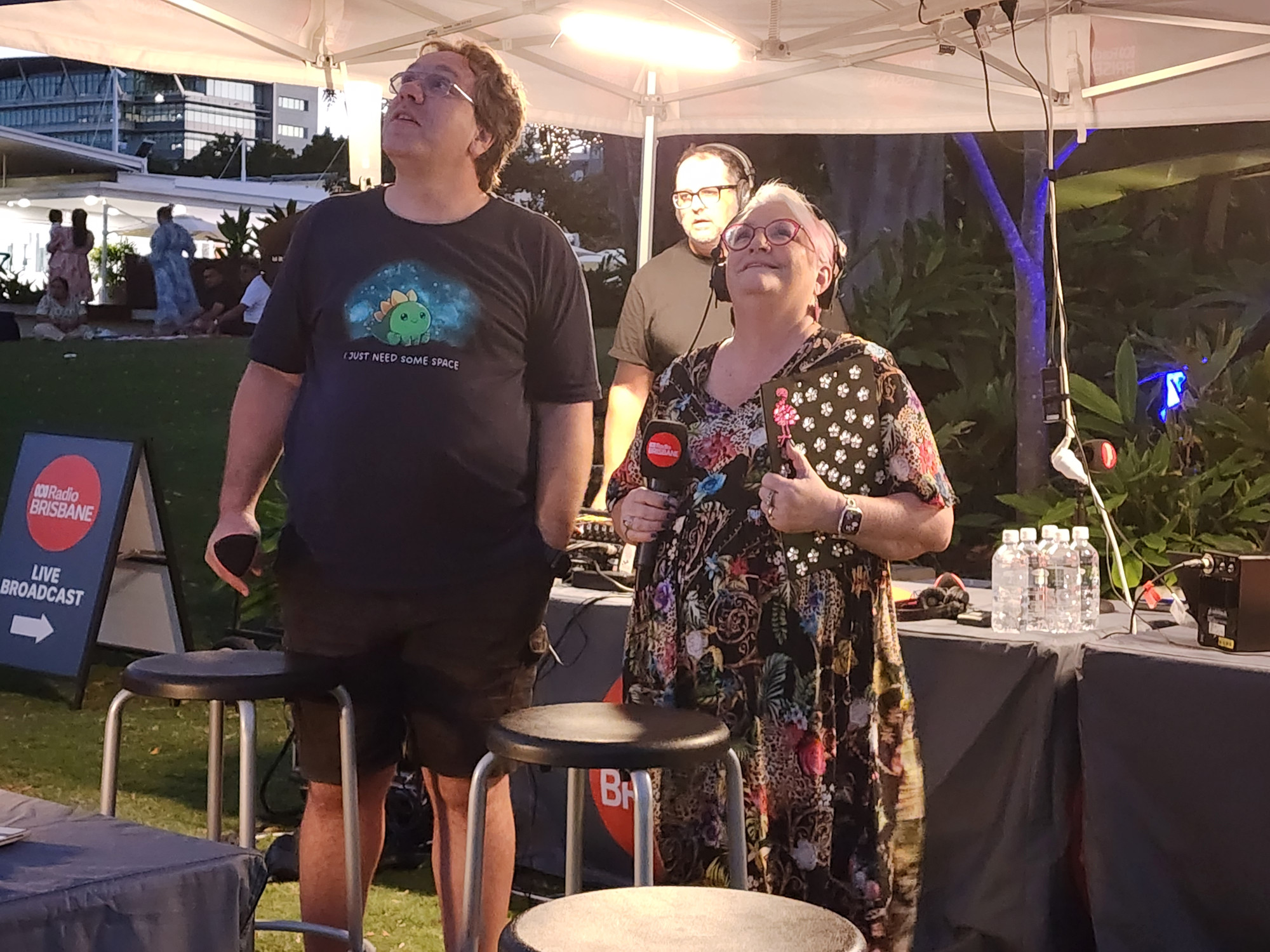
Professor Jonti Horner from the University of Southern Queensland (UniSQ) Centre for Astrophysics in Toowoomba has a regular segment with Kelly, so she had him co-host the evening broadcast. Jonti remembered fondly viewing total lunar eclipses as a kid in the north of England and especially one eclipse that was late on a very cold winter’s night. He also referred to UniSQ’s major role in exoplanetary science.
I’ve long known Kelly and Jonti, so it was a pleasure to join them as one of the three onsite guests for an almost perfect eclipse evening. There was also a linkup to the Charleville Cosmos Centre.
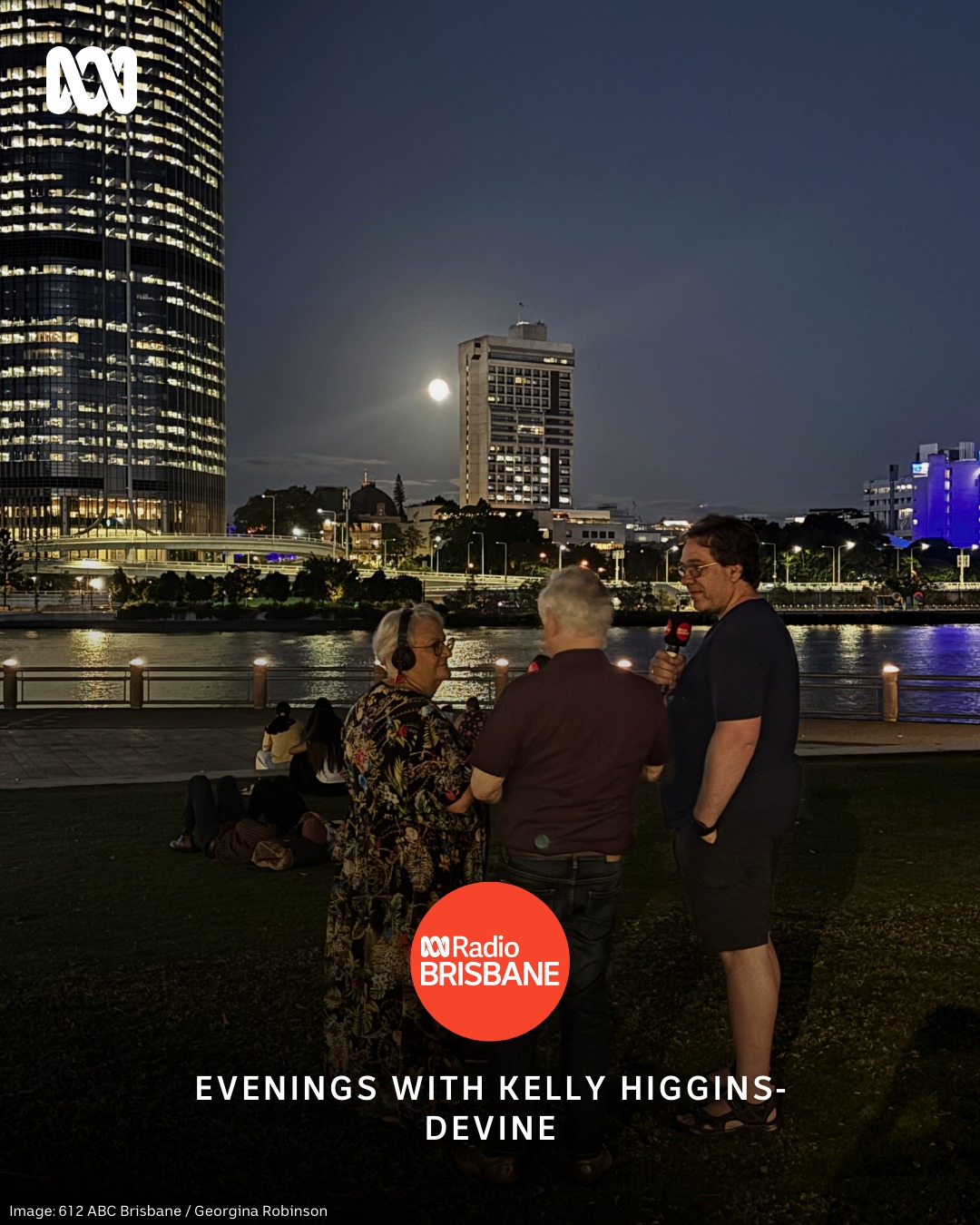
I arrived well before sunset at the outside broadcast area. Jonti had already driven down from Toowoomba. The ABC site had a spectacular view of the inner-city skyline, especially as it got darker. Jupiter and Sirius made their appearance on the celestial stage as the twilight progressed.
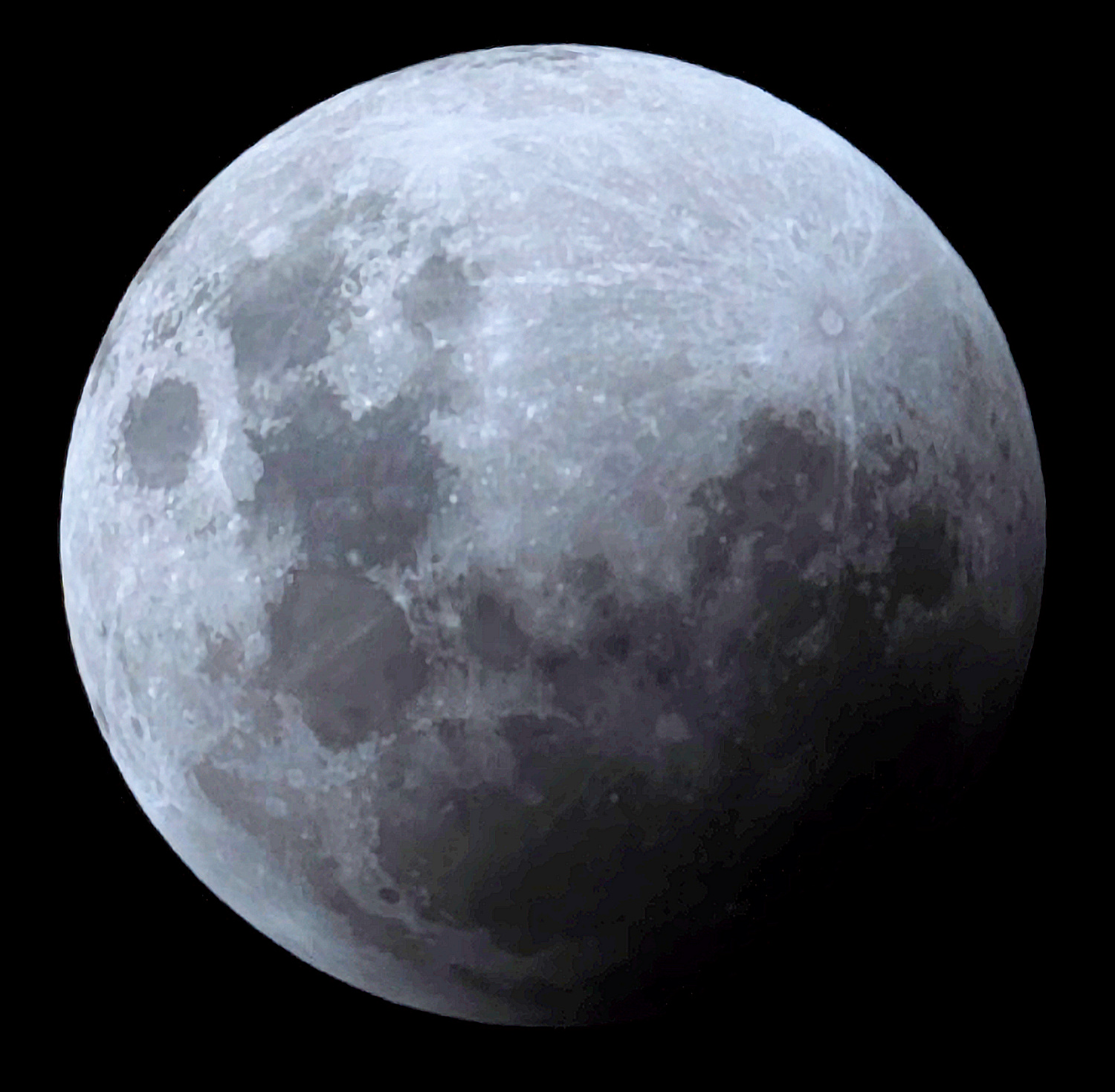
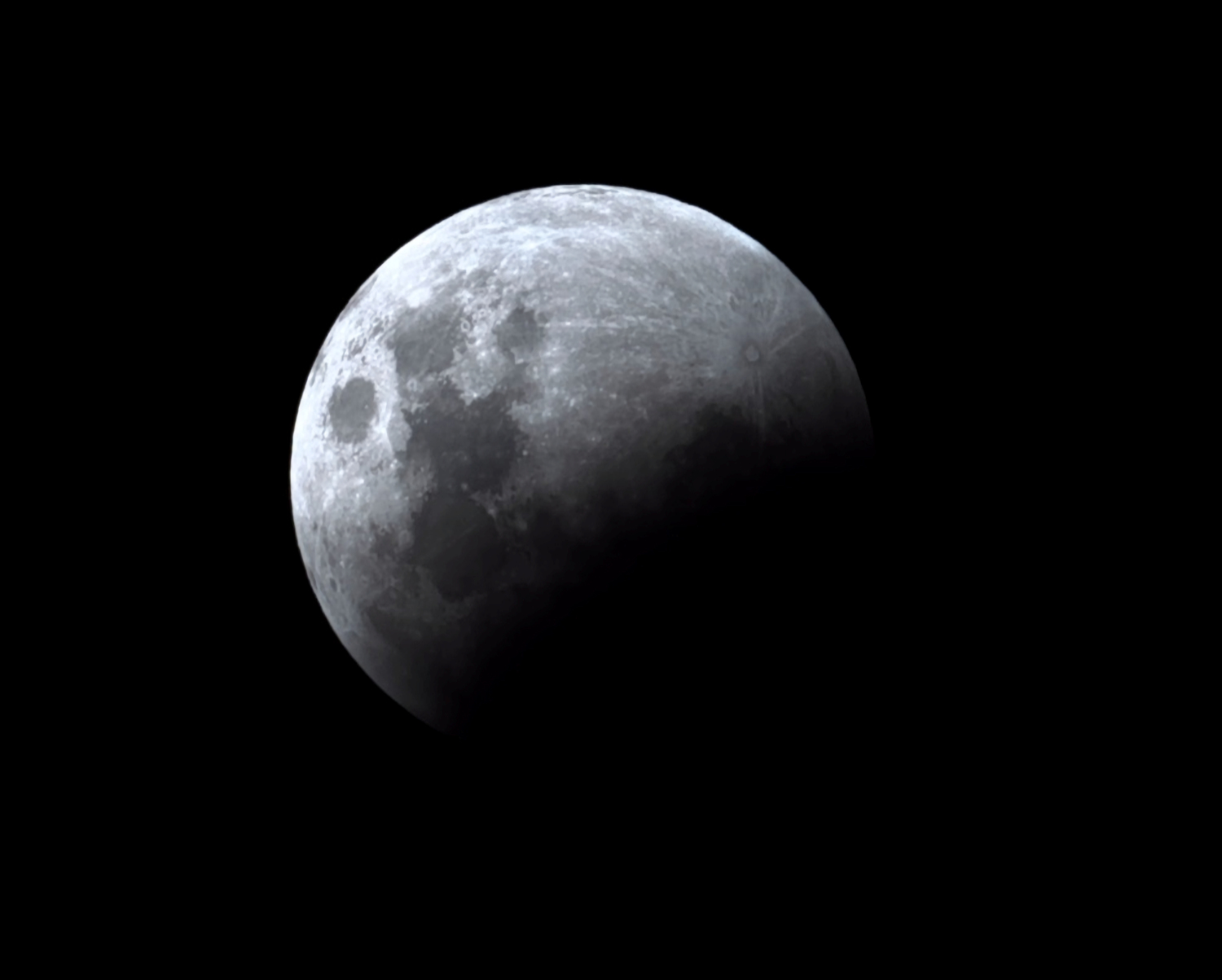
I brought along my compact Seestar S30 smartscope, which I controlled remotely from my smart phone. I hadn’t really had a chance to use the Seestar beyond a couple of quick solar snapshots, but the images of this week’s eclipse featured here were taken with the Seestar.
I was the first guest with Kelly and Jonti as we looked across the river to the Moon, which had risen a little earlier. My segment included talking about the appearance of the Moon, its formation, and how its distance is precisely measured. I gave Kelly a lunar meteorite to handle as we gazed at the Moon. I was also asked what got me first interested in space. It was moving to an outer part of Brisbane with its relatively dark skies in the early 1960s and the build up toward the future Moon landings. I also spoke about my favourite lunar mission (Apollo 15), the remaining Moonwalkers (4 left out of the 12), the Artemis program, and the possibility of life elsewhere.
Queensland University astrophysicist Professor Tamara Davis AM had cycled in at “light speed” and tackled the subject of her amazing research into dark energy as well as discussing how gravitational waves are giving us an entirely new way of looking at the Universe. Tamara’s interest in astronomy had been sparked back in 1986 during Comet Halley’s last passage through the inner realm of the Solar System. There was even a little time to cover her athletic pursuits.
After a session of astronomical quiz questions posed to the gathered audience (including families with young children) that had grown around the broadcast site, it was back to the guests.
There was a live cross to the outback Charleville Cosmos Centre and its manager Alex Macdonald, who hosted our Australasian Planetarium Society conference last year. Alex said that they had a group of about 30 people using four telescopes for a night sky tour as well as the eclipse viewing. Although some cloud moved in from 8:30pm AEST, they did get to observe the last part of totality from 9:45pm. Other topics covered were astrotourism, solar viewing, and the normally dark skies. Asked about his first early interest in astronomy, Alex remembered looking up in wonder at the night sky on a camping trip at the age of five or six and not really understanding what he was looking at.
QUT Associate Professor David Flannery was the third onsite guest of the night bringing his expertise in space science and astrobiology to the broadcast. David said he had always been interested in the natural world. He spoke about his work and that of graduate students at QUT revolving around NASA’s Perseverance Mars rover project and the search for possible evidence of past life on Mars. There was plenty of discussion between David and Jonti revolving around the differences between Earth and Mars. Mention was also made of the QUT team being involved with Australia’s first planned lunar rover being designed and built by a consortium of universities, research organisations and industry partners. QUT is spearheading the navigation and autonomous vision aspects of the rover project.
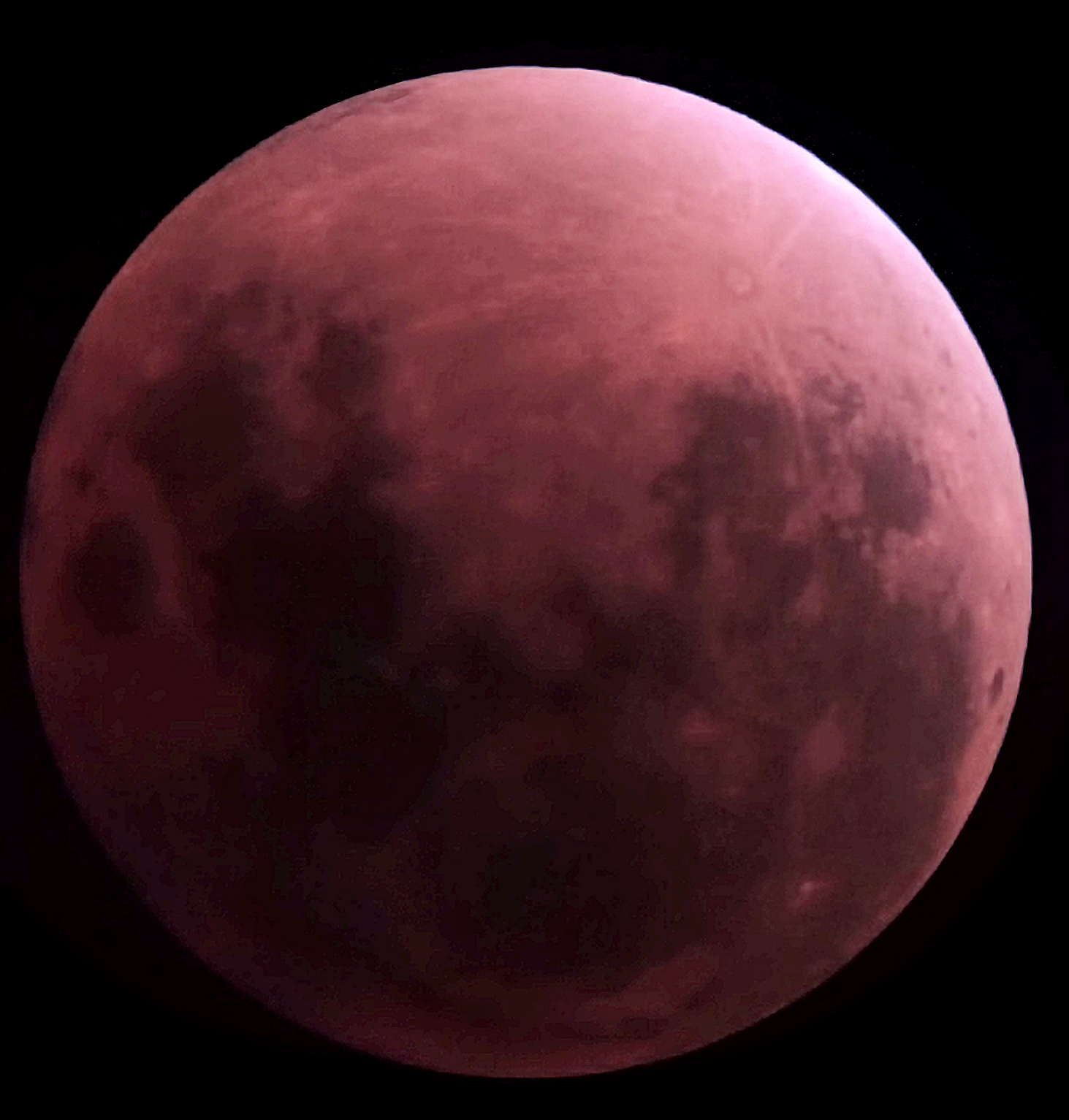
Once Kelly’s program ended at 9pm AEST, the ABC support staff started disassembling the set up, while Kelly and some others stayed around for a while during the early part of totality, as did many of the public. I left about 10:40pm AEST, more than half an hour after the end of totality, by which time the area was pretty deserted.
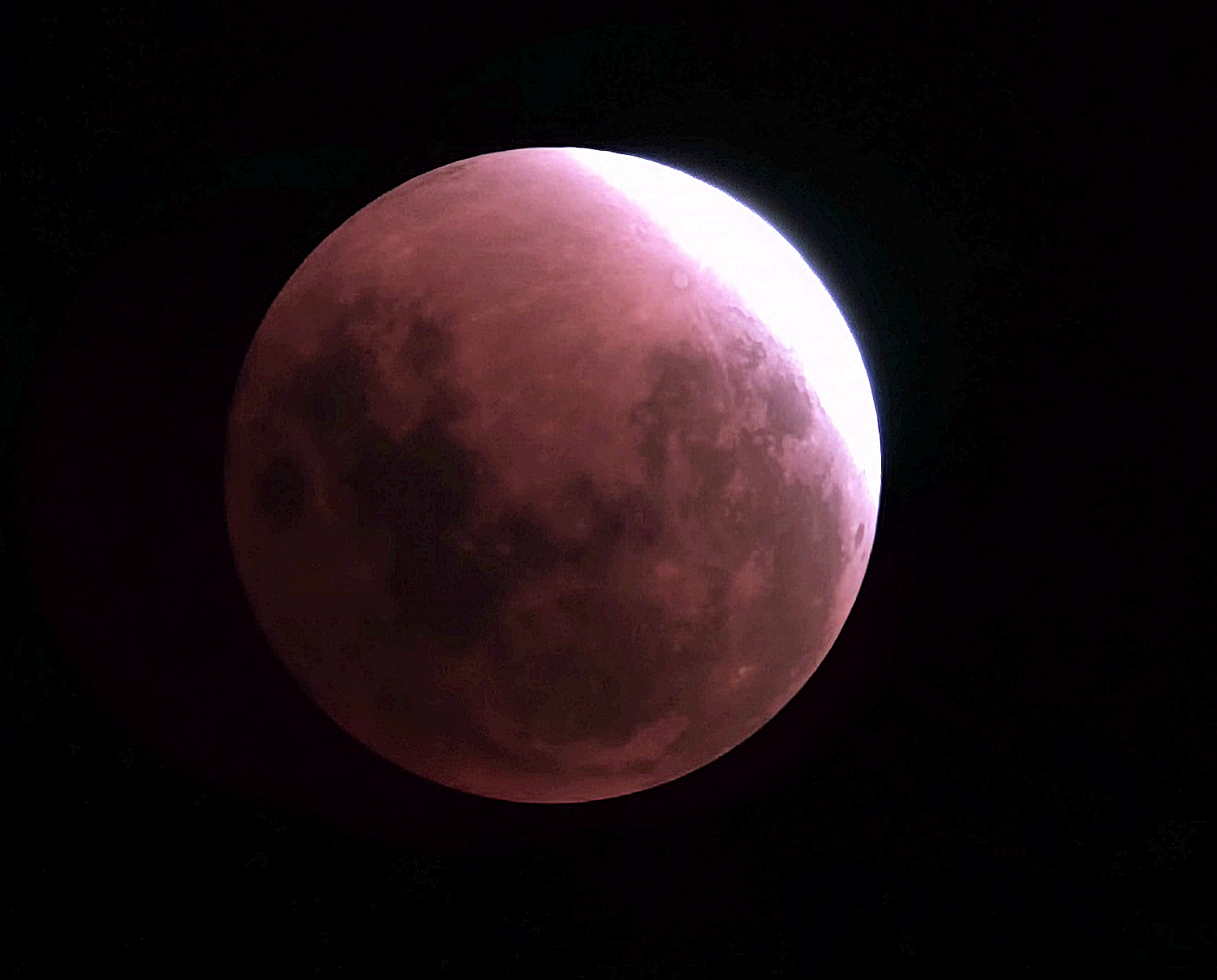
After totality, the Moon began to lose its salmon colour and the bright impact crater Tycho in the Moon’s southern hemisphere started to dominate more.
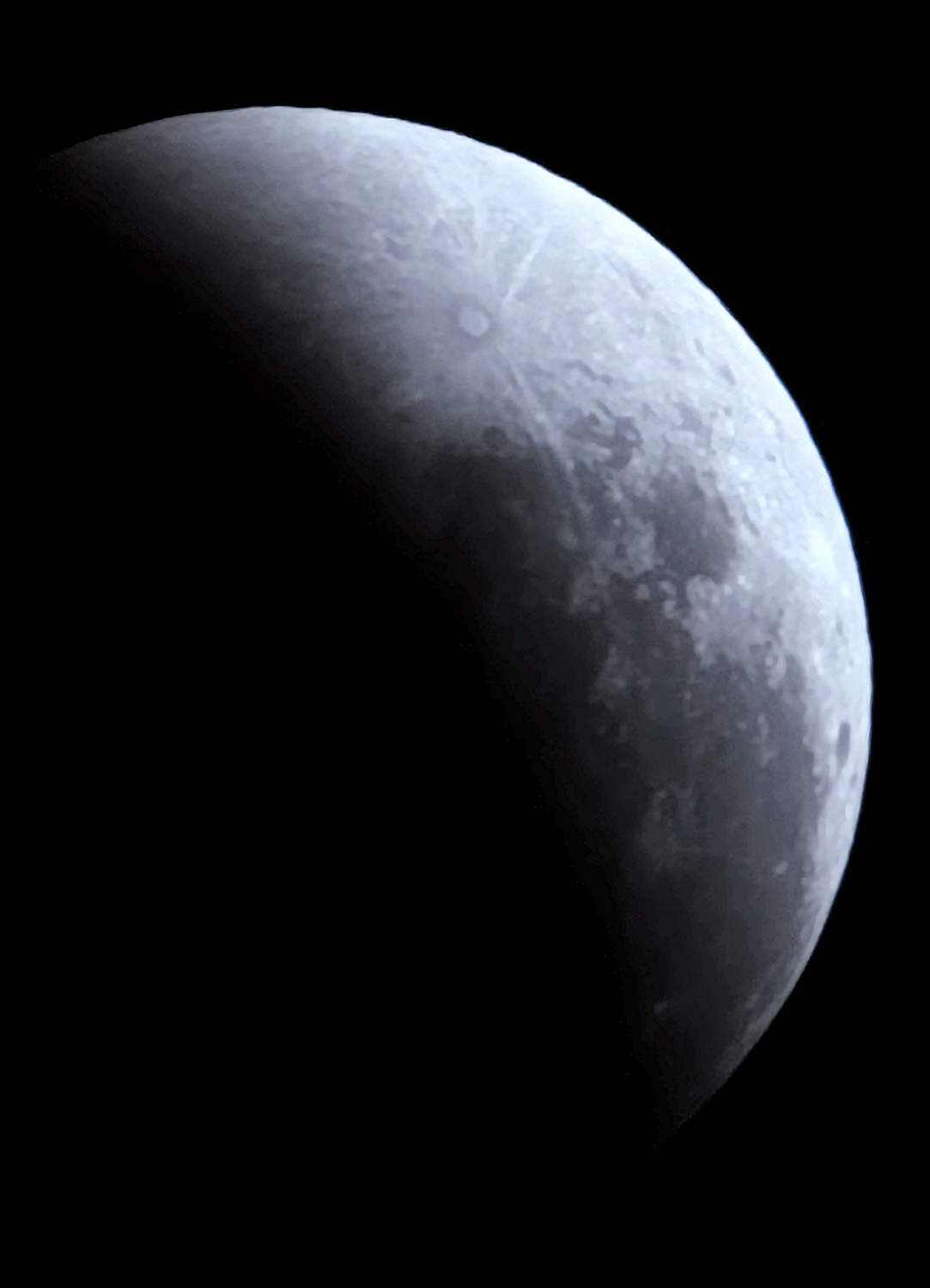
And below are two comparison images I’ve taken in the past. The first image was from a total lunar eclipse on 26 May 2021, which had only 14 minutes of totality compared to 58 minutes for this week’s eclipse.
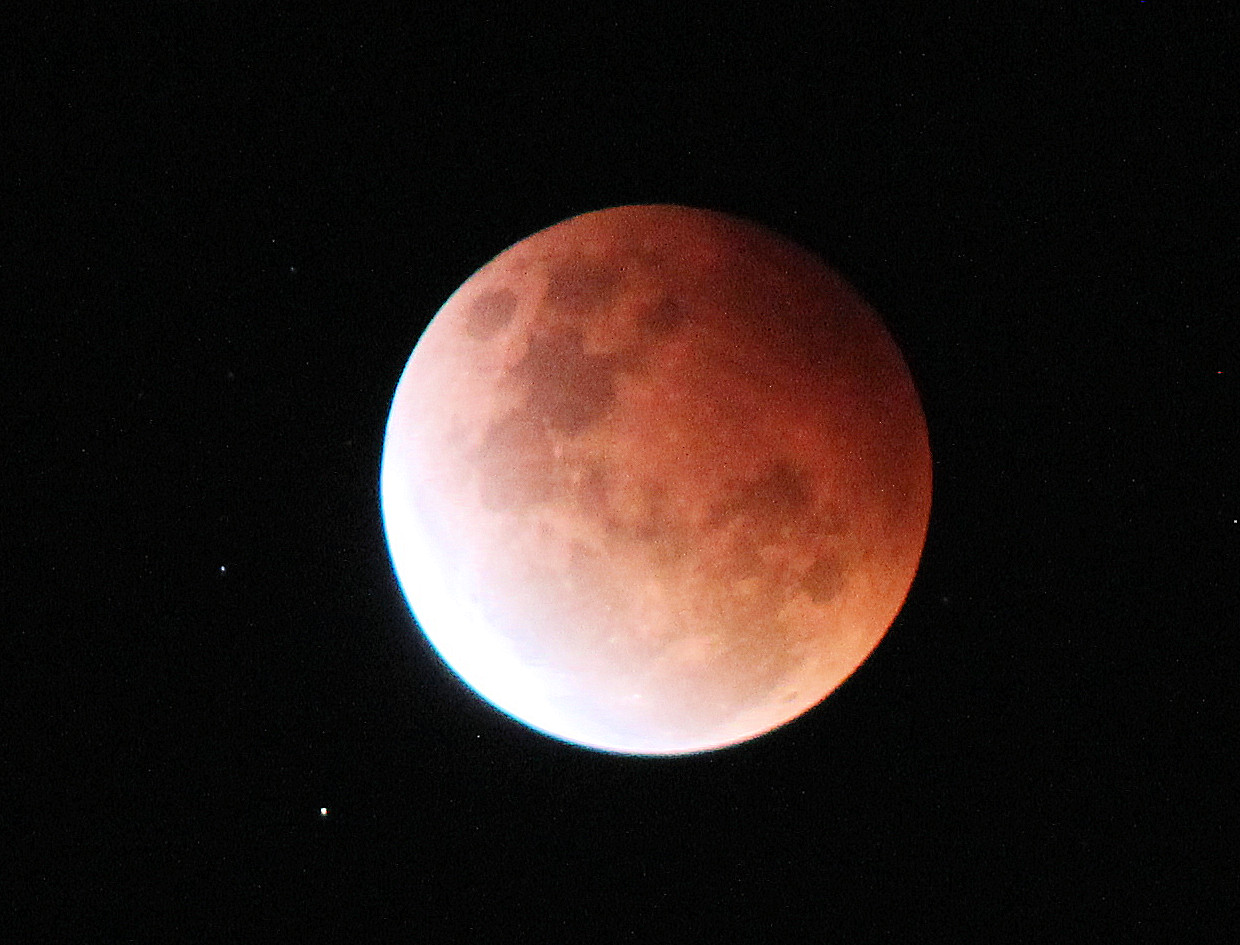
The second image is of a partial lunar eclipse on 19 November 2021. The Moon did not completely enter the darkest part of the Moon’s shadow (the umbra). In fact, just over 97% of the Moon’s diameter entered the umbra. At mid-eclipse the Moon was only nine degrees above the horizon!
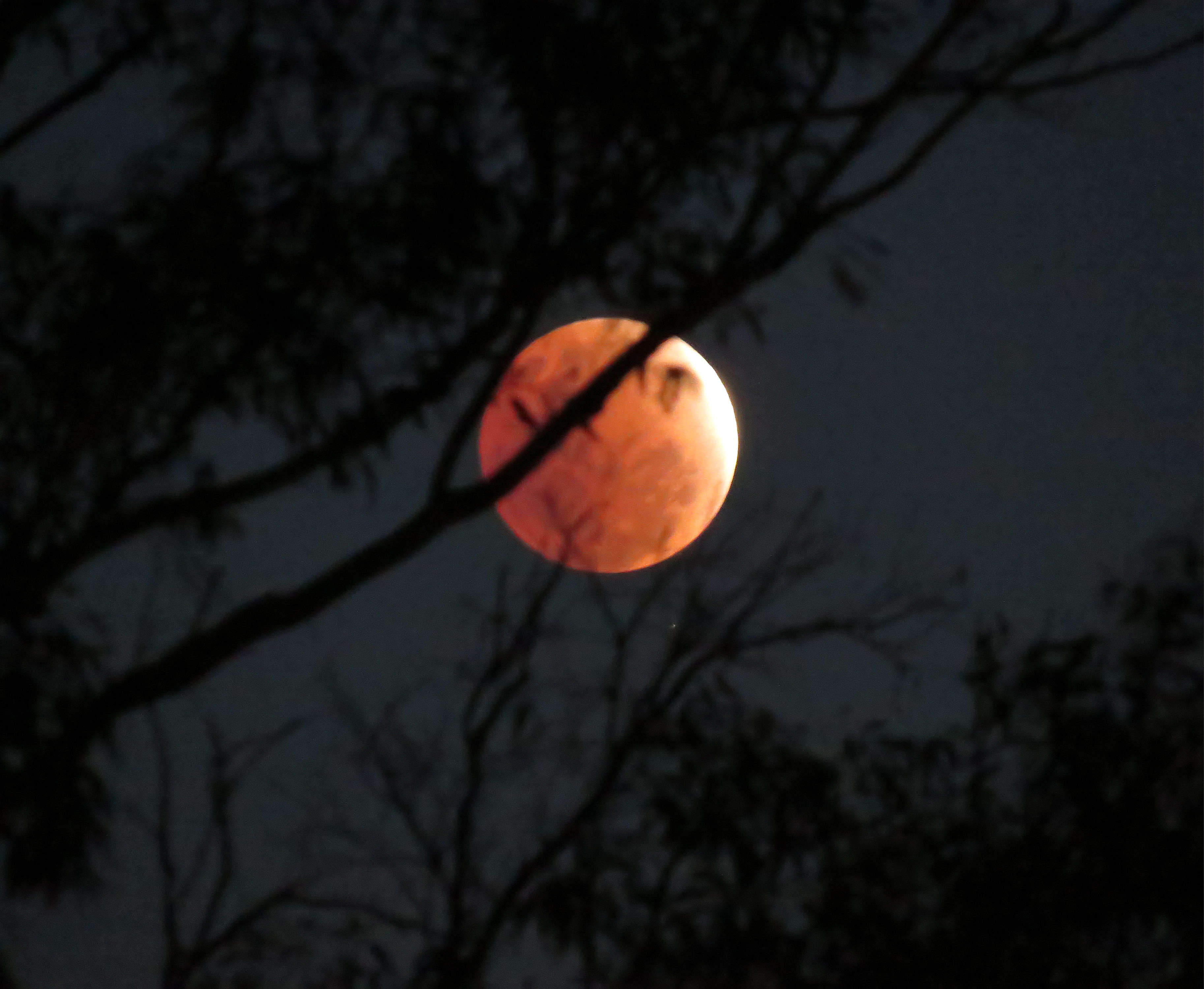
This image was taken by Mark Rigby at mid-eclipse with a Canon PowerShot SX50 HS DSLR.
A reminder that the next total lunar eclipse for our region is on the morning of New Year’s Day 2029. New Zealand will have totality commencing during the morning twilight with the Moon setting during totality. Australia will see all of totality. A nice way to start 2029, weather permitting.
And here’s a thought: Sometime in the 2030s, astronauts on the Moon will probably have the opportunity to look back at Earth during a total lunar eclipse. However, for them it would be a total solar eclipse quite different to those seen from Earth. The spectacle would be a thin reddish ring of sunlight refracted through Earth’s atmosphere – encircling our planet’s black nightside disc, which would appear about four times the diameter of the Moon seen in our sky. They would be simultaneously viewing all the sunrises and sunsets around our Earth at that time.
Mark Rigby OAM
Retired Planetarian, Adjunct Research Fellow (Astrophysics), UniSQ
Still in love with the heavens!
 Australasian Planetarium Society