This month provided an opportunity to join a small New Scientist tour group on a trip to Chile, which included visits to a major planetarium and cutting-edge observatories, as well as a few nights experiencing wonderful dark skies.
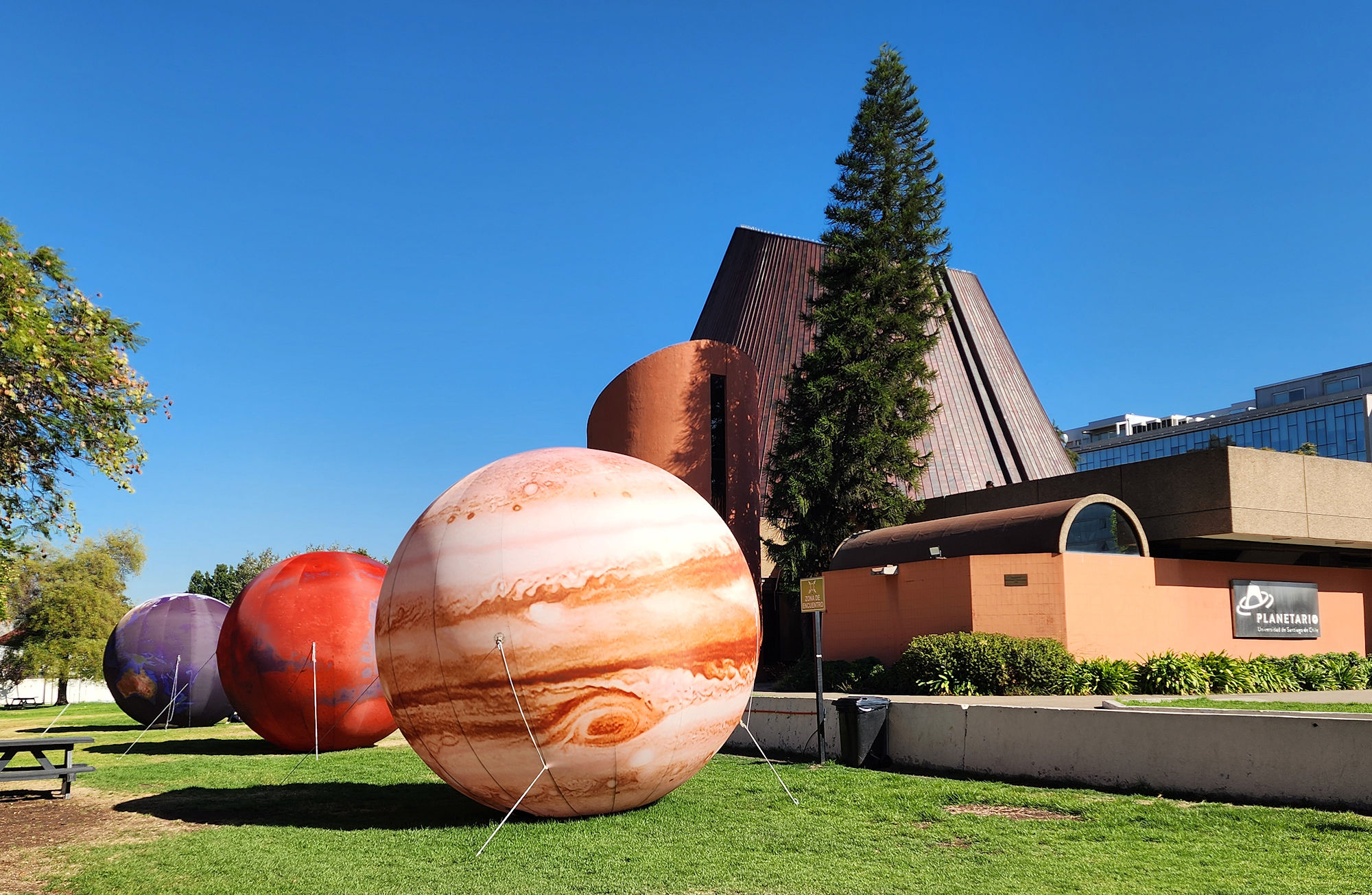
The University of Santiago’s planetarium and outside exhibits.
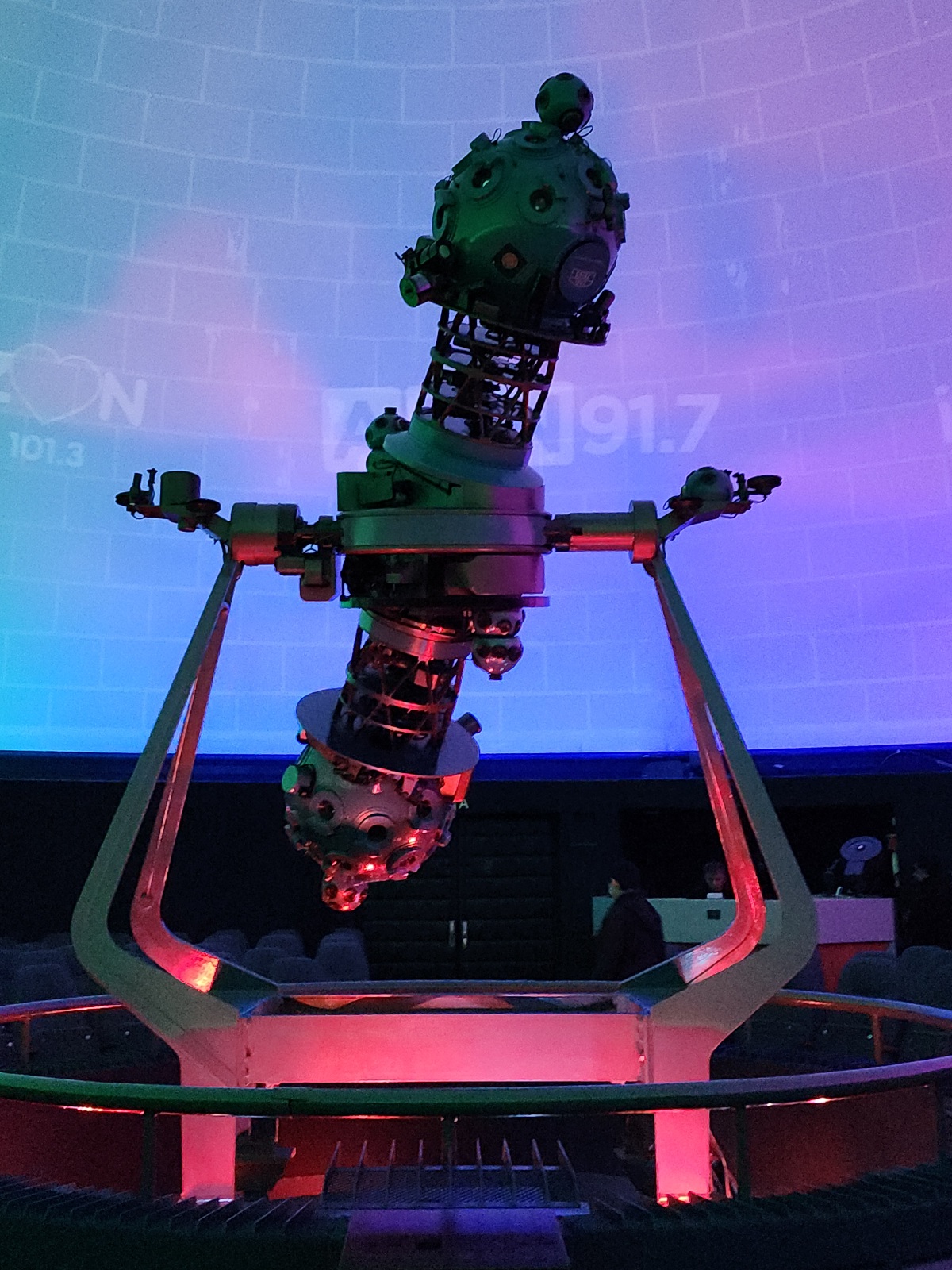
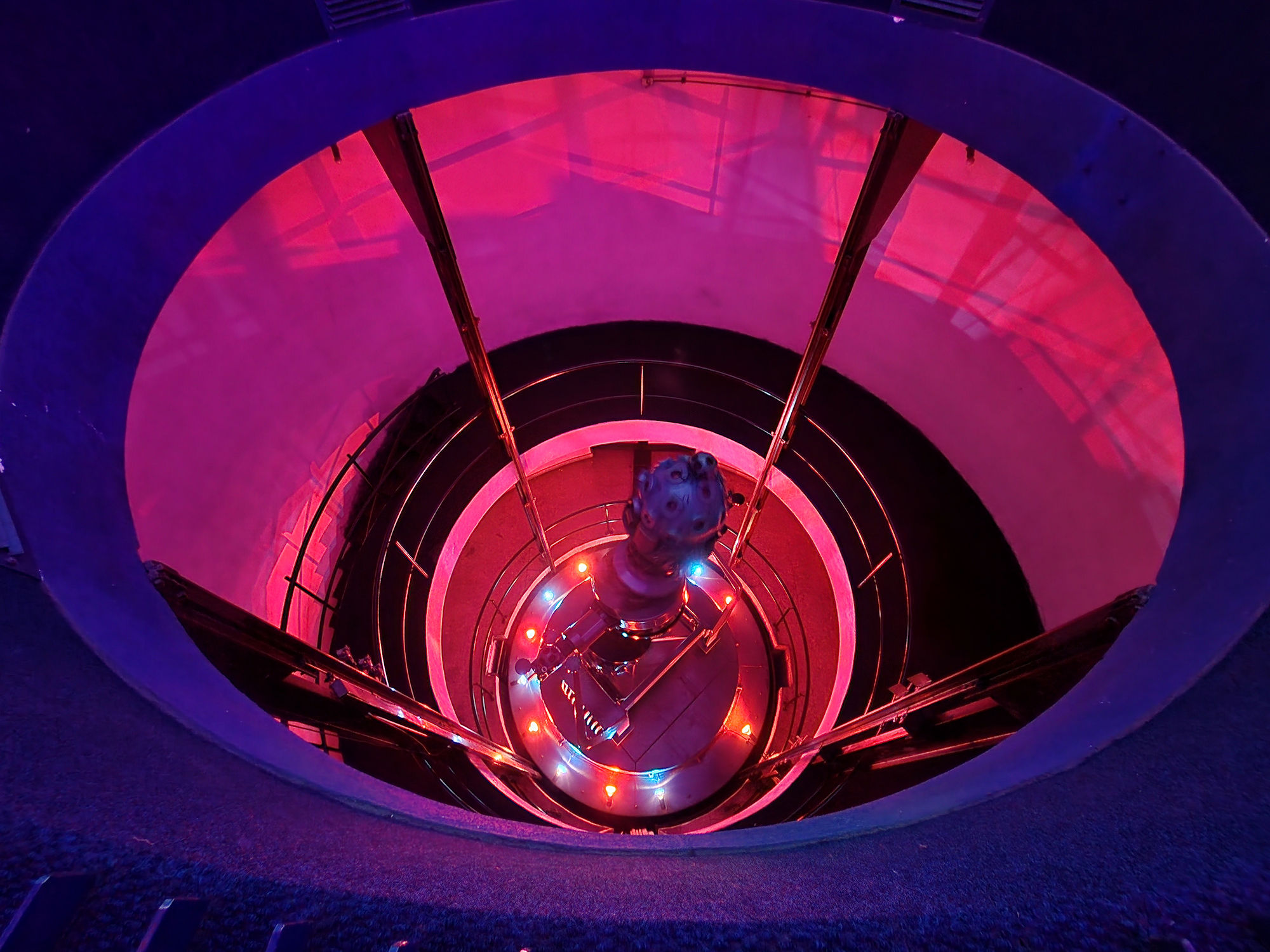
The University of Santiago’s planetarium opened in 1985 with a 20-metre dome and a Zeiss VI projector, which is still in use and was put through its paces, including being raised and lowered from three floors below the theatre. The digital system is a Zeiss Power Dome and there are eight Zeiss VELVET projectors. Seating is provided for 289.
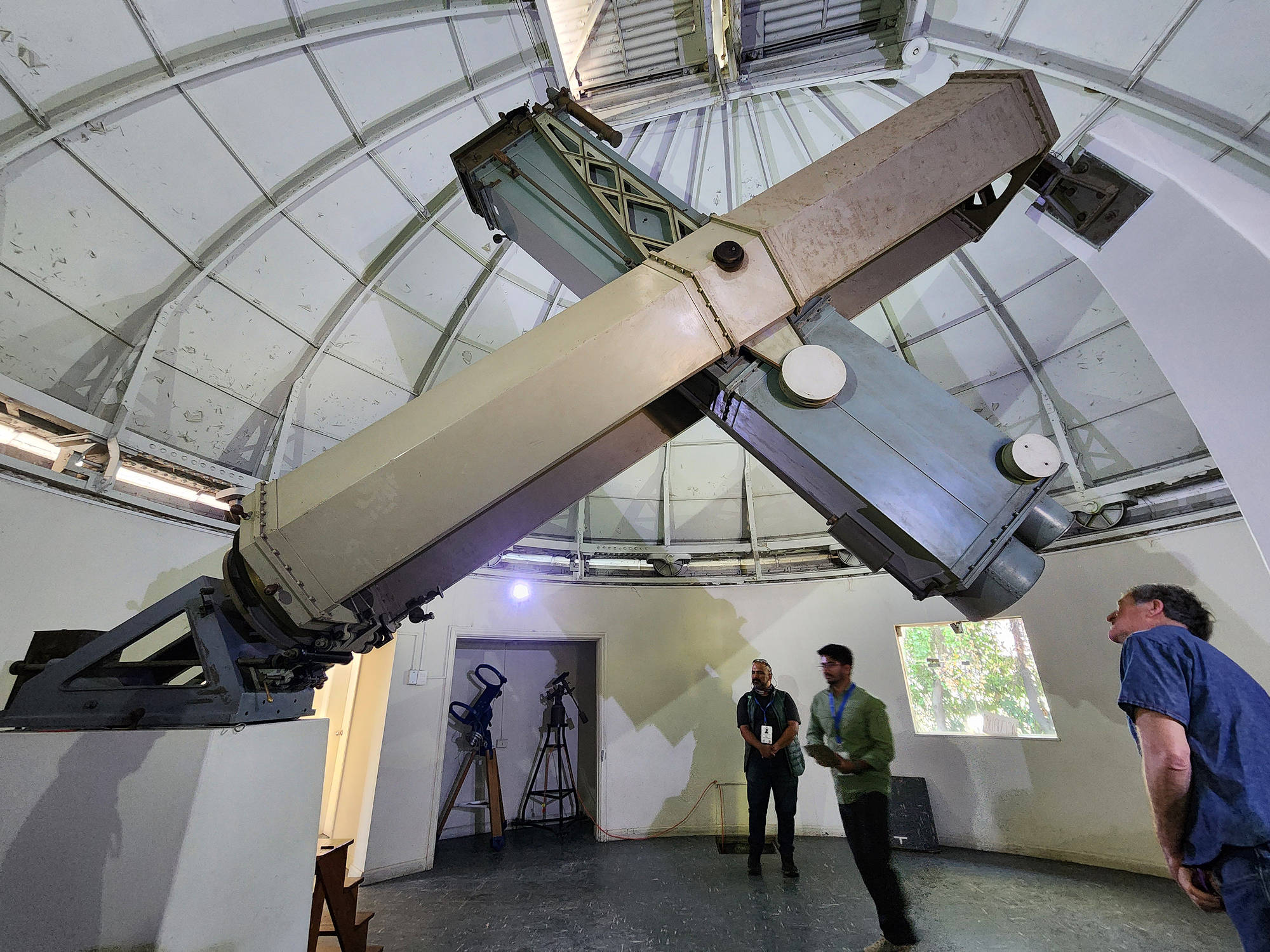
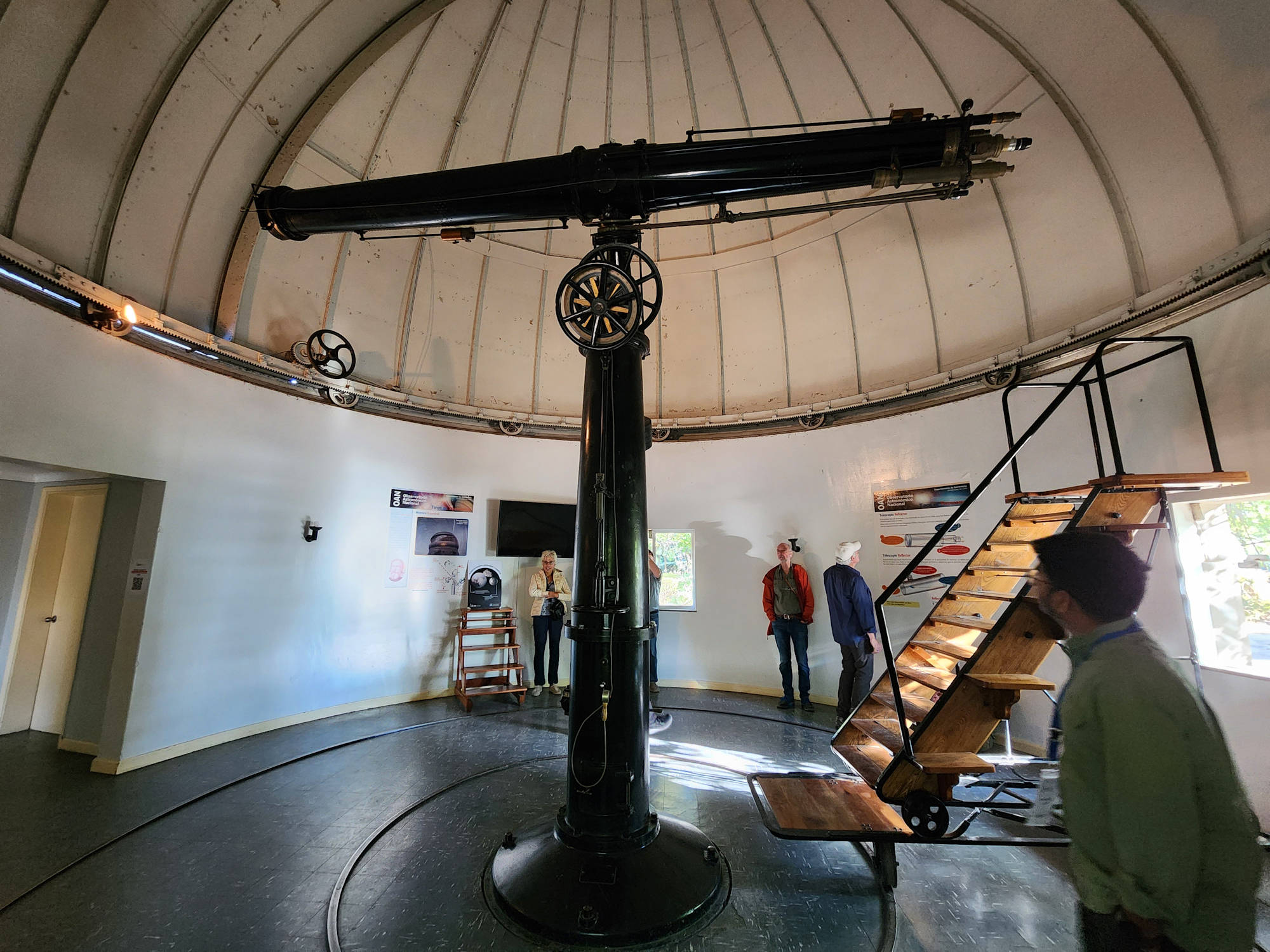
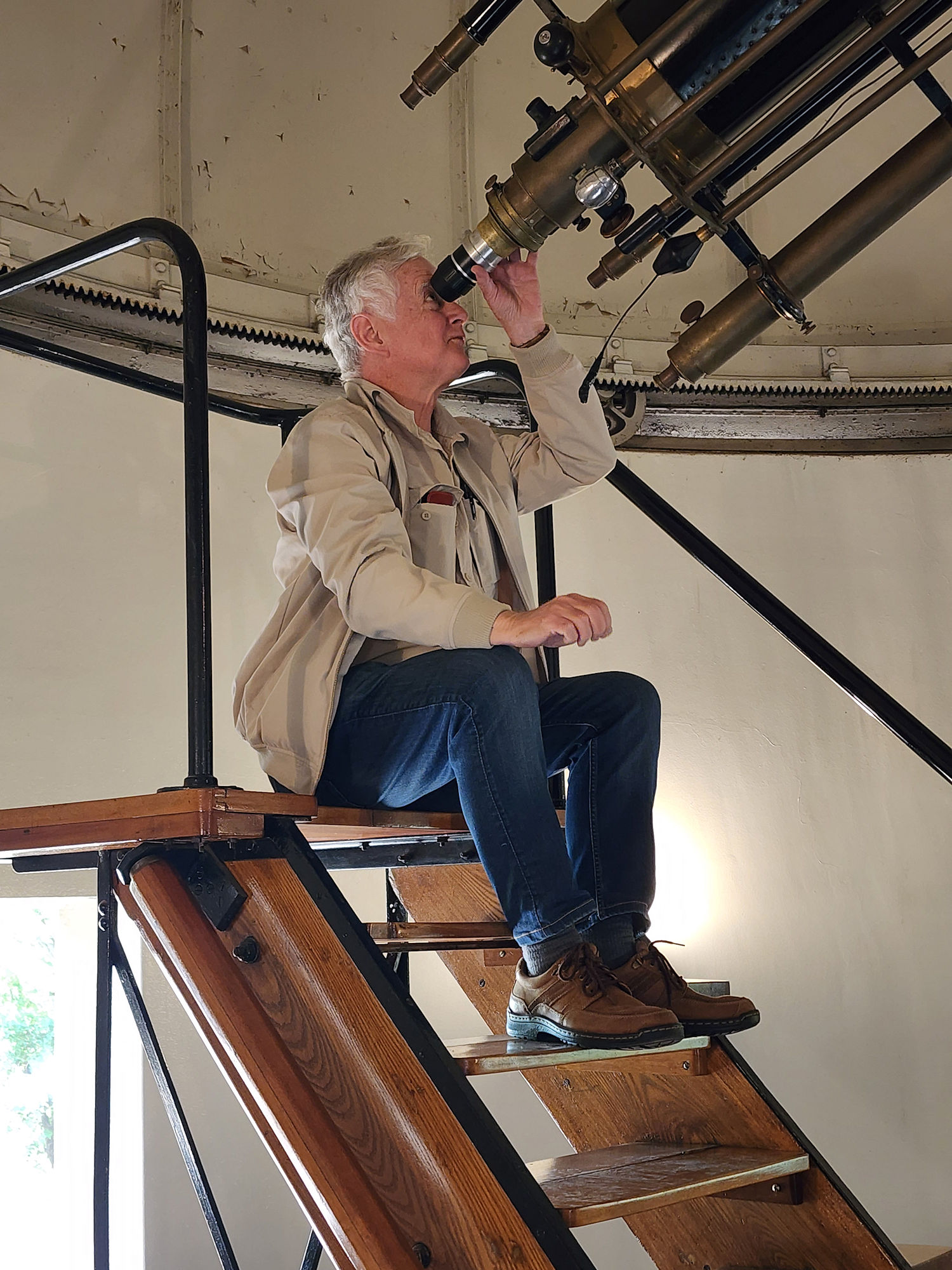
While in Santiago there was time to visit the University of Chile Astronomy Department and the Cerro Calán Observatory with its historic refracting telescopes. The department has a post-graduate course in astrophysics for students from around the world.
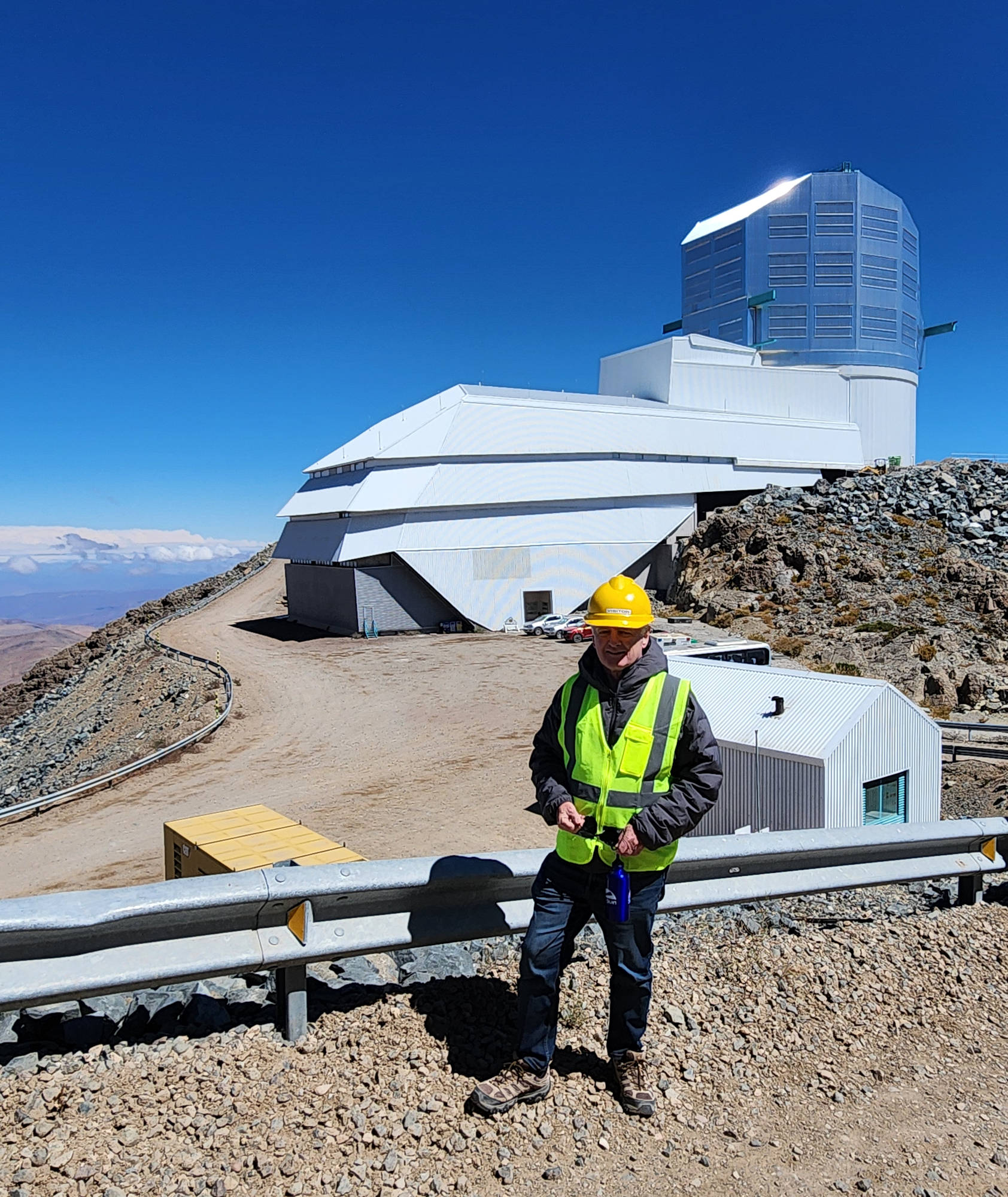
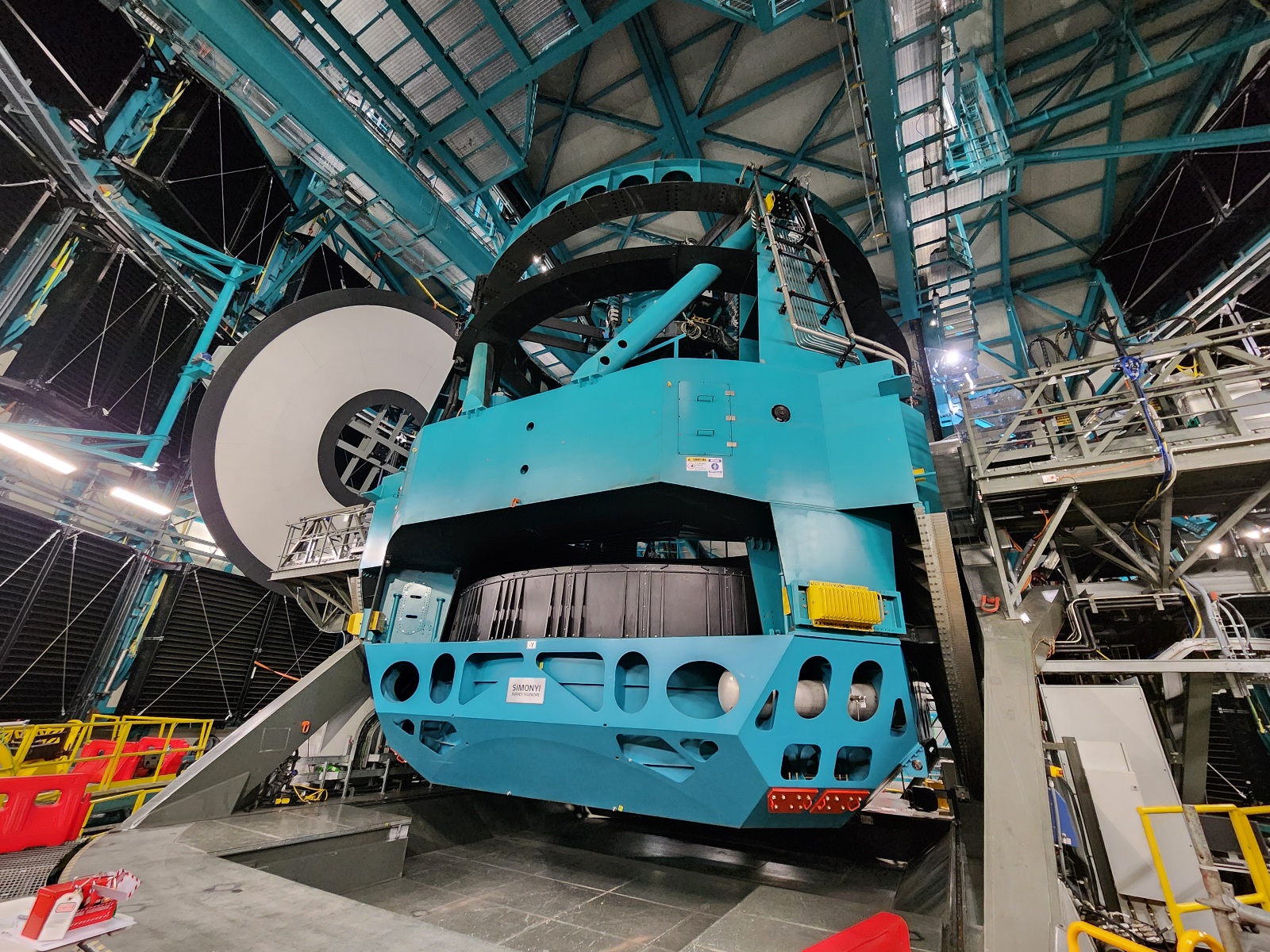
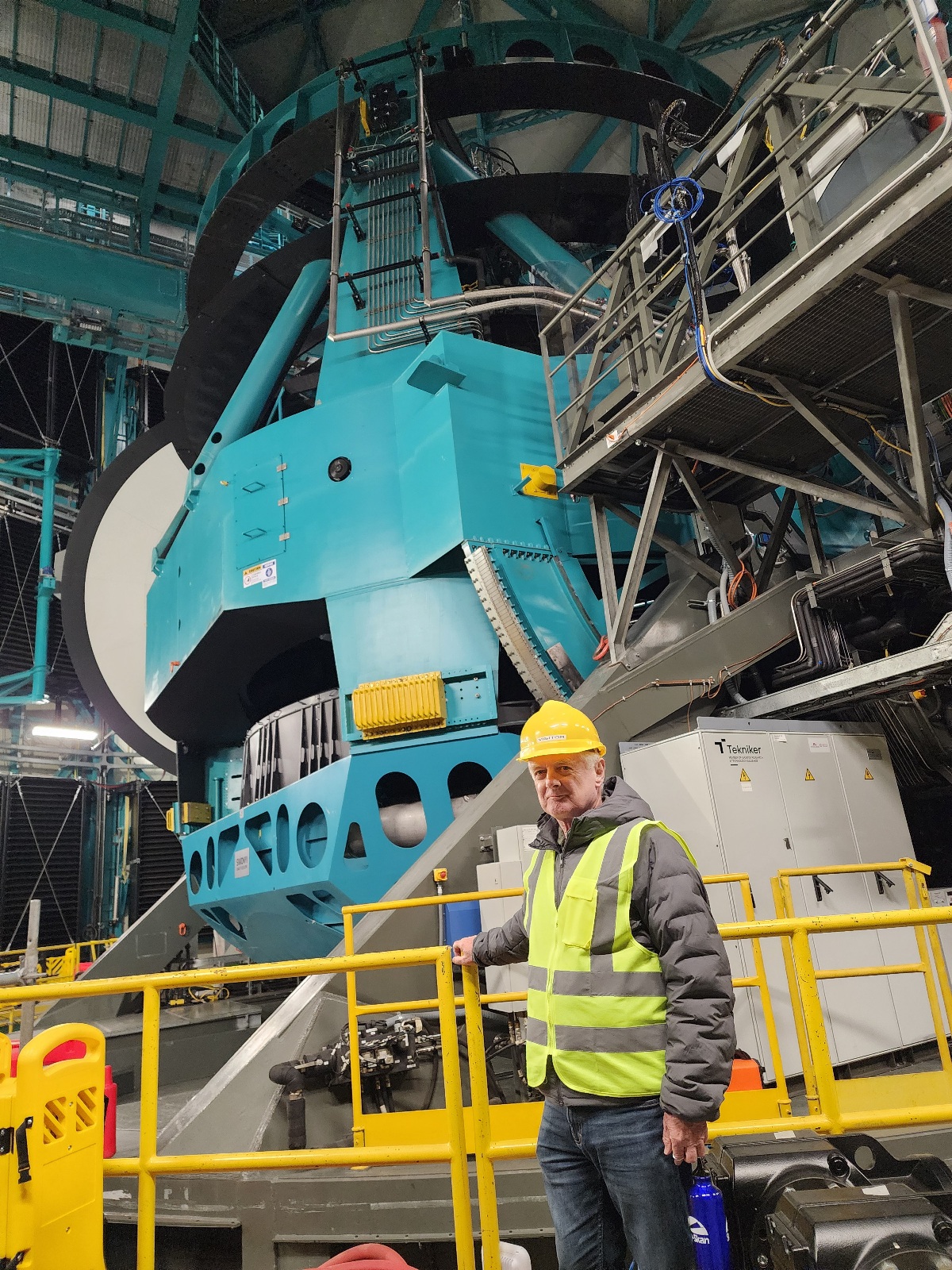
The newest of the observatories in Chile is the Vera C. Rubin Observatory on the Cerro Pachón ridge in the Chilean Andes. The observatory is still a construction site even though the telescope’s 8.4m mirror and 3.2-gigapixel camera are producing remarkable results with great promise for the coming years. The instrument can scan the entire southern sky visible from the site every few nights owing to its field of view being about 40 times the area of the Full Moon. Its primary mission is the 10-year Legacy Survey of Space and Time (LSST). Key objectives are investigating dark matter and dark energy, mapping the Milky Way, cataloguing the Solar System (particularly asteroids and comets), and exploring the transient sky (e.g. supernovae).
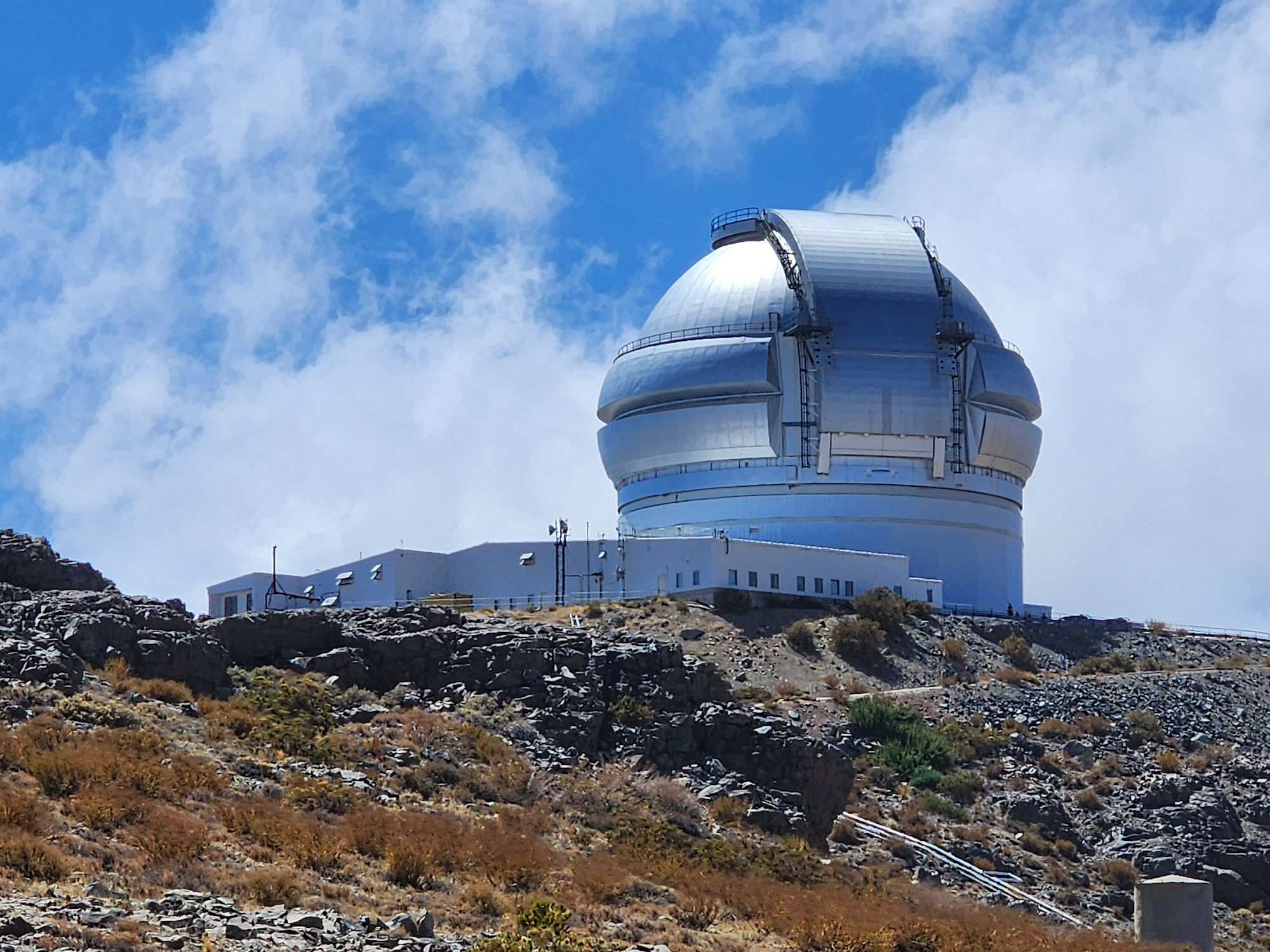
Adjacent to the Vera C. Rubin Observatory is the Gemini South Observatory with its 46m dome at an altitude of 2,737m. The observatory’s telescope has an 8.1m primary mirror used in the optical/infrared wavelengths. It is operated by the US National Science Foundation NOIRLab in partnership with Canada, Chile, Brazil, Argentina, and the Republic of Korea. Its twin, Gemini North, is in Hawaii.
The Gemini South Observatory
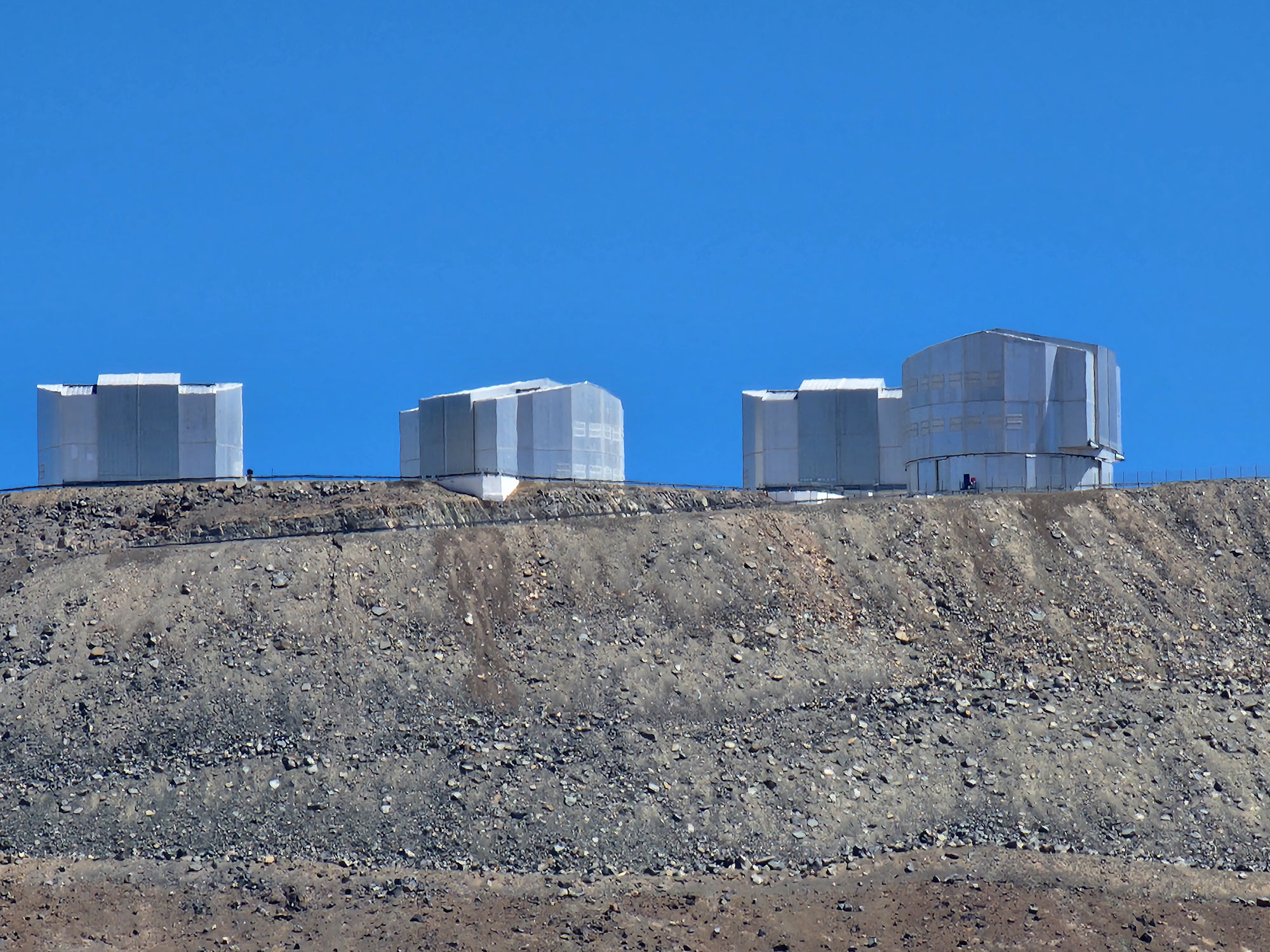
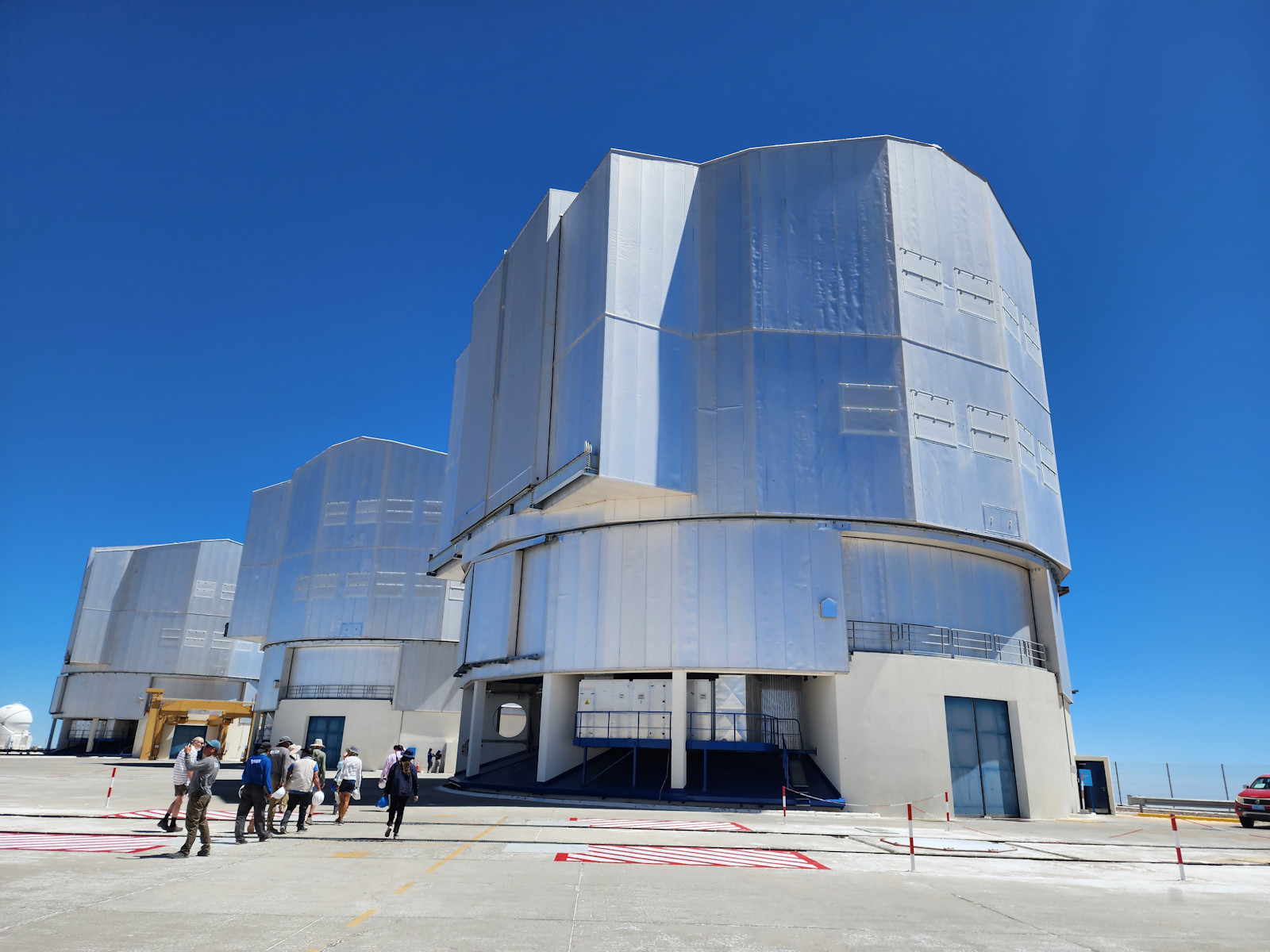
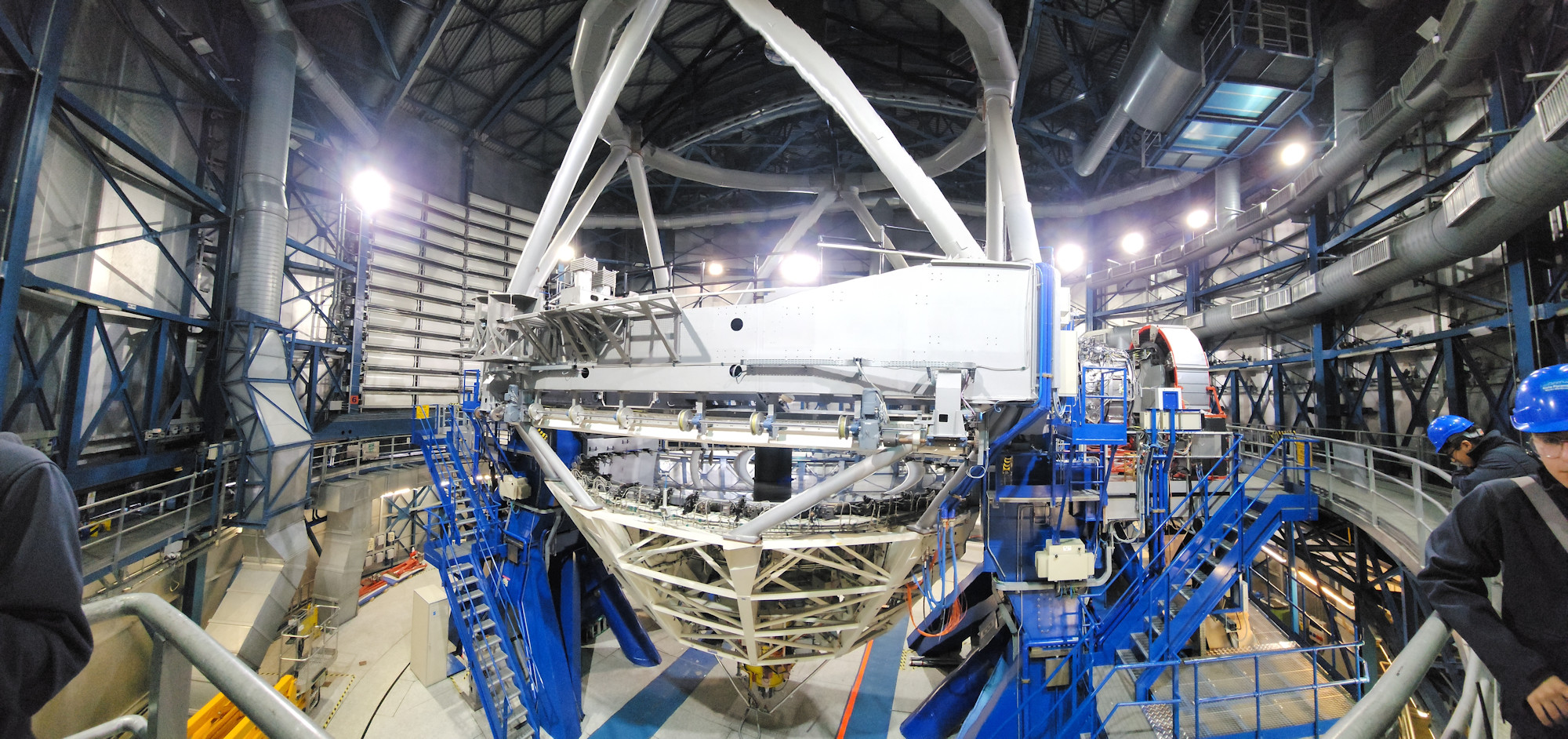
Further north in Chile’s Atacama Desert and at an altitude of 2,635m is Paranal Observatory, which is one of the best observing sites in the world. Various facilities are operated by the European Southern Observatory, including the Very Large Telescope (VLT) with its four main independent Unit Telescopes and adjacent smaller ones. Below the VLT are support facilities and also the La Residencia for visiting astronomers and staff.
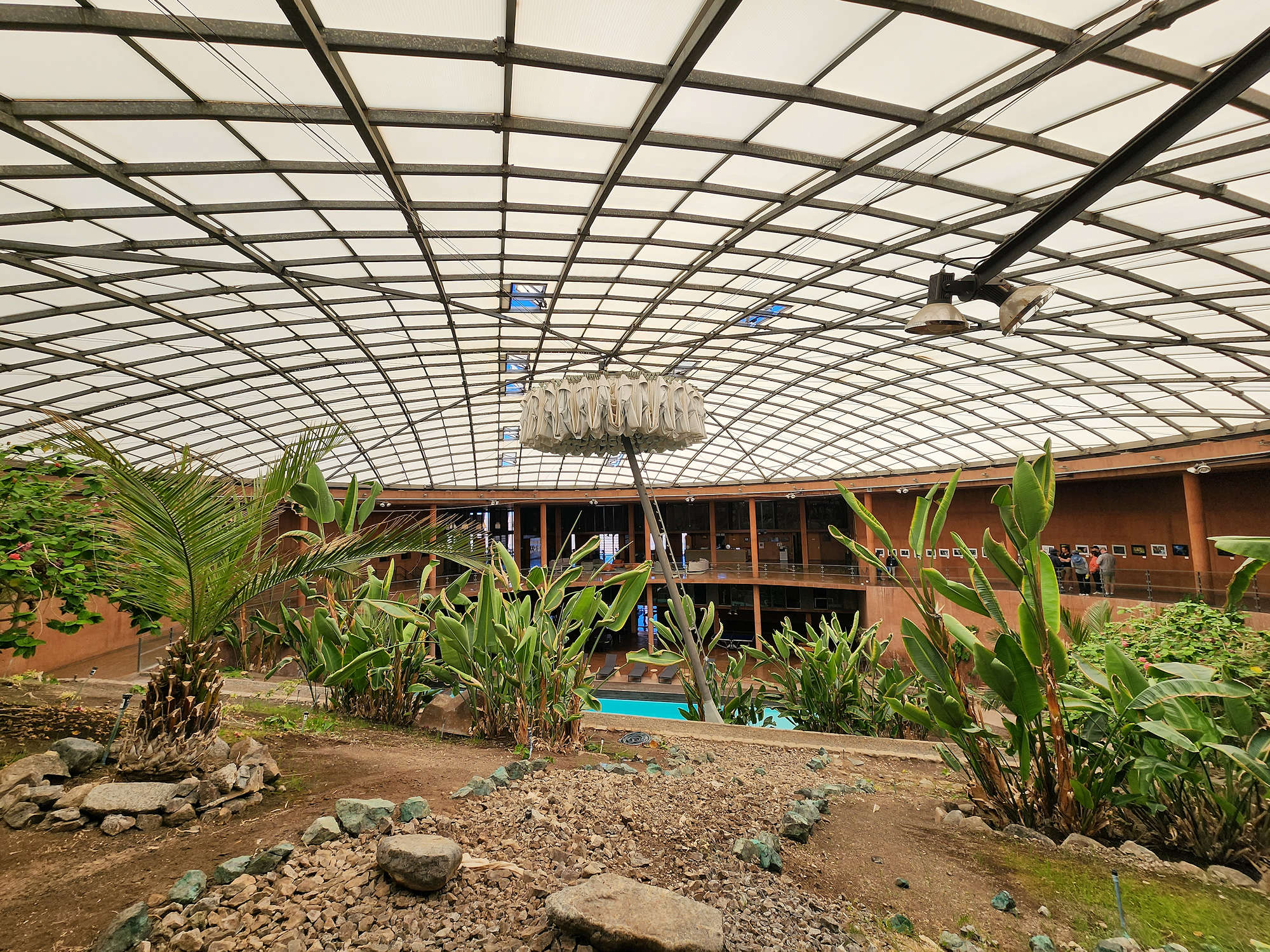
Near the VLT is La Residencia for visiting astronomers and staff. It is partly built into the mountain to protect it from the harsh conditions and prevent light pollution. It served as a backdrop for the 2008 James Bond movie Quantum of Solace.
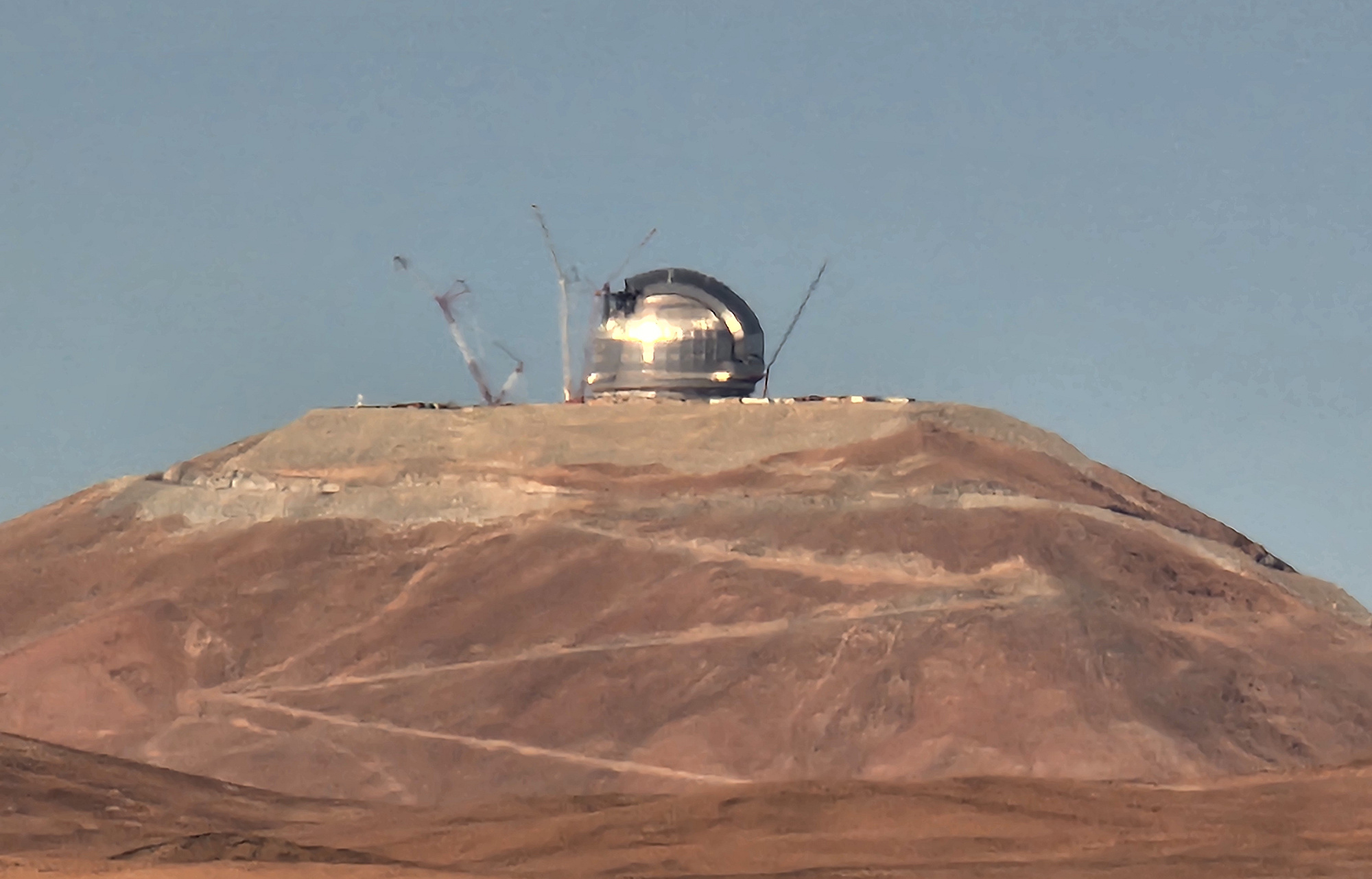
Visible from the VLT was the Extremely Large Telescope (ELT) located about 23 km away. Its dome diameter is 93m. The facility is not open for visits as it is very much a construction site with completion a few years off. The primary mirror will be 39m in diameter and composed of 798 segments, each being about 1.5m across.
The ELT under construction.
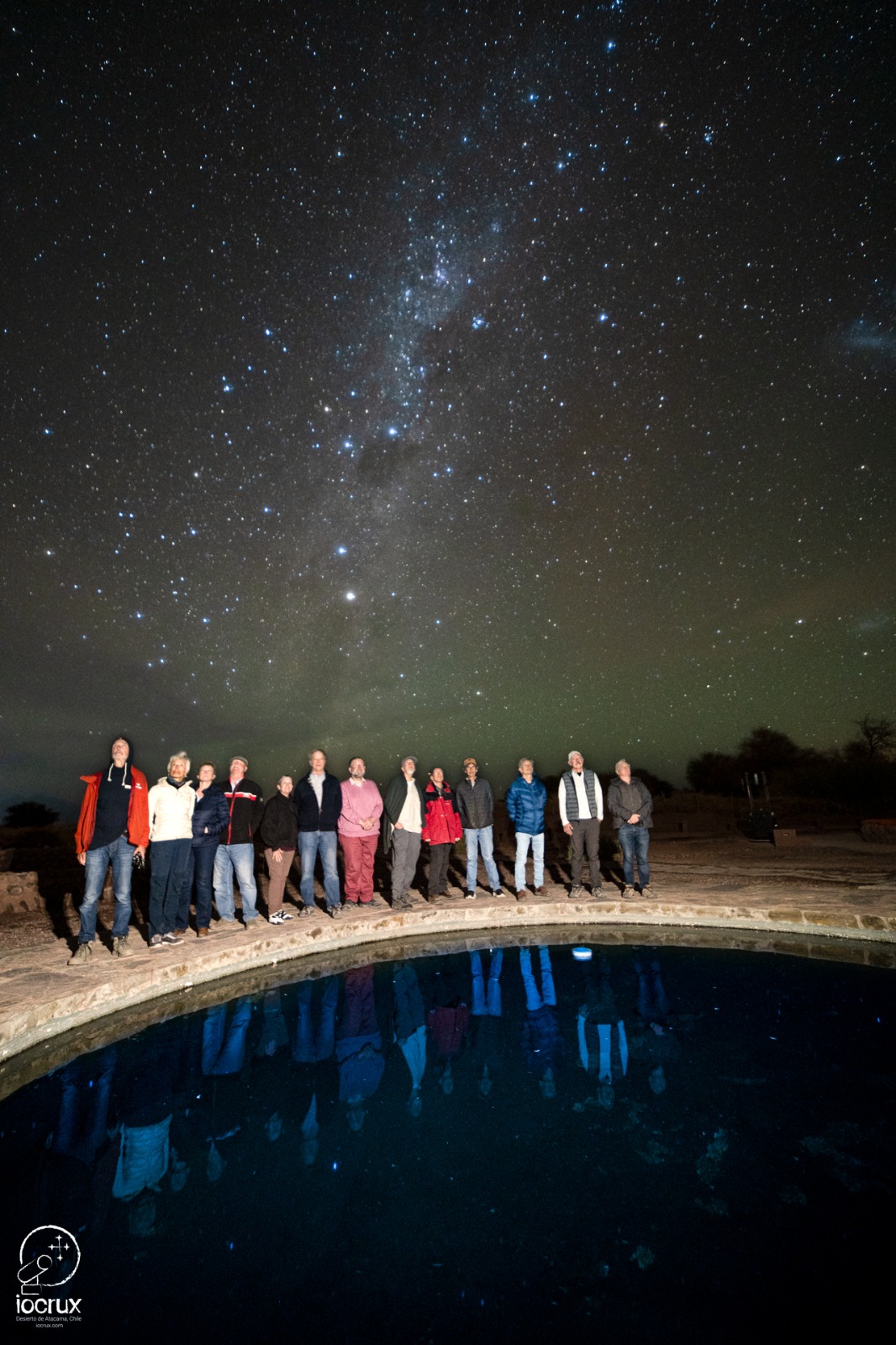
My travels also included many other amazing sights in the Atacama Desert and elsewhere, but it was hard to beat the visits to the observatories and the dark night skies. Although I did not take any instruments of my own, a couple of the sites had a range of Dobsonian telescopes with mirrors up to about 61cm. While the sky wasn’t unfamiliar with one site being not too different to Brisbane’s latitude, the dark sky conditions were a joy to behold.
Mark Rigby OAM Retired Planetarian, Adjunct Research Fellow (Astrophysics), UniSQ Still in love with the heavens!
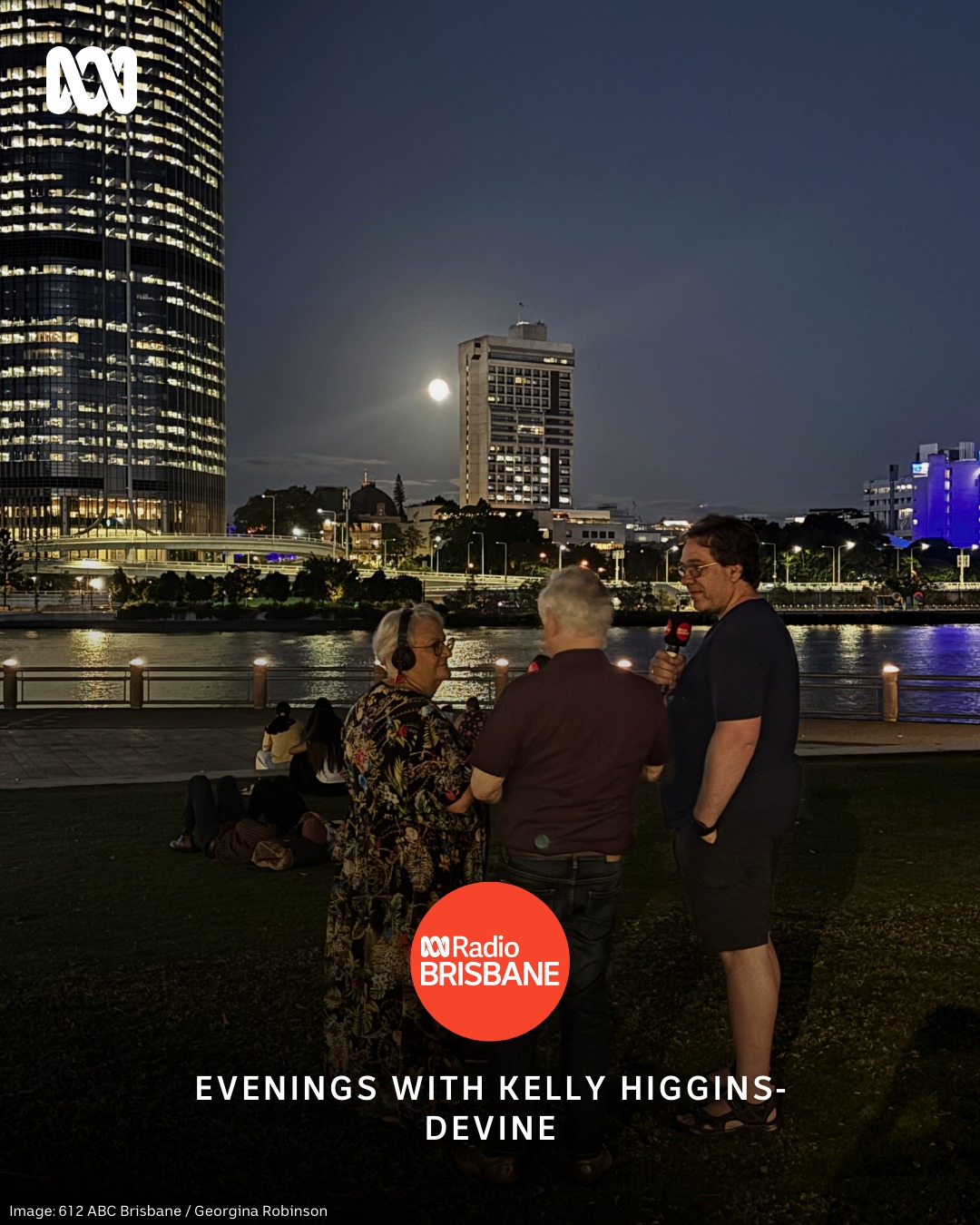
The total lunar eclipse on the evening of Tuesday, 3 March 2026 was observed by many across our region. In Brisbane, ABC 612’s Queensland Evenings radio program with Kelly Higgins-Divine decided to do an outside broadcast from 6:30pm to 9pm AEST from South Bank’s Riverside Green.
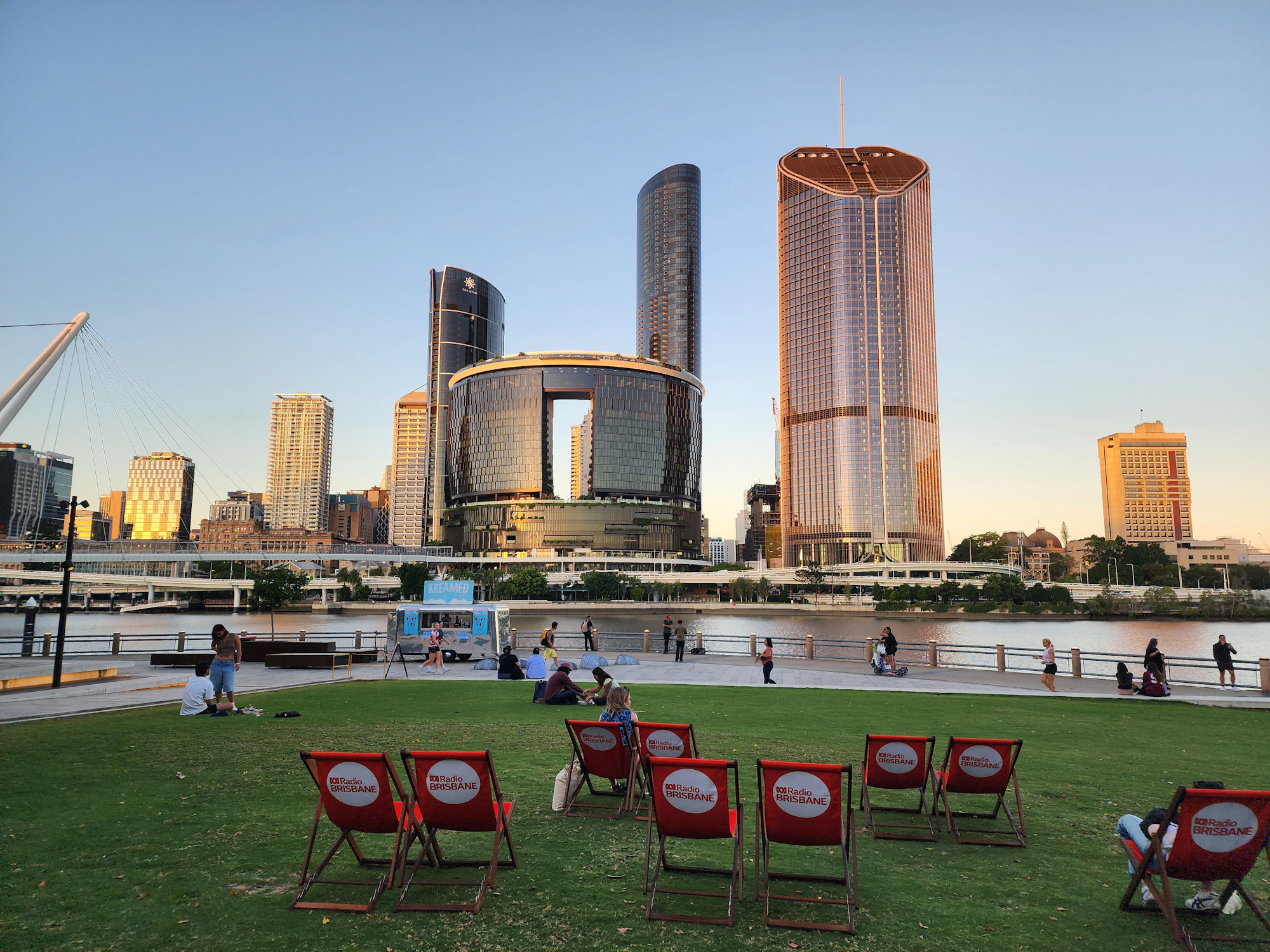
Part of the view looking across the Brisbane River from the ABC outside broadcast area at South Bank.
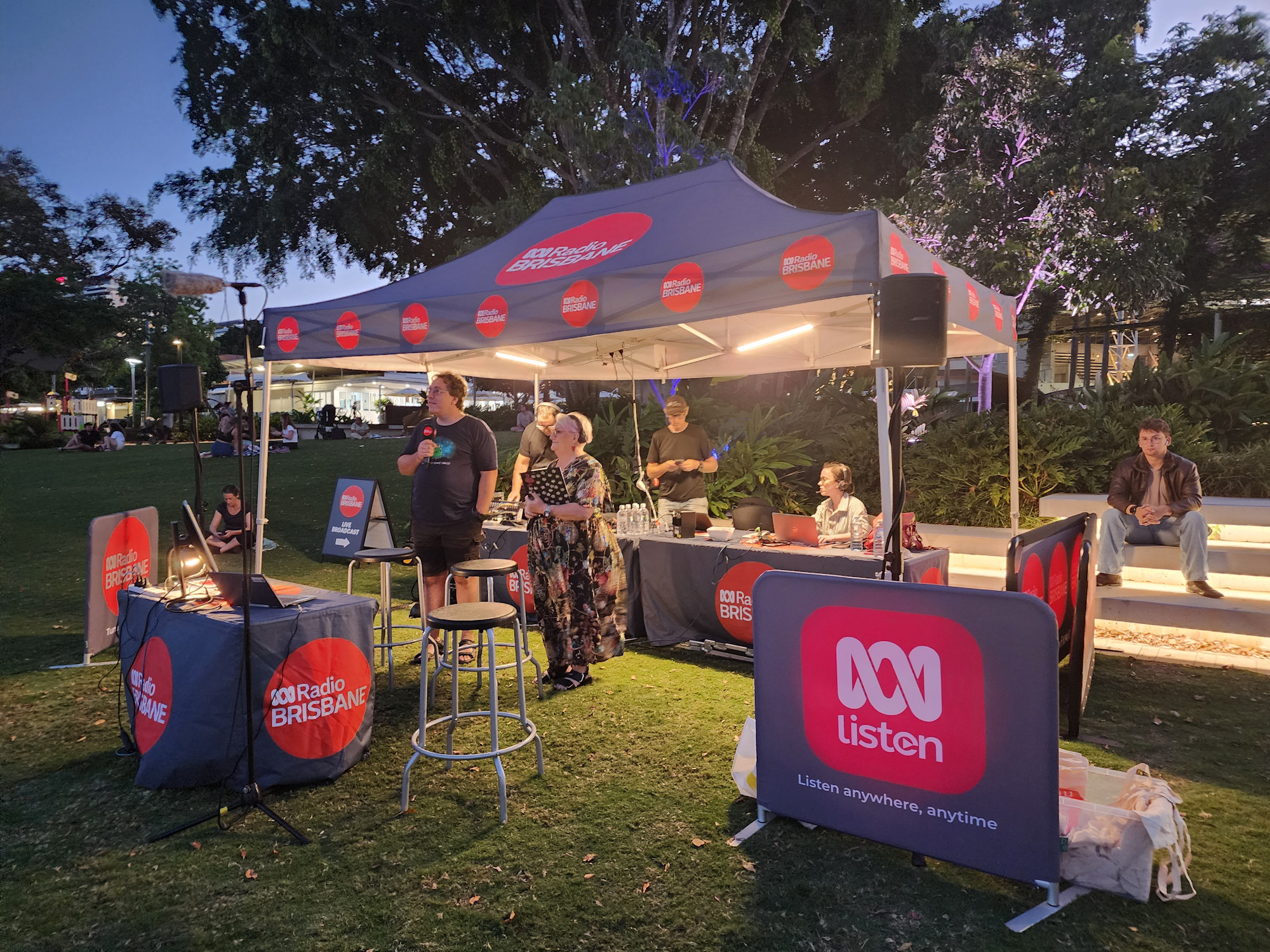
The ABC team set up a marquee for their broadcast equipment as well as some ABC deck chairs, although there was plenty of lawn that the public filled up as the broadcast progressed.
The ABC marquee for the outside broadcast.
Professor Jonti Horner from the University of Southern Queensland (UniSQ) Centre for Astrophysics in Toowoomba has a regular segment with Kelly, so she had him co-host the evening broadcast. Jonti remembered fondly viewing total lunar eclipses as a kid in the north of England and especially one eclipse that was late on a very cold winter’s night. He also referred to UniSQ’s major role in exoplanetary science.
I’ve long known Kelly and Jonti, so it was a pleasure to join them as one of the three onsite guests for an almost perfect eclipse evening. There was also a linkup to the Charleville Cosmos Centre.
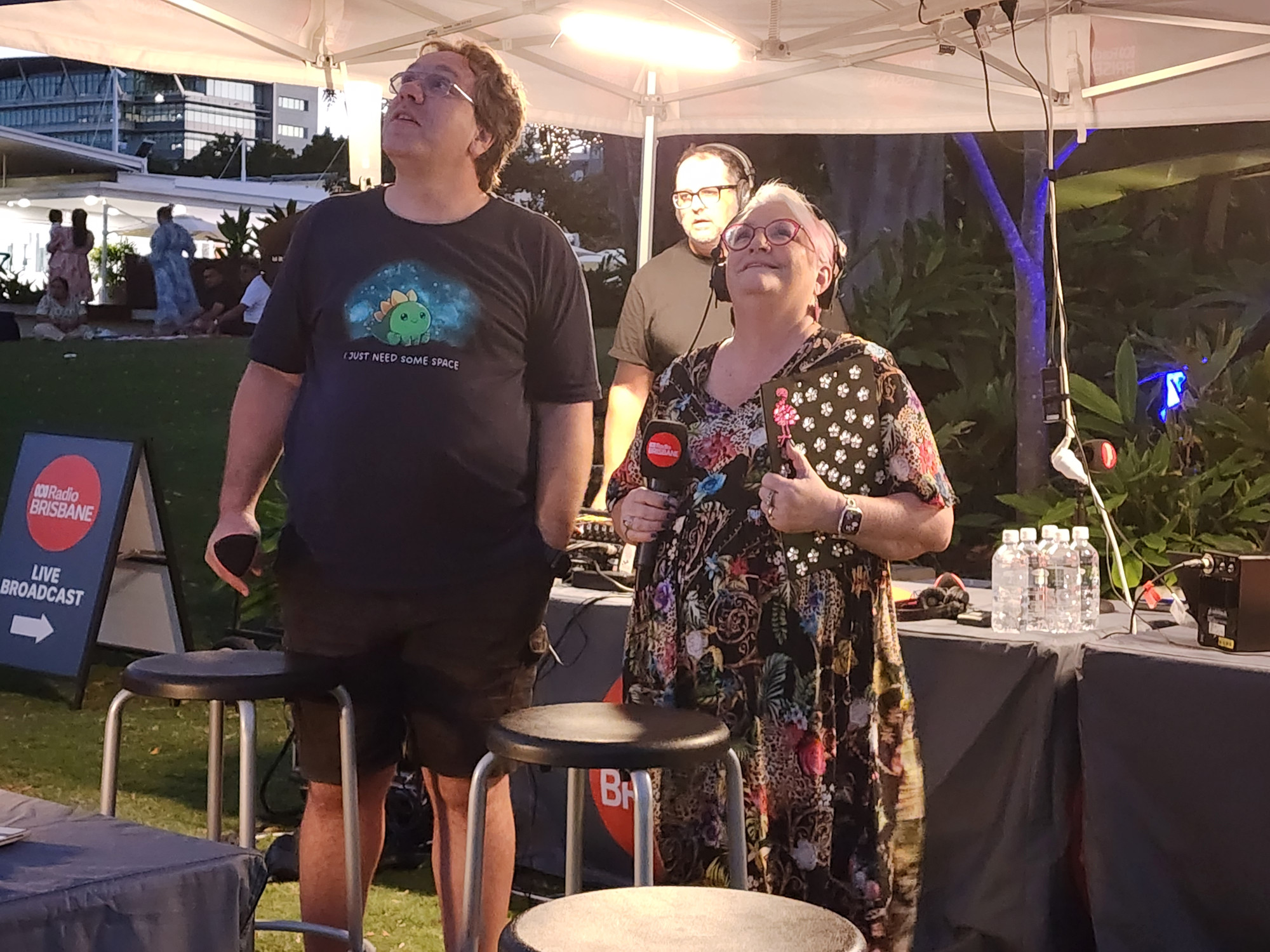
Jonti Horner (UniSQ) and Kelly Higgins-Devine (ABC) early in the broadcast.
I arrived well before sunset at the outside broadcast area. Jonti had already driven down from Toowoomba. The ABC site had a spectacular view of the inner-city skyline, especially as it got darker. Jupiter and Sirius made their appearance on the celestial stage as the twilight progressed.
Kelly Higgins-Devine, Mark Rigby and Jonti Horner early in the eclipse broadcast.
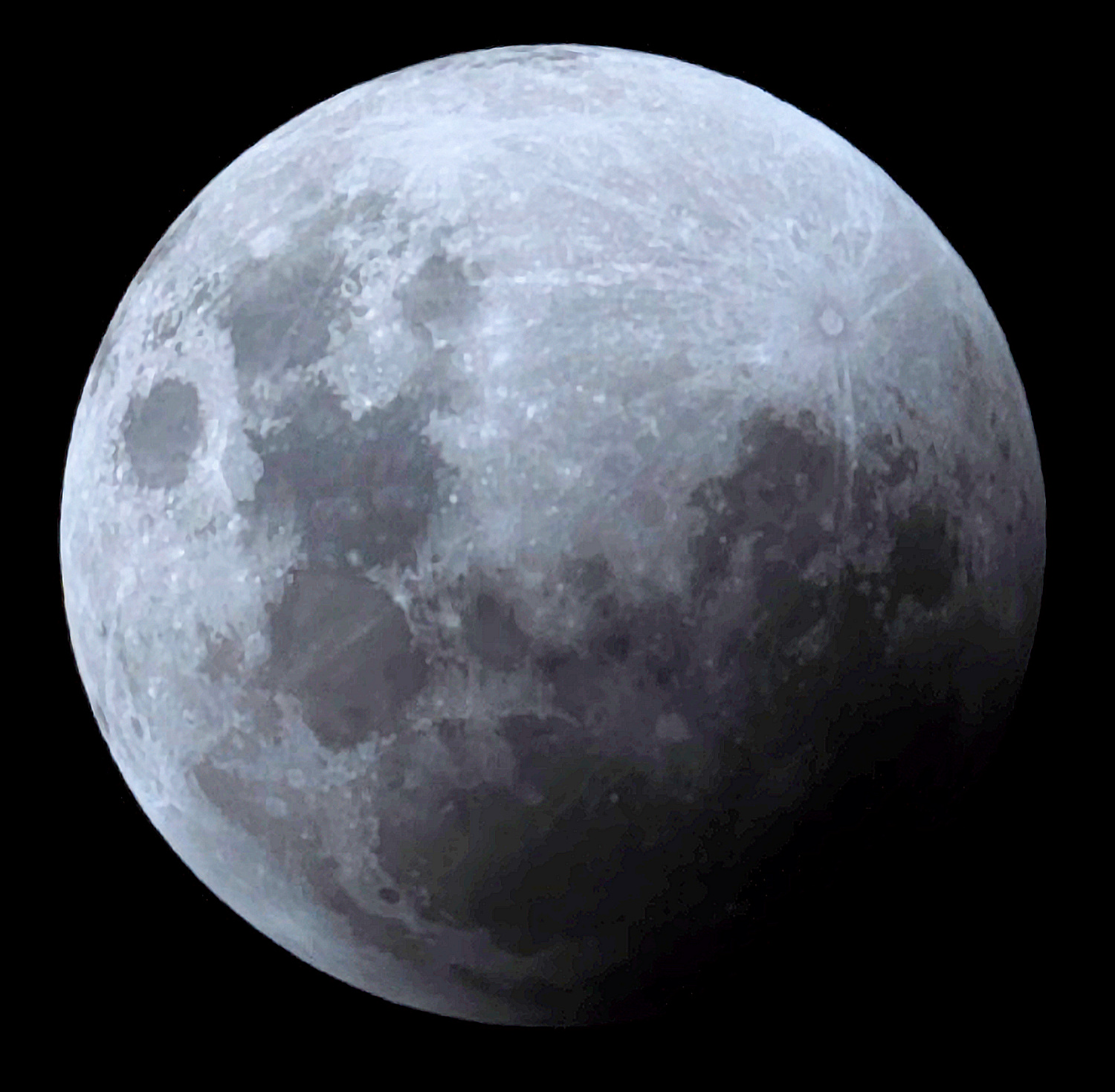
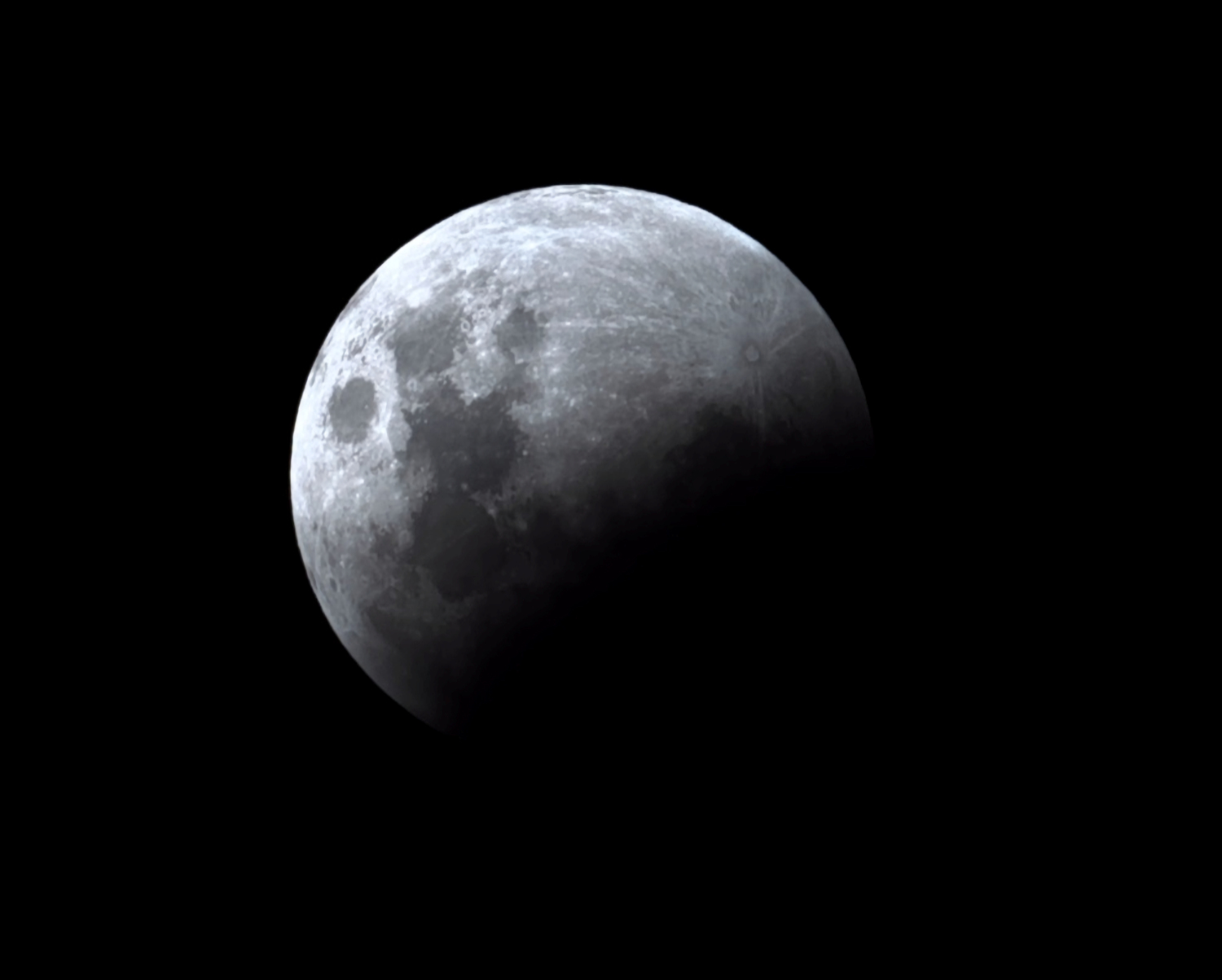
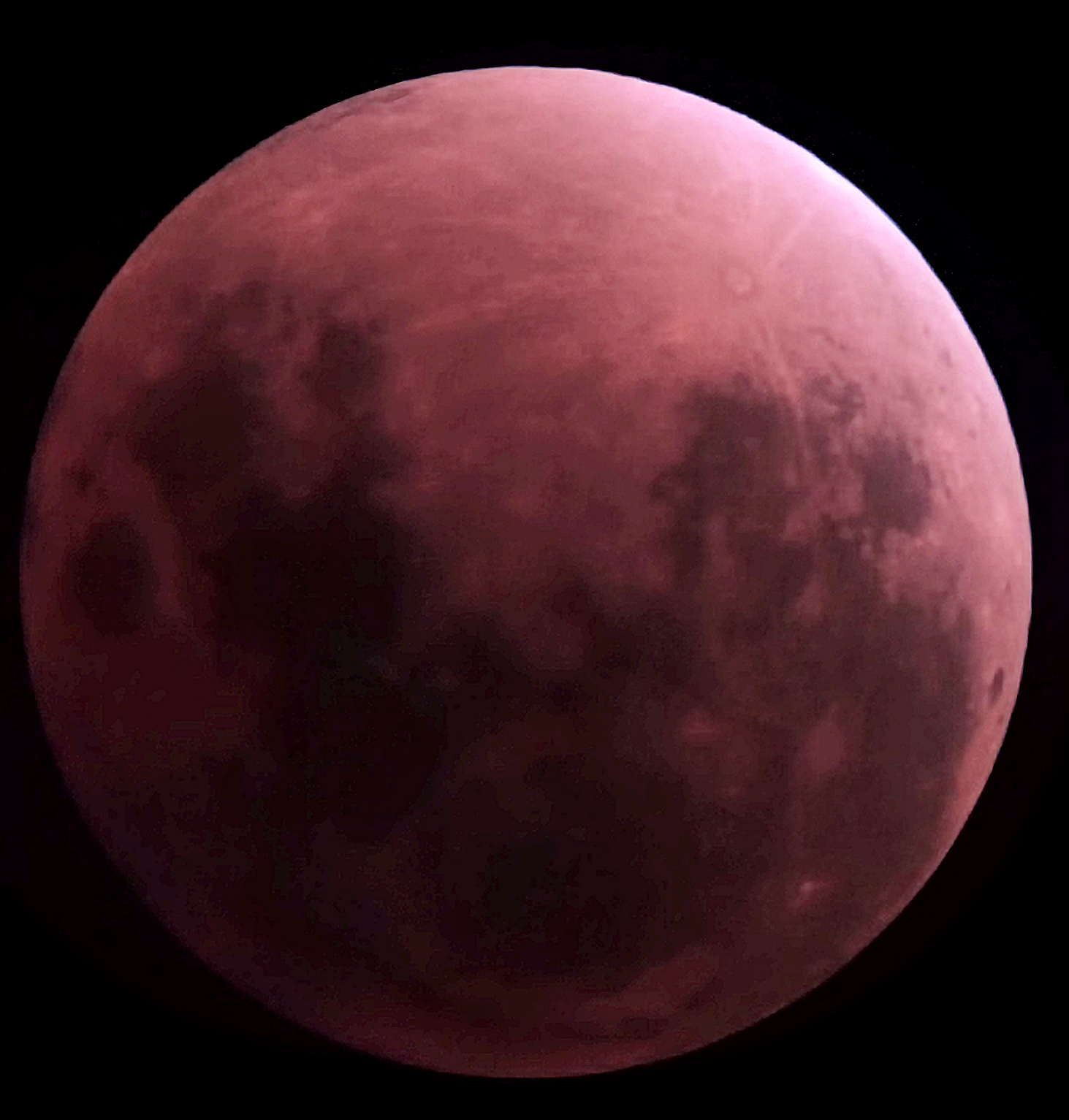
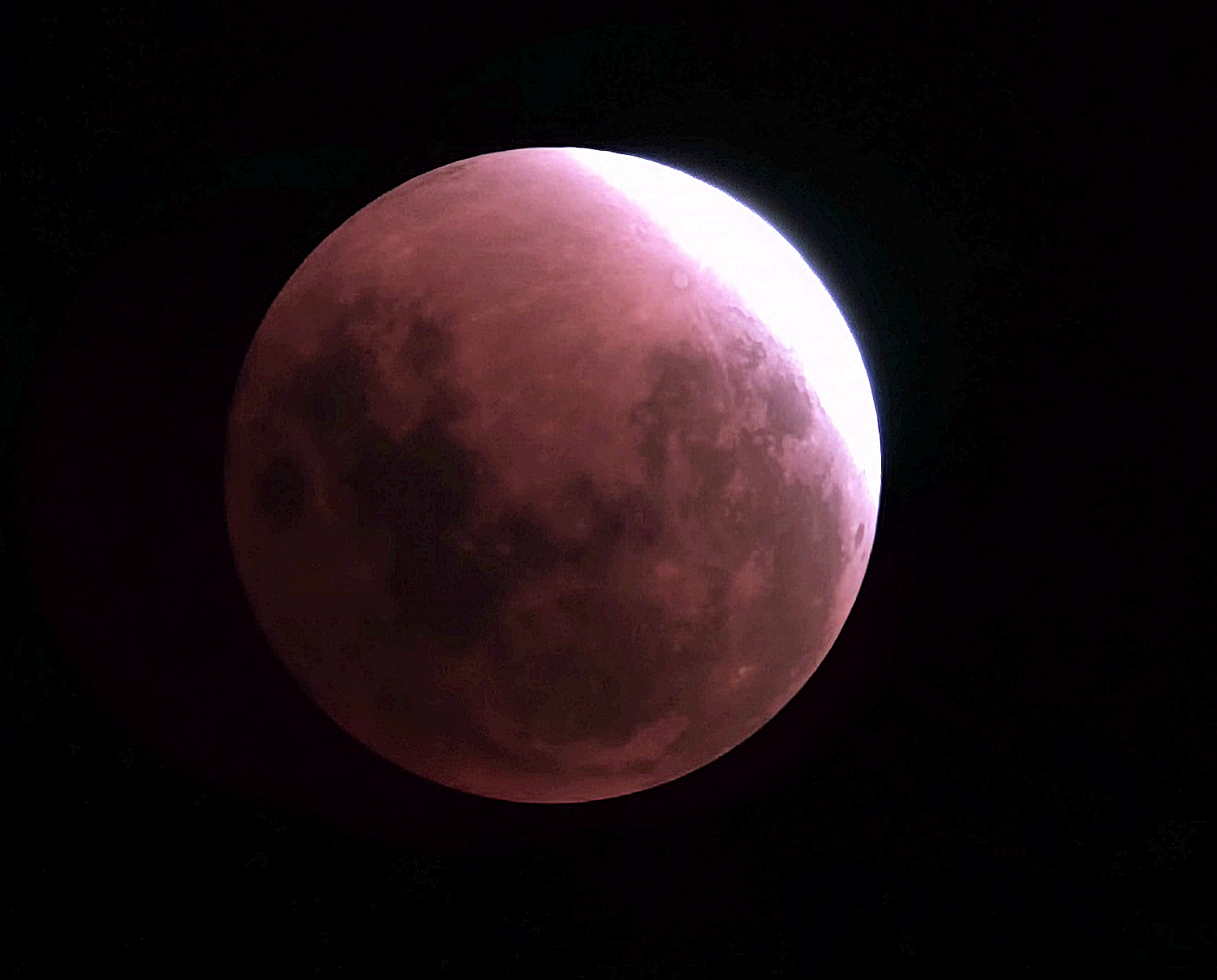
I brought along my compact Seestar S30 smartscope, which I controlled remotely from my smart phone. I hadn’t really had a chance to use the Seestar beyond a couple of quick solar snapshots, but the images of this week’s eclipse featured here were taken with the Seestar.
The Moon at 7:49pm AEST – one minute before the start of the eclipse’s partial phase and 75 minutes before totality.
I was the first guest with Kelly and Jonti as we looked across the river to the Moon, which had risen a little earlier. My segment included talking about the appearance of the Moon, its formation, and how its distance is precisely measured. I gave Kelly a lunar meteorite to handle as we gazed at the Moon. I was also asked what got me first interested in space. It was moving to an outer part of Brisbane with its relatively dark skies in the early 1960s and the build up toward the future Moon landings. I also spoke about my favourite lunar mission (Apollo 15), the remaining Moonwalkers (4 left out of the 12), the Artemis program, and the possibility of life elsewhere.
Queensland University astrophysicist Professor Tamara Davis AM had cycled in at “light speed” and tackled the subject of her amazing research into dark energy as well as discussing how gravitational waves are giving us an entirely new way of looking at the Universe. Tamara’s interest in astronomy had been sparked back in 1986 during Comet Halley’s last passage through the inner realm of the Solar System. There was even a little time to cover her athletic pursuits.
After a session of astronomical quiz questions posed to the gathered audience (including families with young children) that had grown around the broadcast site, it was back to the guests.
The Moon 55 minutes before totality at 8:09pm AEST.
There was a live cross to the outback Charleville Cosmos Centre and its manager Alex Macdonald, who hosted our Australasian Planetarium Society conference last year. Alex said that they had a group of about 30 people using four telescopes for a night sky tour as well as the eclipse viewing. Although some cloud moved in from 8:30pm AEST, they did get to observe the last part of totality from 9:45pm. Other topics covered were astrotourism, solar viewing, and the normally dark skies. Asked about his first early interest in astronomy, Alex remembered looking up in wonder at the night sky on a camping trip at the age of five or six and not really understanding what he was looking at.
QUT Associate Professor David Flannery was the third onsite guest of the night bringing his expertise in space science and astrobiology to the broadcast. David said he had always been interested in the natural world. He spoke about his work and that of graduate students at QUT revolving around NASA’s Perseverance Mars rover project and the search for possible evidence of past life on Mars. There was plenty of discussion between David and Jonti revolving around the differences between Earth and Mars. Mention was also made of the QUT team being involved with Australia’s first planned lunar rover being designed and built by a consortium of universities, research organisations and industry partners. QUT is spearheading the navigation and autonomous vision aspects of the rover project.
The Moon 9:58pm AEST – just four minutes before the end of totality.
Once Kelly’s program ended at 9pm AEST, the ABC support staff started disassembling the set up, while Kelly and some others stayed around for a while during the early part of totality, as did many of the public. I left about 10:40pm AEST, more than half an hour after the end of totality, by which time the area was pretty deserted.
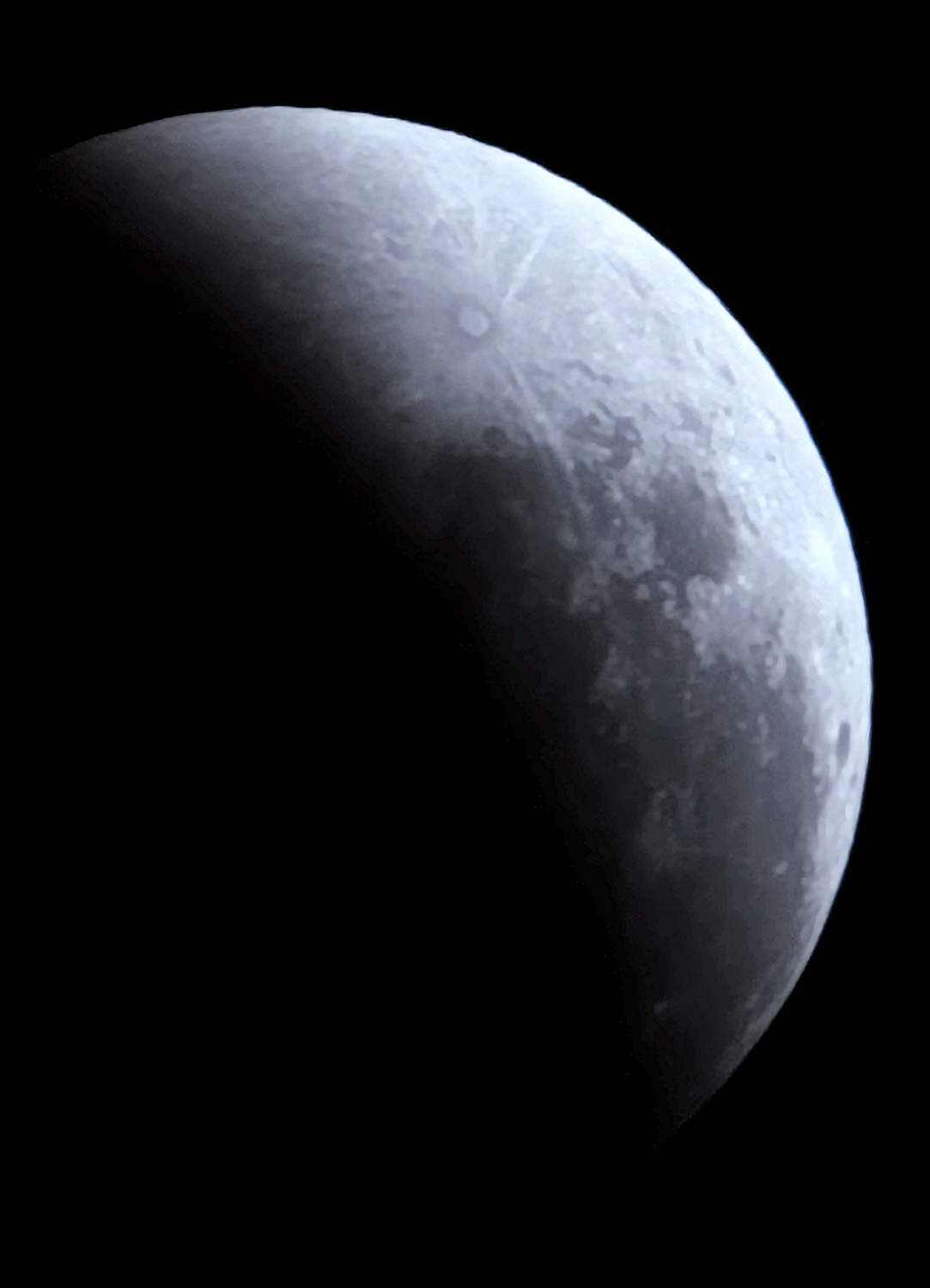
The Moon at 10:10pm AEST – eight minutes after totality ended.
After totality, the Moon began to lose its salmon colour and the bright impact crater Tycho in the Moon’s southern hemisphere started to dominate more.
The Moon at 10:33pm AEST – 31 minutes after the end of totality
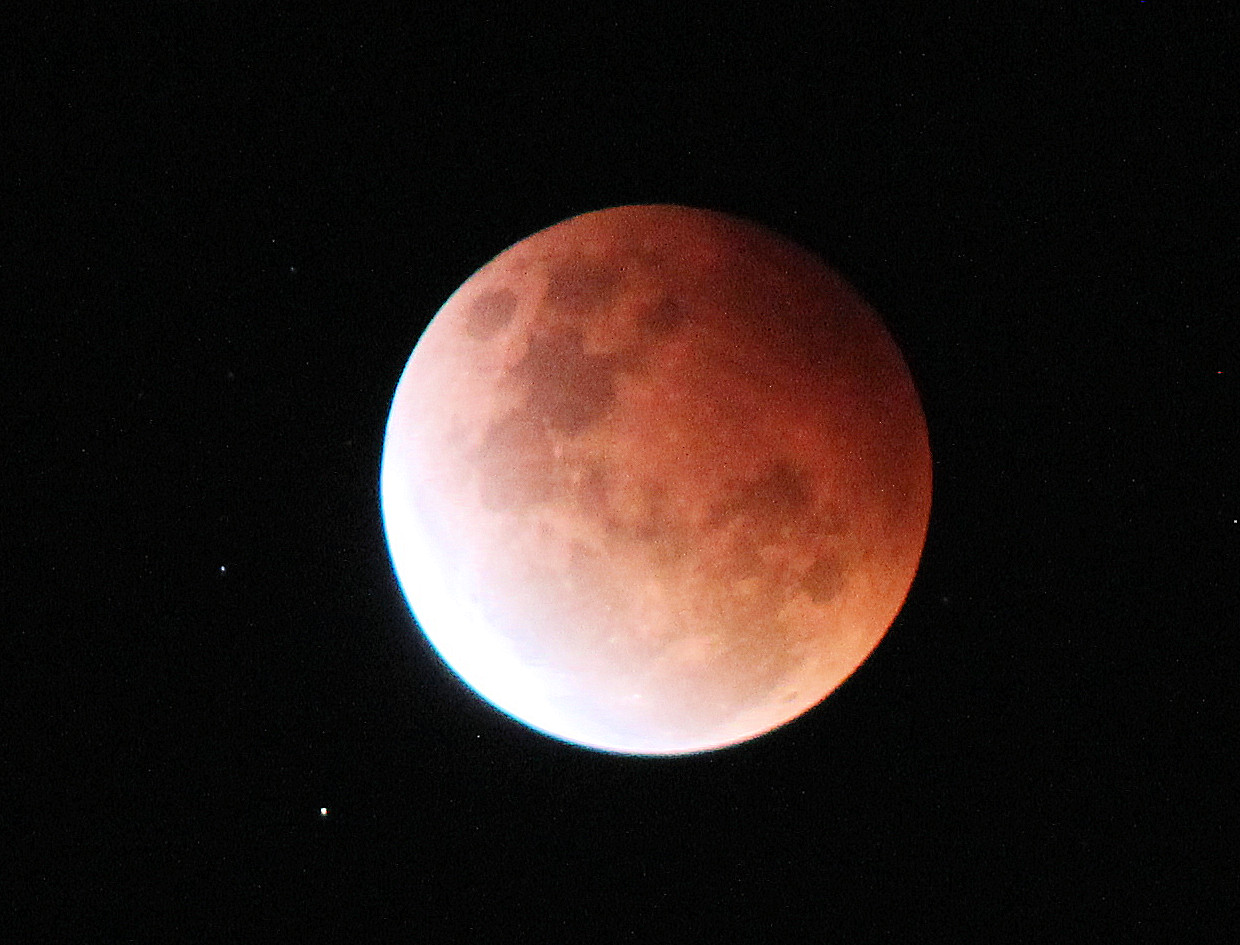
And below are two comparison images I’ve taken in the past. The first image was from a total lunar eclipse on 26 May 2021, which had only 14 minutes of totality compared to 58 minutes for this week’s eclipse.
The total lunar eclipse of 26 May 2021. Photographed by Mark Rigby using a Canon EOS 600D DSLR.
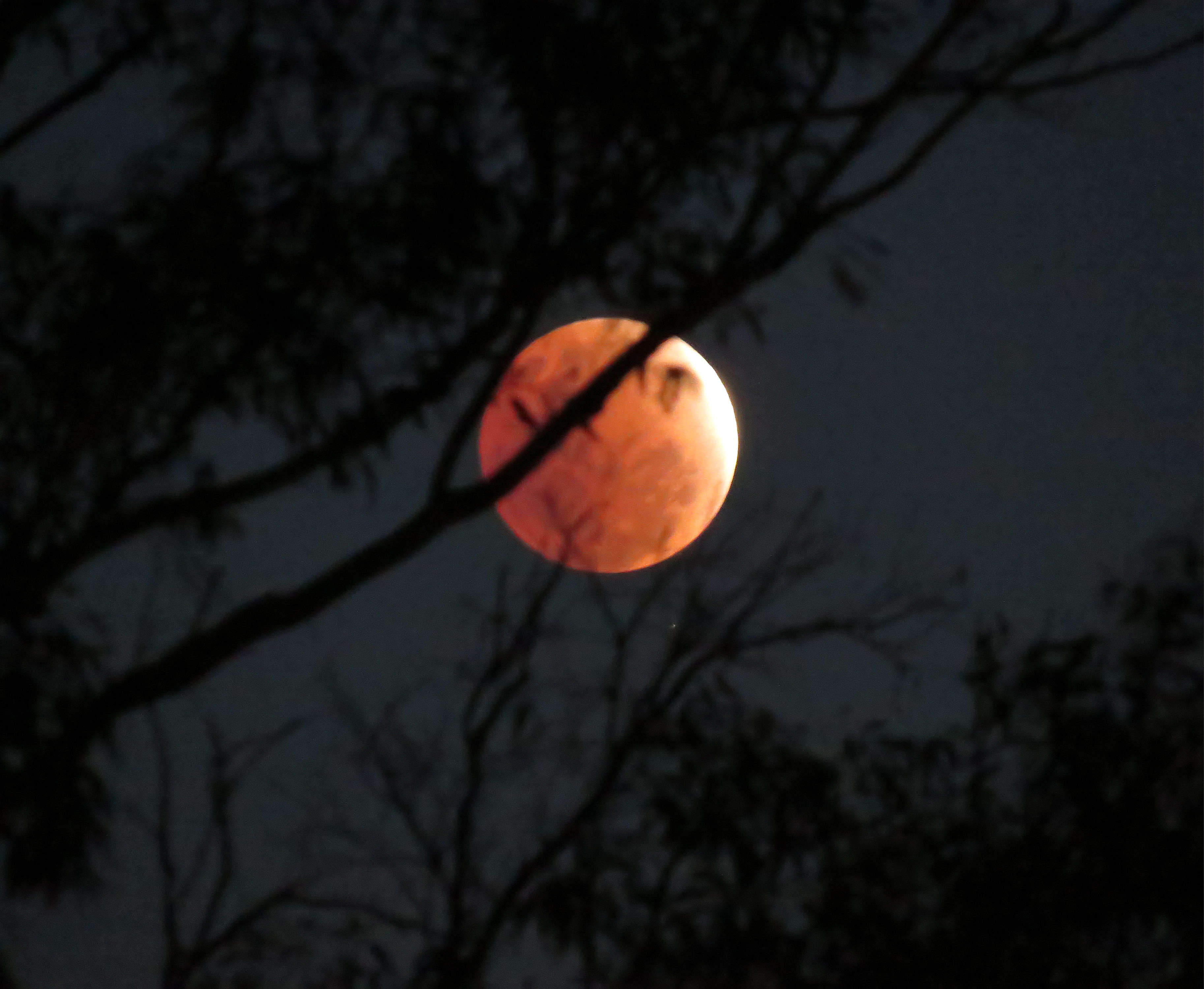
The second image is of a partial lunar eclipse on 19 November 2021. The Moon did not completely enter the darkest part of the Moon’s shadow (the umbra). In fact, just over 97% of the Moon’s diameter entered the umbra. At mid-eclipse the Moon was only nine degrees above the horizon!
An image of a partial lunar eclipse that was visible from Brisbane on 19 November 2021. This image was taken by Mark Rigby at mid-eclipse with a Canon PowerShot SX50 HS DSLR.
A reminder that the next total lunar eclipse for our region is on the morning of New Year’s Day 2029. New Zealand will have totality commencing during the morning twilight with the Moon setting during totality. Australia will see all of totality. A nice way to start 2029, weather permitting.
And here’s a thought: Sometime in the 2030s, astronauts on the Moon will probably have the opportunity to look back at Earth during a total lunar eclipse. However, for them it would be a total solar eclipse quite different to those seen from Earth. The spectacle would be a thin reddish ring of sunlight refracted through Earth’s atmosphere – encircling our planet’s black nightside disc, which would appear about four times the diameter of the Moon seen in our sky. They would be simultaneously viewing all the sunrises and sunsets around our Earth at that time.
Mark Rigby OAM Retired Planetarian, Adjunct Research Fellow (Astrophysics), UniSQ Still in love with the heavens!
Held at the Queen Victoria Museum and Art Gallery on 3 & 4 February 2026
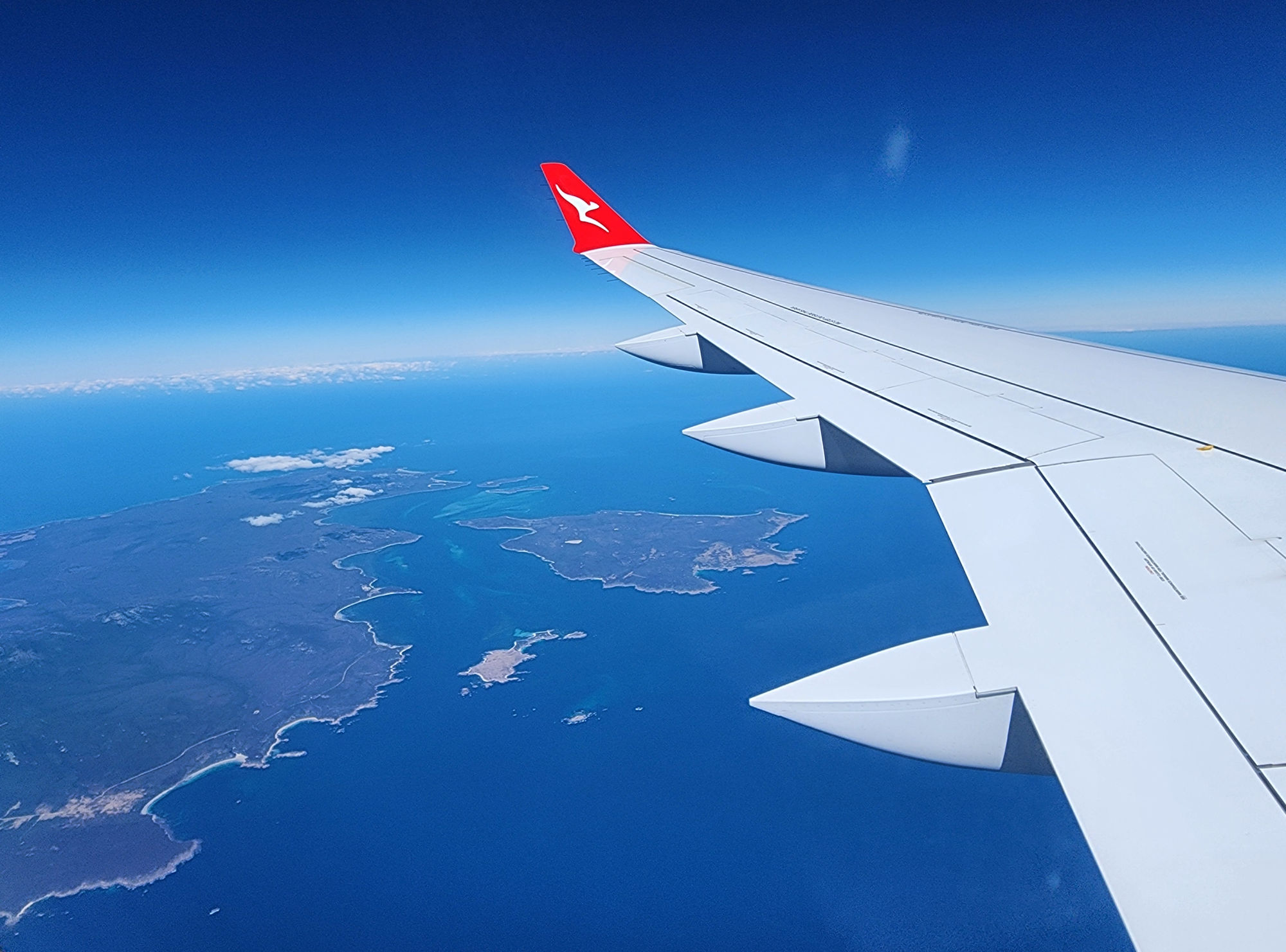
I’ve just gone through my images from the trip to Launceston for a most enjoyable APS 2026 conference and I’ve attached a handful here starting with a beautiful view over Bass Strait with Cape Barren Island & Clarke Island below.
On the way to Launceston flying over Bass Strait with Cape Barren Island & Clarke Island in view.
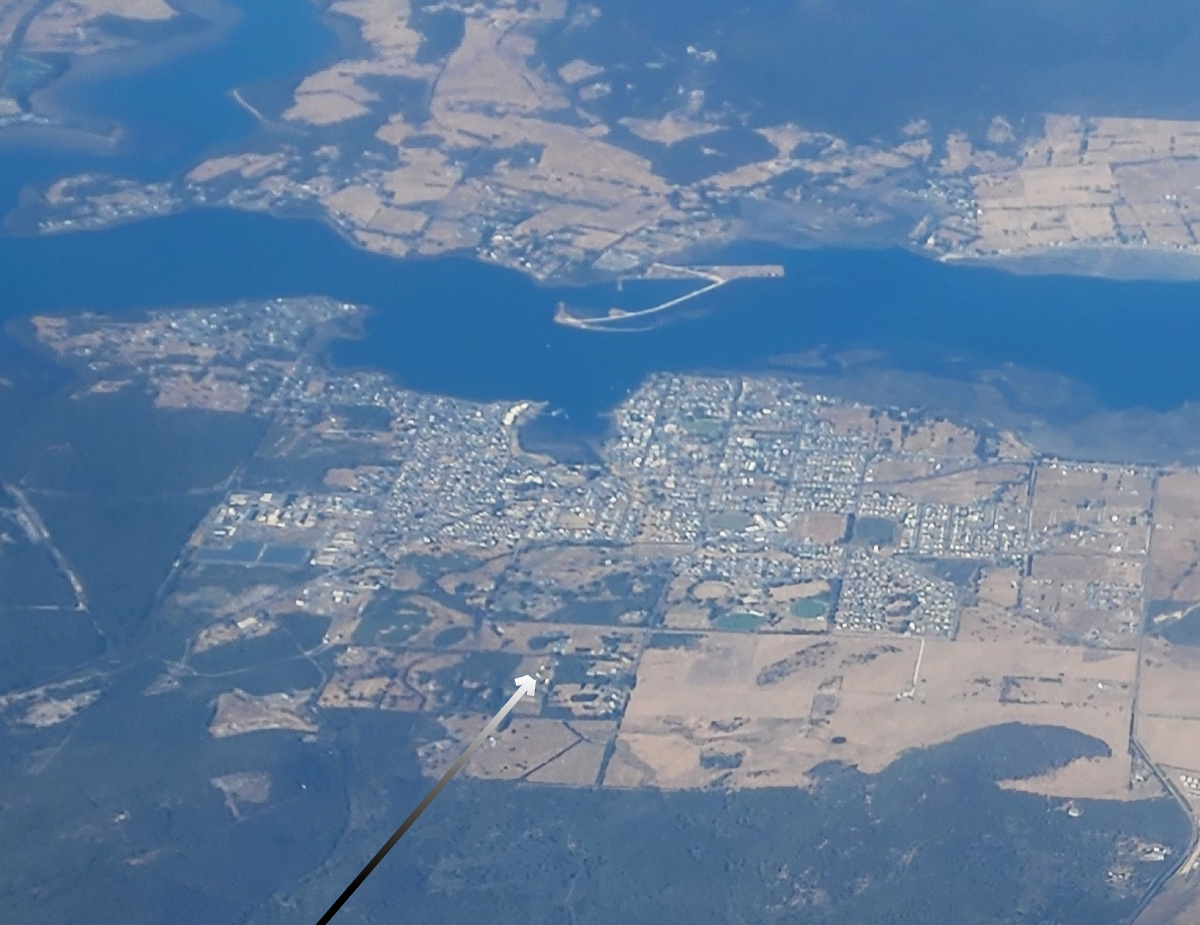
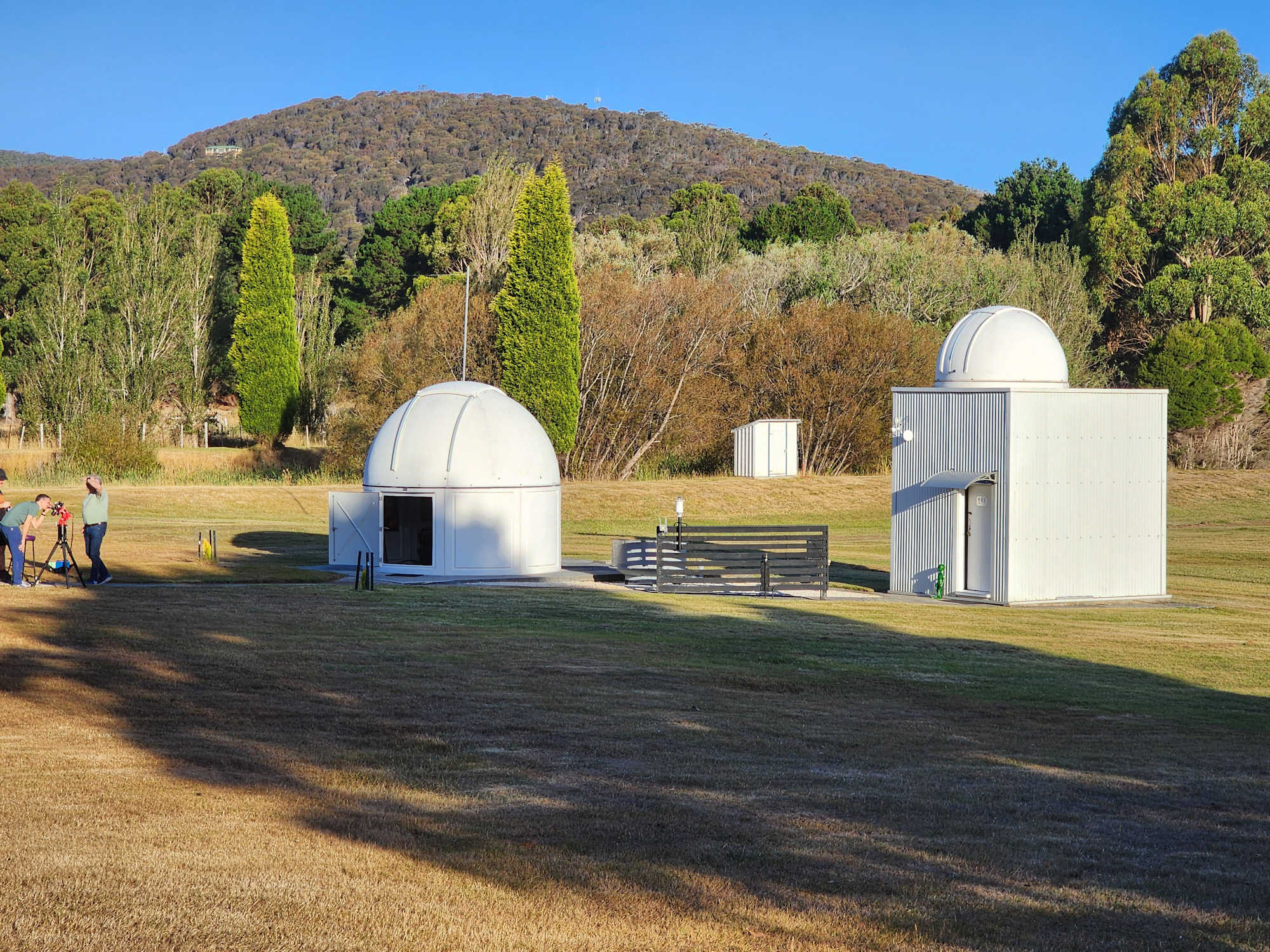
Looking down on York Creek Observatory near George Town north of Launceston where some of us went on the Monday night (2 February) to see Mervyn Millward’s observatories and partake of generously supplied food and drink.
York Creek Observatory shown at the head of the arrow. The image was taken on my way home to Brisbane.
The York Creek Observatory domes.
Mervyn’s site was a beautiful location for some APS members to relax, as did our friends Kirk Johnson and regular APS conference attendee Scott Niskach from Cosm/E&S (Salt Lake City, USA). Some members had come north from Launceston on a bus organised by Chris Arkless at the Launceston Planetarium.
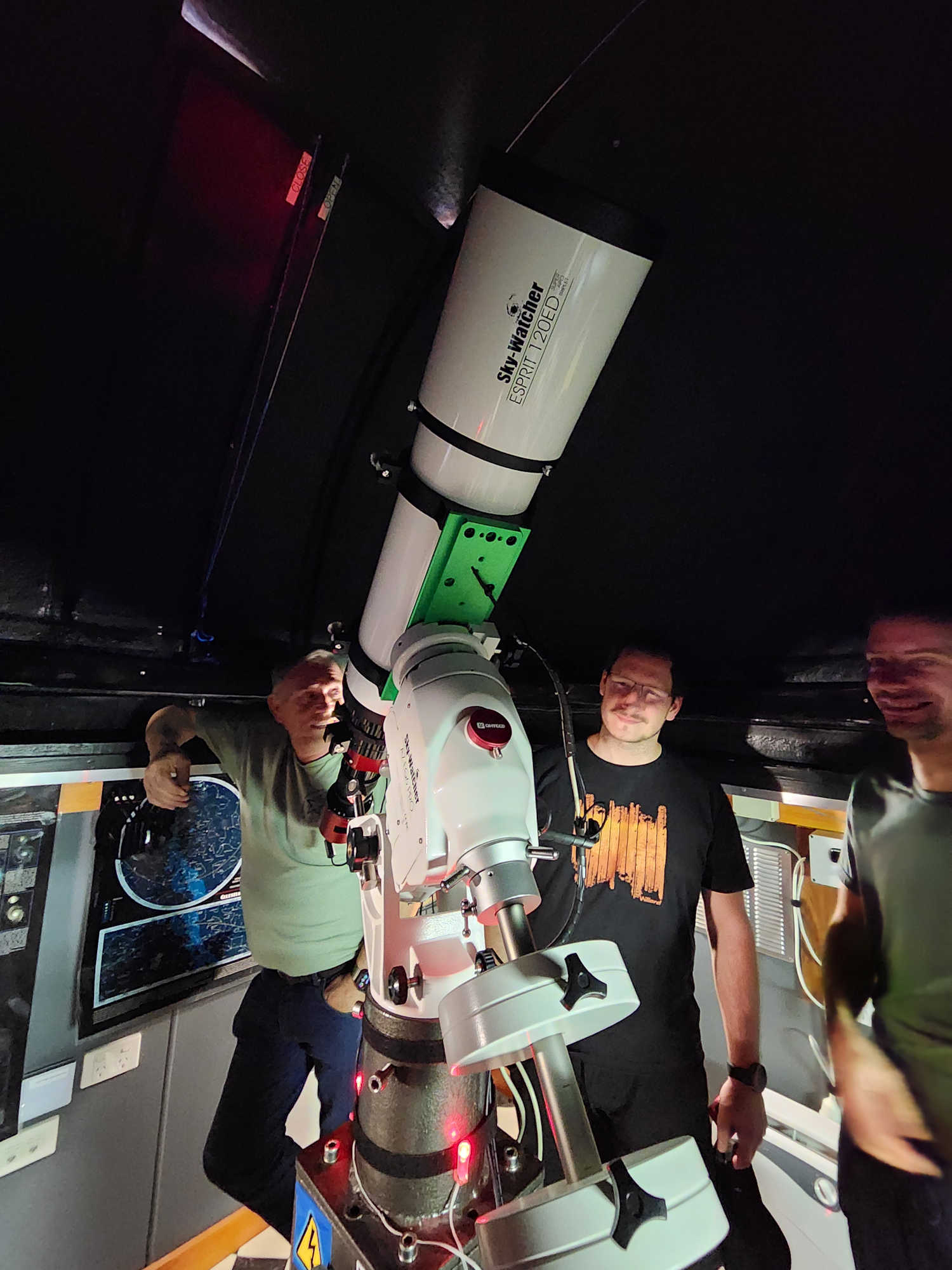
Inside the two-level observatory at York Creek with Merv on left and two of our visitors from the Brno Observatory and Planetarium.
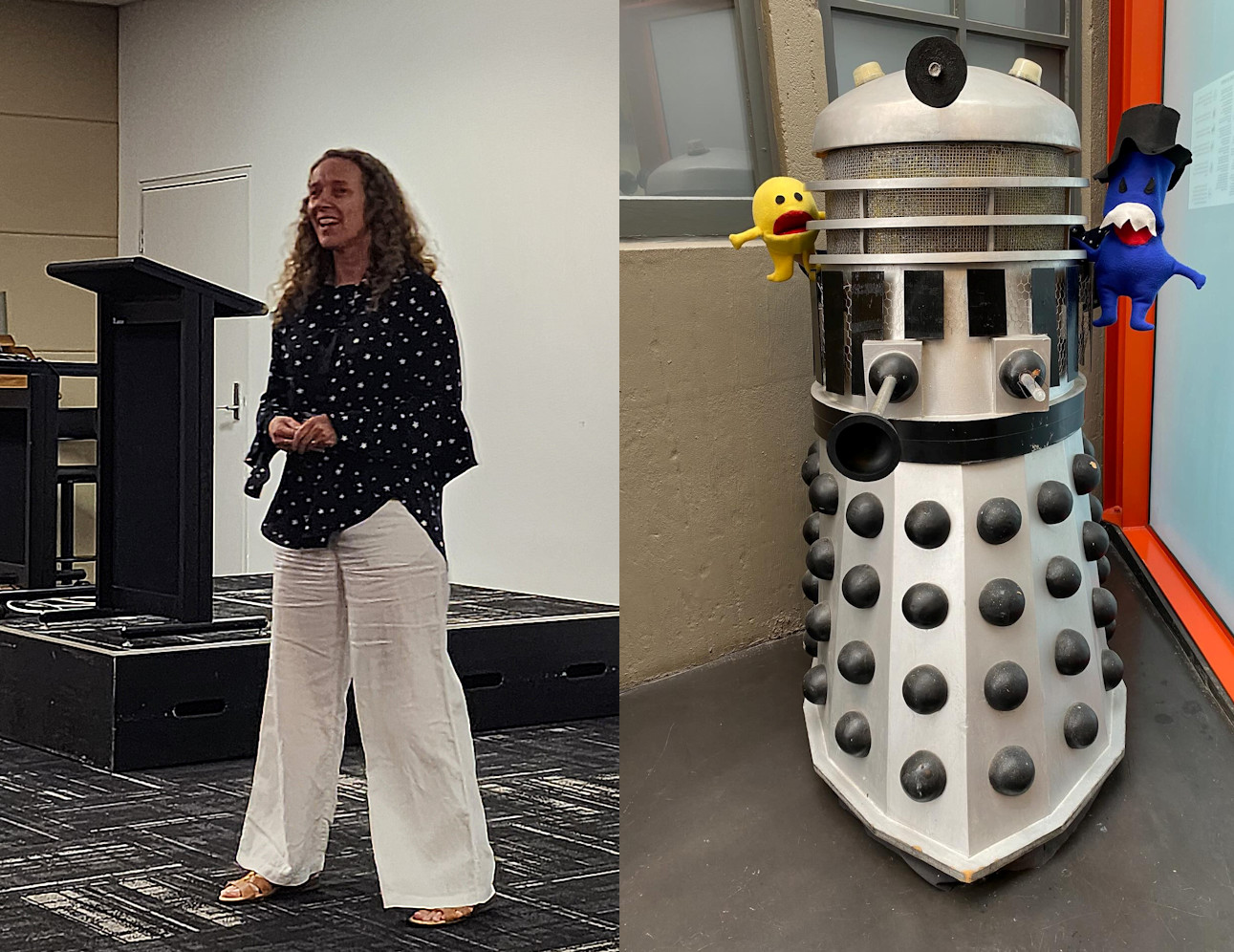
There were numerous non-dome presentations over the two days of the conference with Eileen O’Hely (below) starting off those with “Fun Astro Teaching”.
Eileen O’Hely during her presentation. Her puppets met up with the 51st way to die in space!
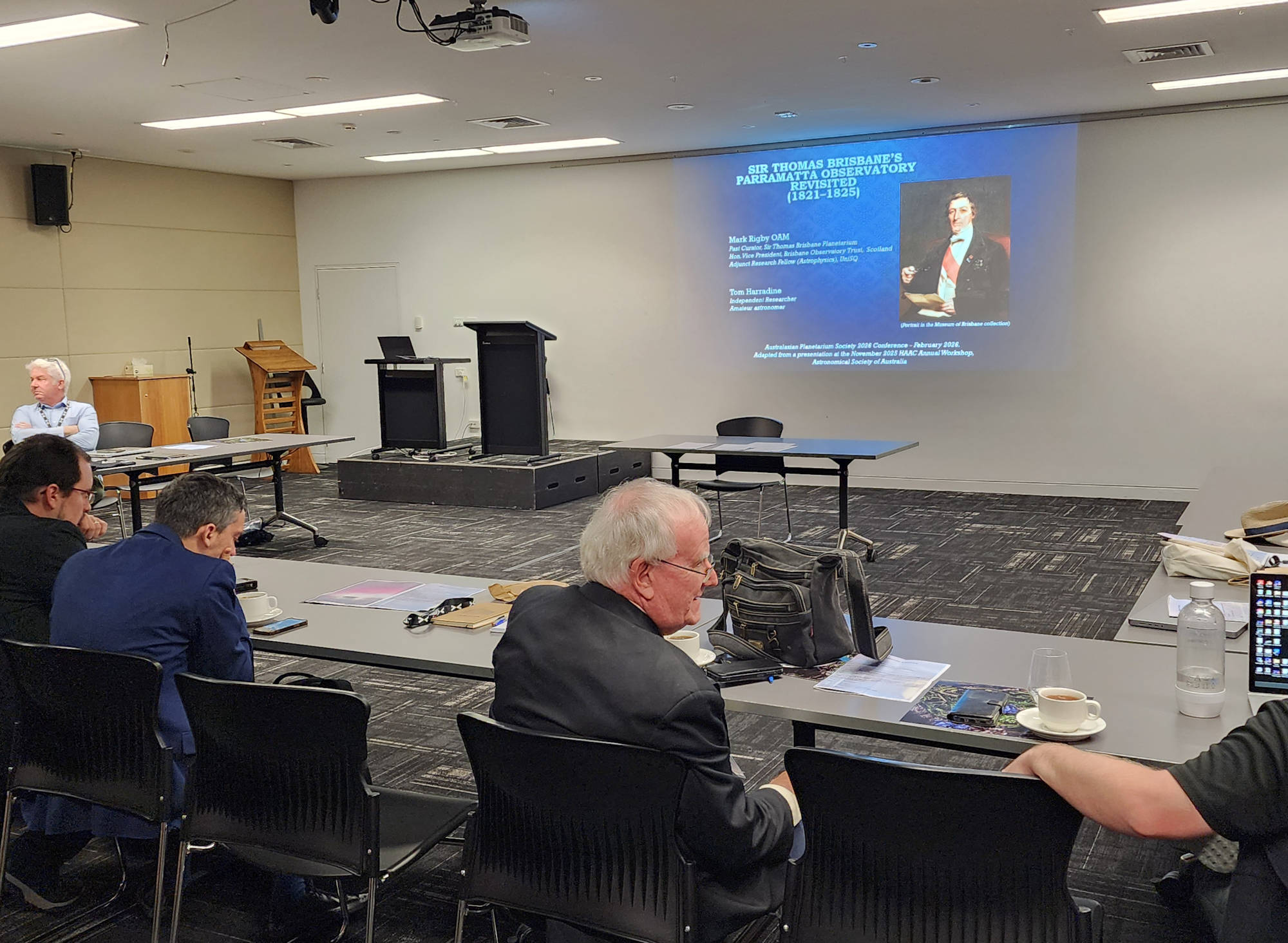
Following lunch on Day 2 of APS 2026, attendees started to gather for a presentation about Sir Thomas Brisbane and Parramatta Observatory.
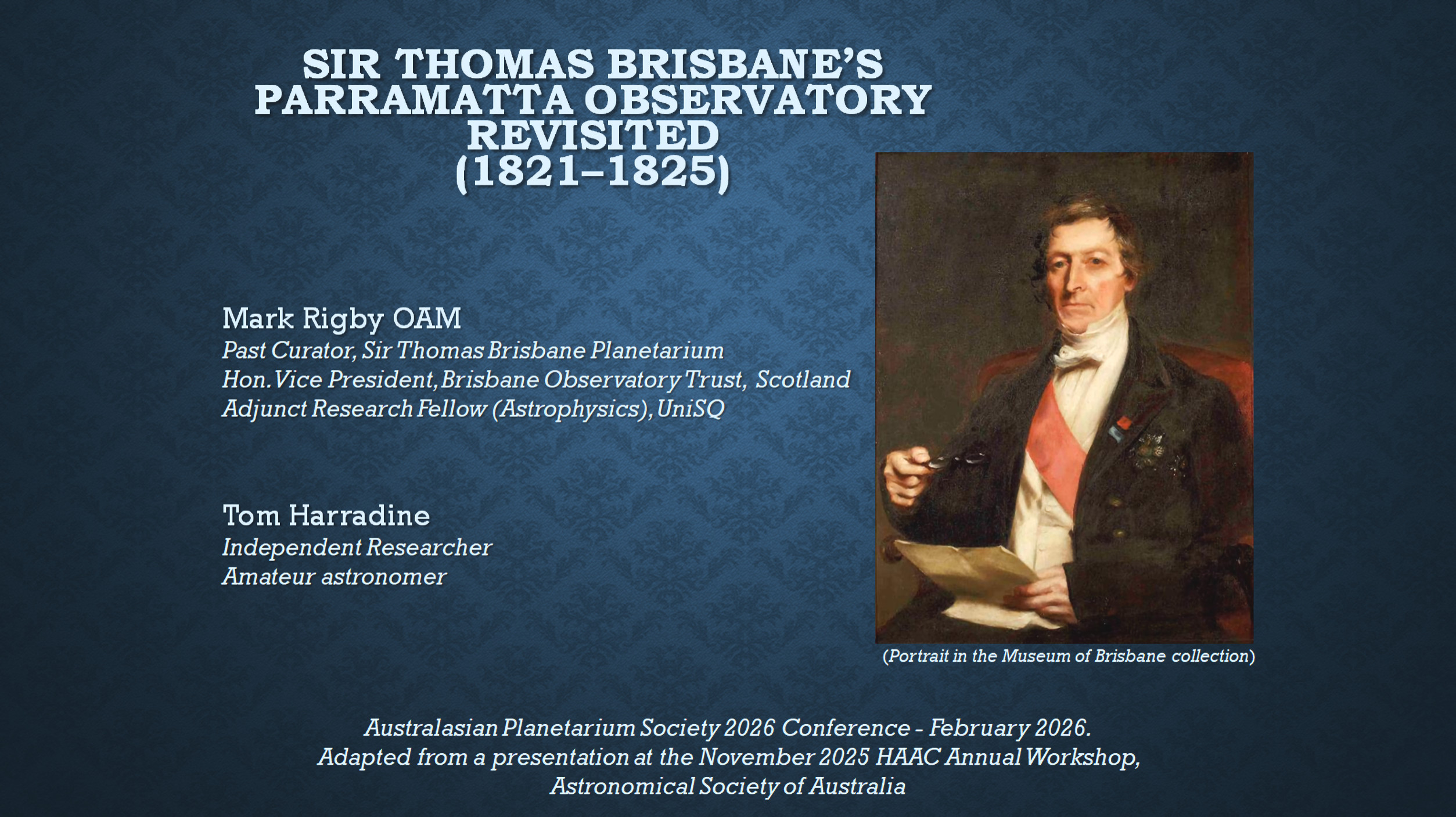
The opening slide below was in a presentation about Sir Thomas Brisbane the man and his career by Mark Rigby followed by a tantalising hint of the extensive research done by Tom Harradine on Parramatta Observatory’s history and the observational work using primary sources and site visits in Australia and the UK, as well as examination of instruments. It included a recreation and virtual tour of the observatory and description of the instruments pre-narrated by Tom.
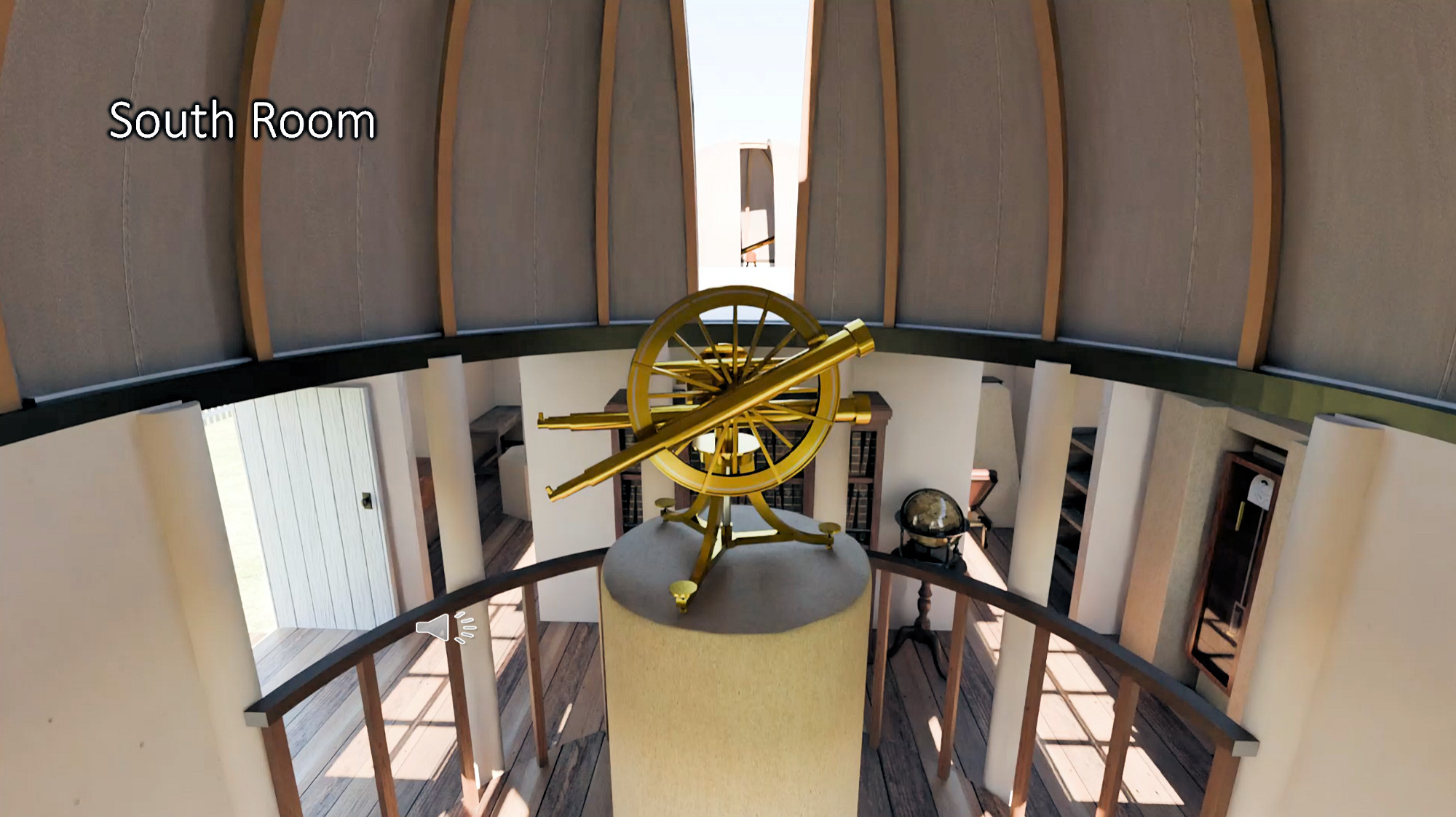
The south room of Parramatta Observatory measured about 4.5 by 8 metres and housed the observatory’s two meridian instruments. Part of the virtual tour created by Thomas Harradine.
Amanda Kruger addressed an important subject: “Leading with Inclusion: The Hidden Power of Affirming Staff Diversity”.
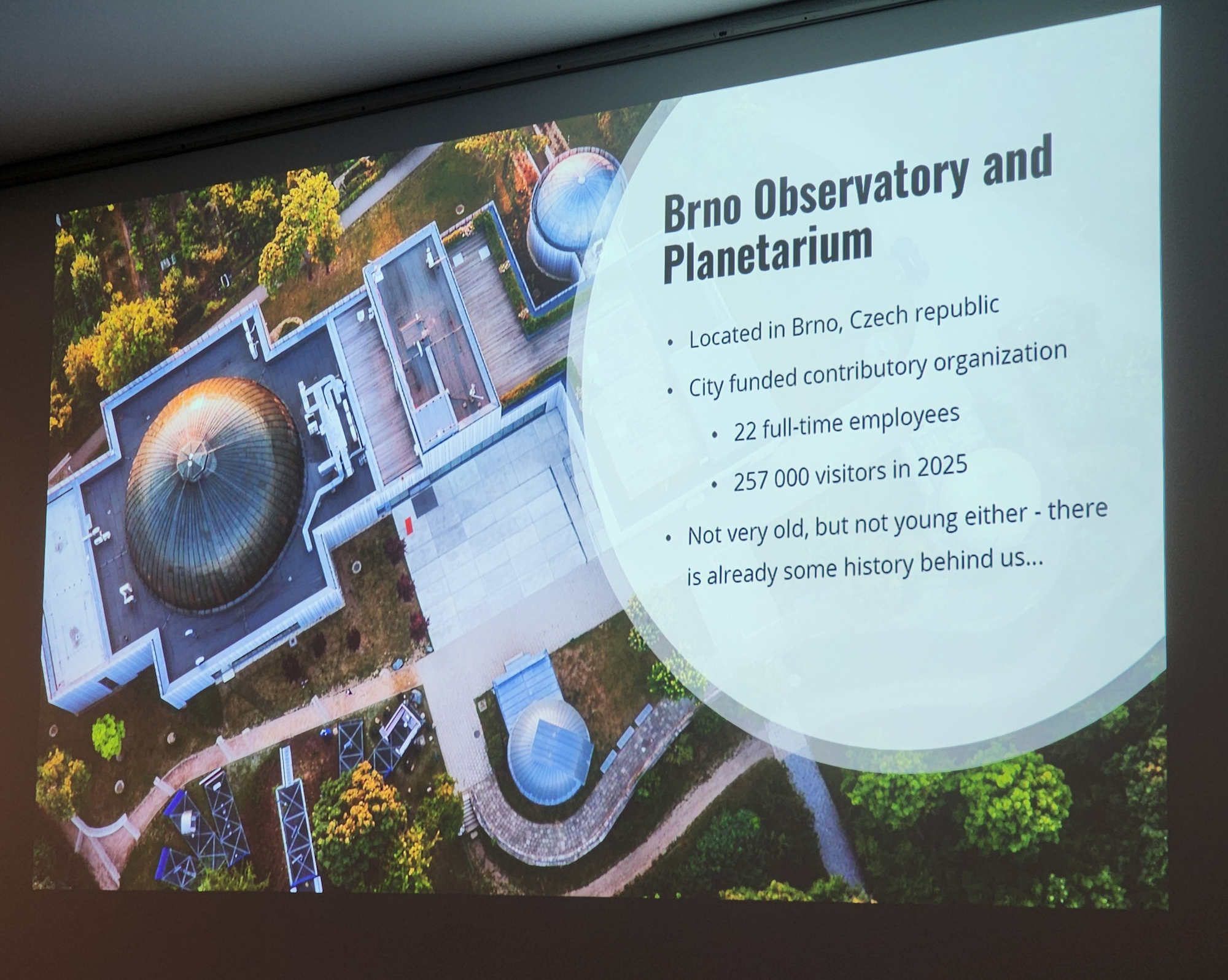
Our new friends all the way from Brno Observatory and Planetarium in the Czech Republic provided us with details of their planetarium and their production “Edge of the Sky”, which had been shown in full length a few days earlier at the Dome Under Film Festival in Melbourne Planetarium.
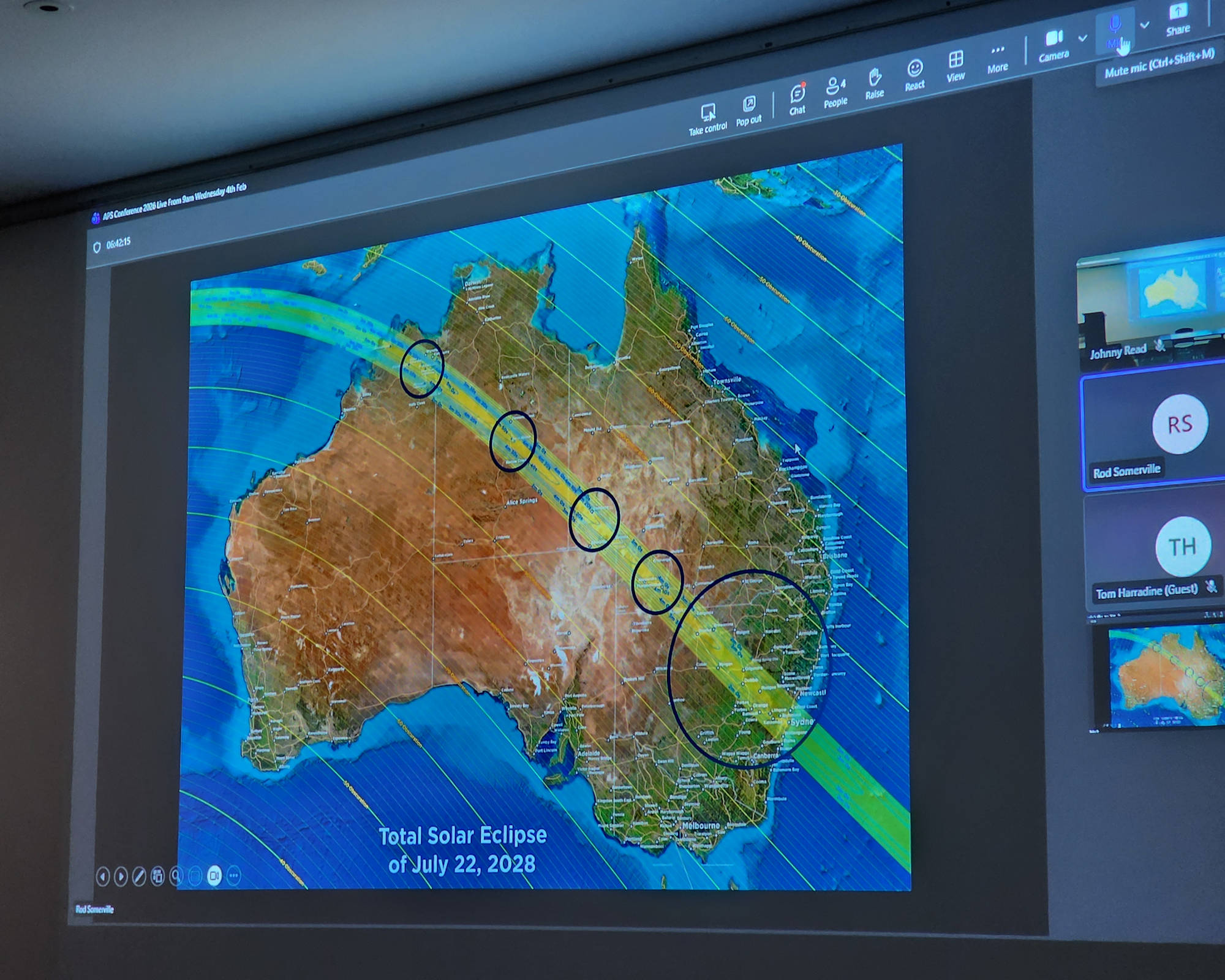
Rod Sommerville gave us a detailed look at weather prospects and observing practicalities along the path of totality spanning Australia and New Zealand for the 22 July 2028 total solar eclipse.
The path of totality for the 22 July 2028 total solar eclipse.
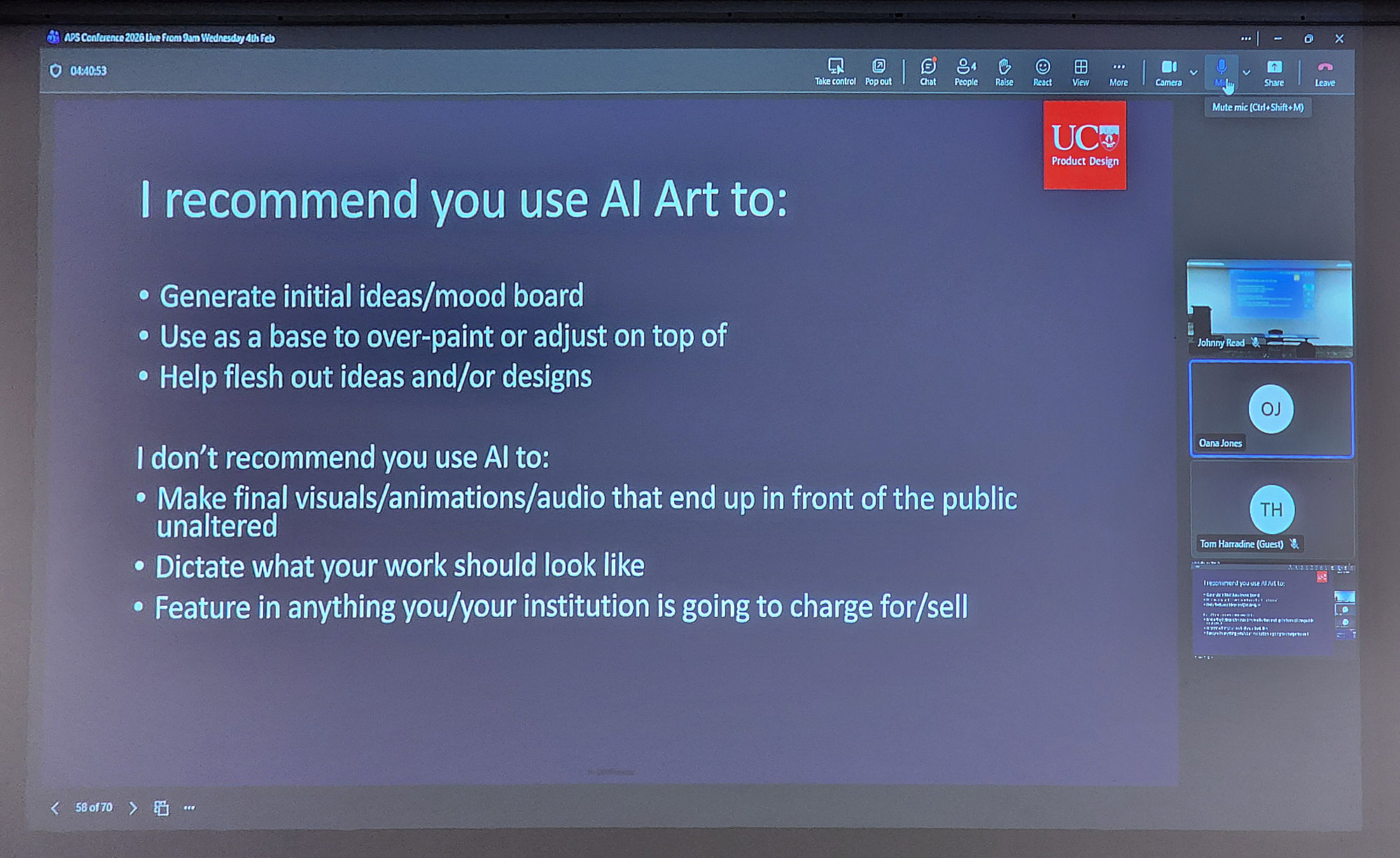
Oana Jones demonstrated some of the pitfalls of using AI for producing art. However, it can be a major time saver. Like lots of things, there are pros and cons.
Oana Jones on pro and cons of using AI-generated art.
Perhaps some of the others who attended APS 2026 may add follow-up posts and images related to their presentations, e.g. there was Tanya Hill who presented “Solar System Adventure: the eight planets” and Joe Bean of the Wilderness Society who explored “Dark Skies Sanctury Tasmania” and provided much interesting data.
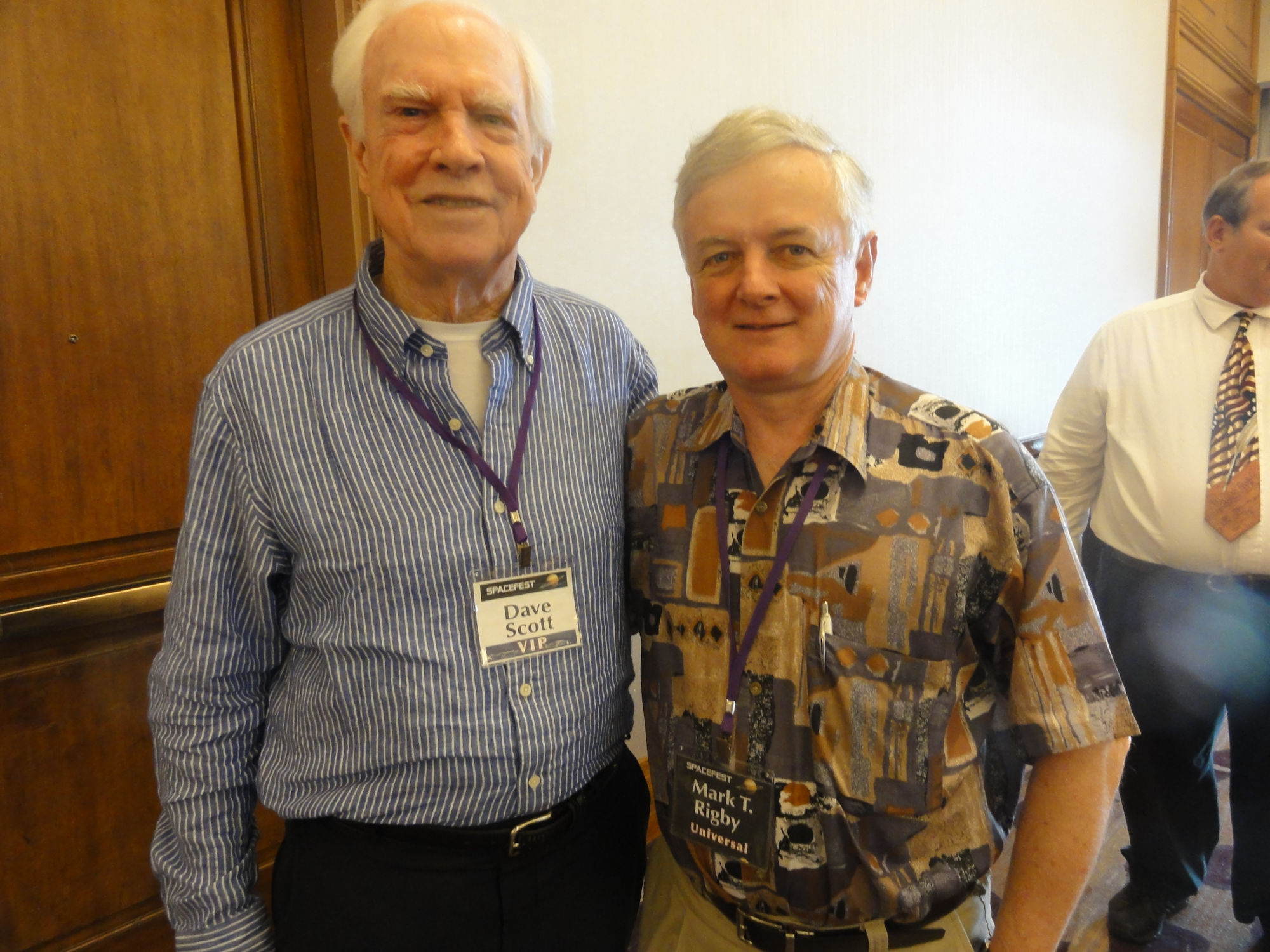
The conference also gave me an opportunity to use an Xbox controller for some unprepared free flying with Digistar in view of the upcoming Artemis II mission. It’s always nice to fly down to and take a close-up look at my favourite landing site (Apollo 15) from below the level of the mountain tops. The mission’s 93-year-old Commander David Scott (below) is the only astronaut still alive to have flown a Lunar Module down to the surface.
Apollo 15 commander Dave Scott and Mark Rigby in 2016.
Maybe one day, I’ll do a longer, in-depth exploration of the Moon in a dome. It is, after all, the only other world we can look at with the naked eye, binoculars, or small telescopes and see such a wealth of detail.
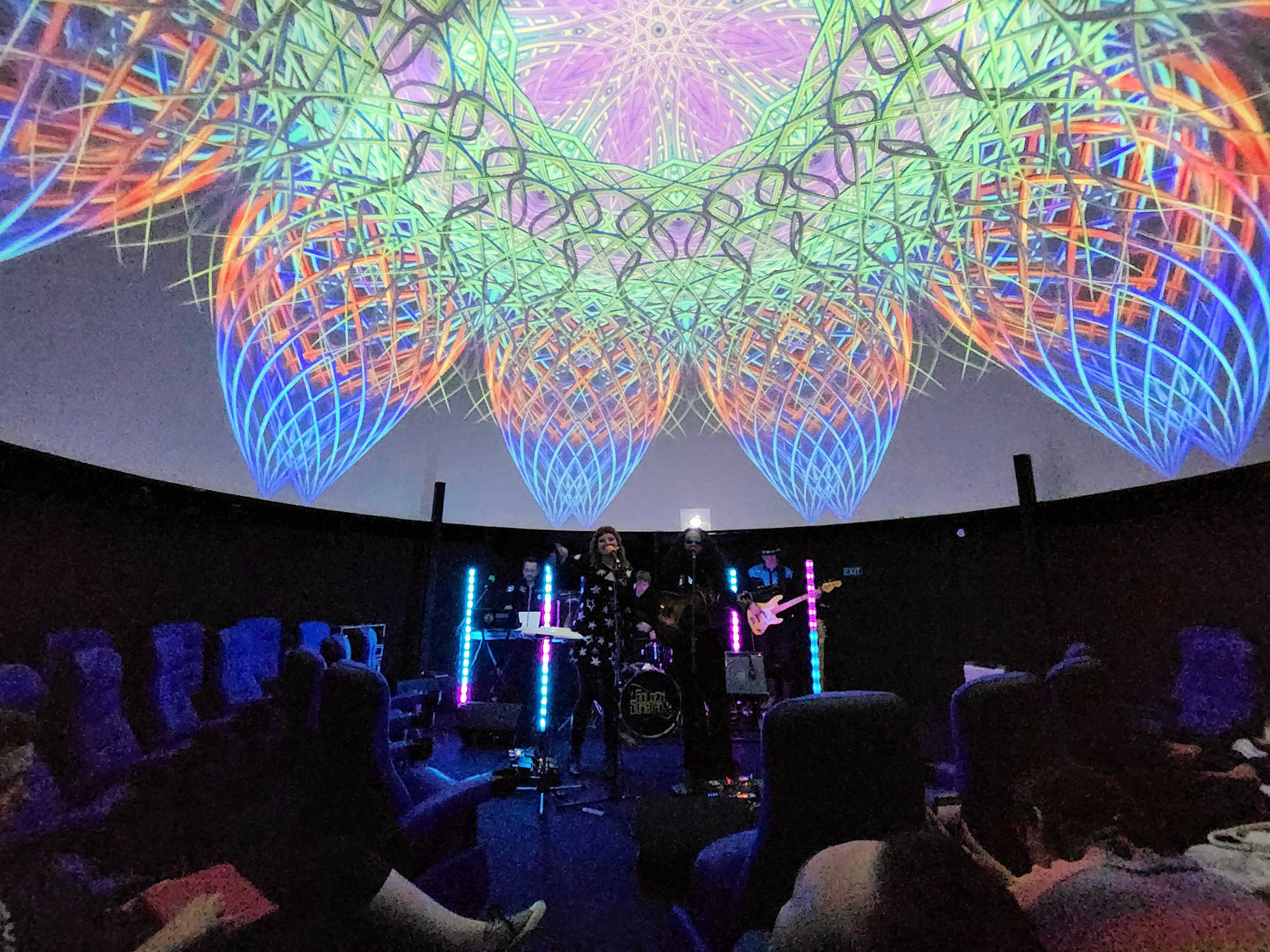
The conference wrapped up in the late afternoon on Day 2 with “Golden Sunbirds – Space rock in the dome”, an immersive live music performance which is intended to be performed around Australia.
Golden Sunbirds
Many thanks to Chris Arkless and Johnny Reid at the Launceston Planetarium, Queen Victoria Museum and Art Gallery, for hosting us.
The three-day film festival will be a celebration of the fulldome film format and it will promote the medium to a wider audience. The festival is independent and open to contributions from all around the world.
SUBMISSIONS ARE OPEN – Submissions for the Dome Under Festival are now open. Enter your films via the website. Entries will close on 22 November. Early entry is encouraged and appreciated!
International Dark Sky Week is a worldwide celebration of the dark and natural night.
For many, the dark night is often misunderstood, unfamiliar, and frightening. But the natural night is filled with wonder and awe, and is critical to the health and wellbeing of our planet.
IDSW – Walk on the Wild Side Tues 2nd, Fri 5th with Andrew Grant
Join in with Andrew for a Walk on the Wild Side of Lake Wendouree and Woowookarung Regional Park. Andrew will introduce you to our nocturnal species as they become active at dusk, then, come back to the Observatory for viewing through our telescopes.
We are thrilled to have Sean Dooley come to speak for our IDSW events, National Public Affairs Manager, BirdLife Australia.
Sean will speak about importance of a dark night for wildlife including migratory birds. Sean Dooley has written for TV comedies like Full Frontal, Hamish and Andy and Spicks and Specks, is author of books such as The Big Twitch. He was also the national birdwatching champion, holding the record for seeing the most birds seen in one year. Sean Dooley is the Birdman. Plus viewing at the telescopes.
The annual Dome Under Film Festival returns to the Melbourne Planetarium with a weekend of back-to-back fulldome films on Saturday 3 February and Sunday 4 February.
The only festival in Australia dedicated to fulldome films, marvel at the symposium of global entries that utilise experimental and awe-inspiring audio-visual technologies alongside considered storytelling, presented in the Planetariums’ 16-metre domed ceiling in surround sound for an immersive experience like no other.
With 26 films across seven sessions all weekend, themes include Mind Blowing Art, Kids’ Films, World Stories and more for a line-up that promises to delight all audiences.
The Melbourne Planetarium is excited to announce the return of the Dome Under Film Festival. The festival will take place at the Melbourne Planetarium, February 3-4, 2024.
The two-day film festival will be a celebration of the fulldome film format and it will promote the medium to a wider audience. The festival is independent and open to contributions from all around the world.
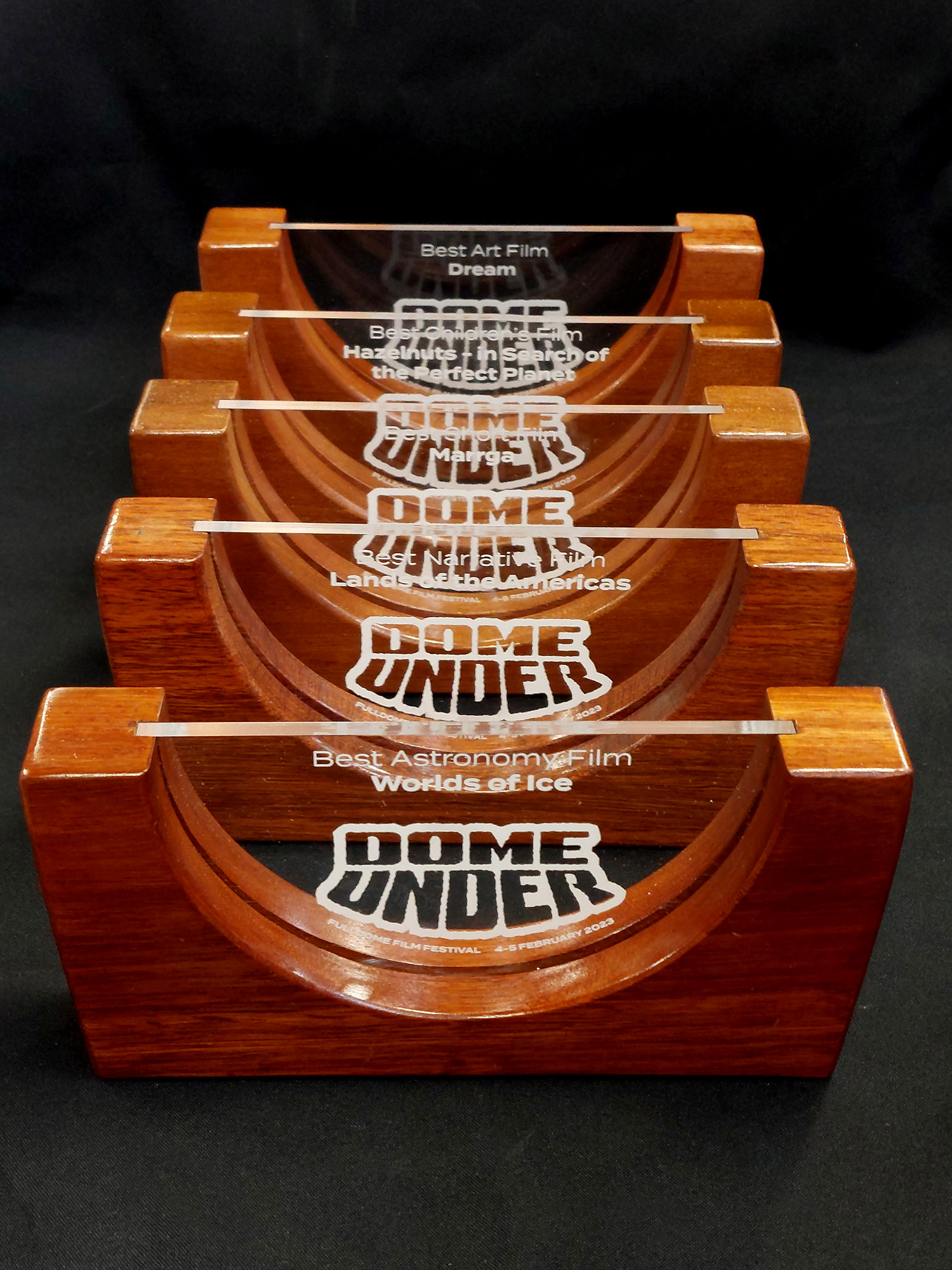
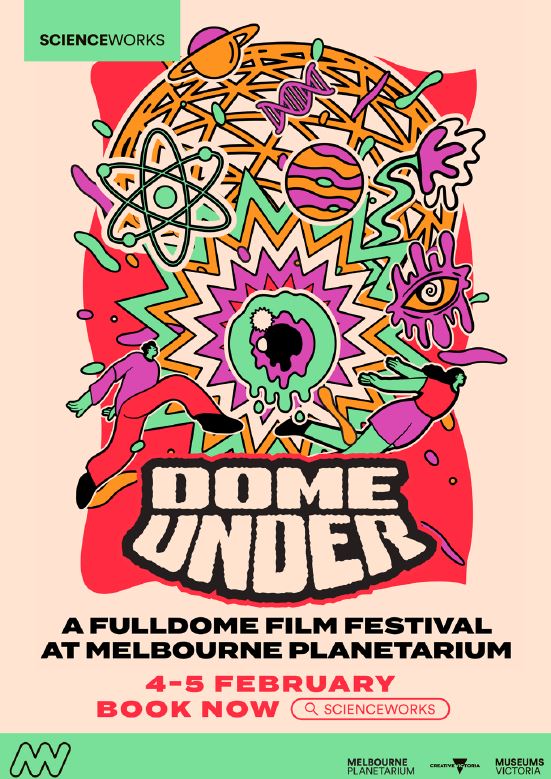
The Melbourne Planetarium is excited to announce the return of the Dome Under Festival. The festival will take place at the Melbourne Planetarium, February 4-5, 2023.
The two-day film festival will be a celebration of the fulldome film format and it will promote the medium to a wider audience. The festival is independent and open to contributions from all around the world.
SUBMISSIONS ARE OPEN – Submissions for the Dome Under Festival are now open. Enter your films via the website. Entries will close on 25 November. Early entry is encouraged and appreciated!





 Australasian Planetarium Society