New Horizons Live! Destination Pluto!

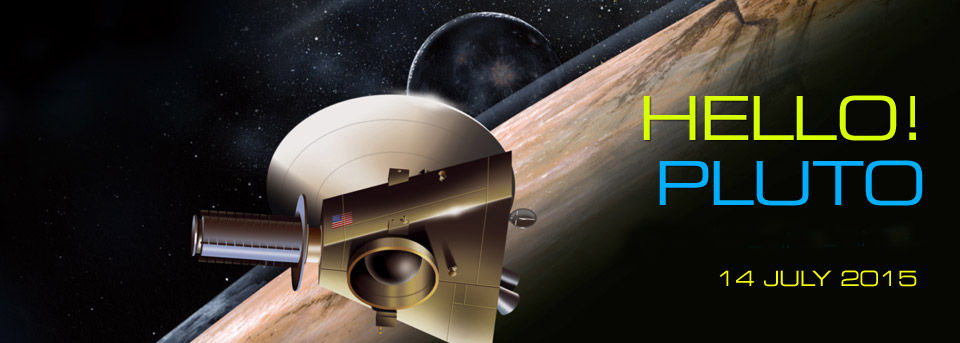
Tonight, the Sir Thomas Brisbane Planetarium will be part of a global internet program for the close encounter with Pluto and its moons by NASA’s New Horizons spacecraft.
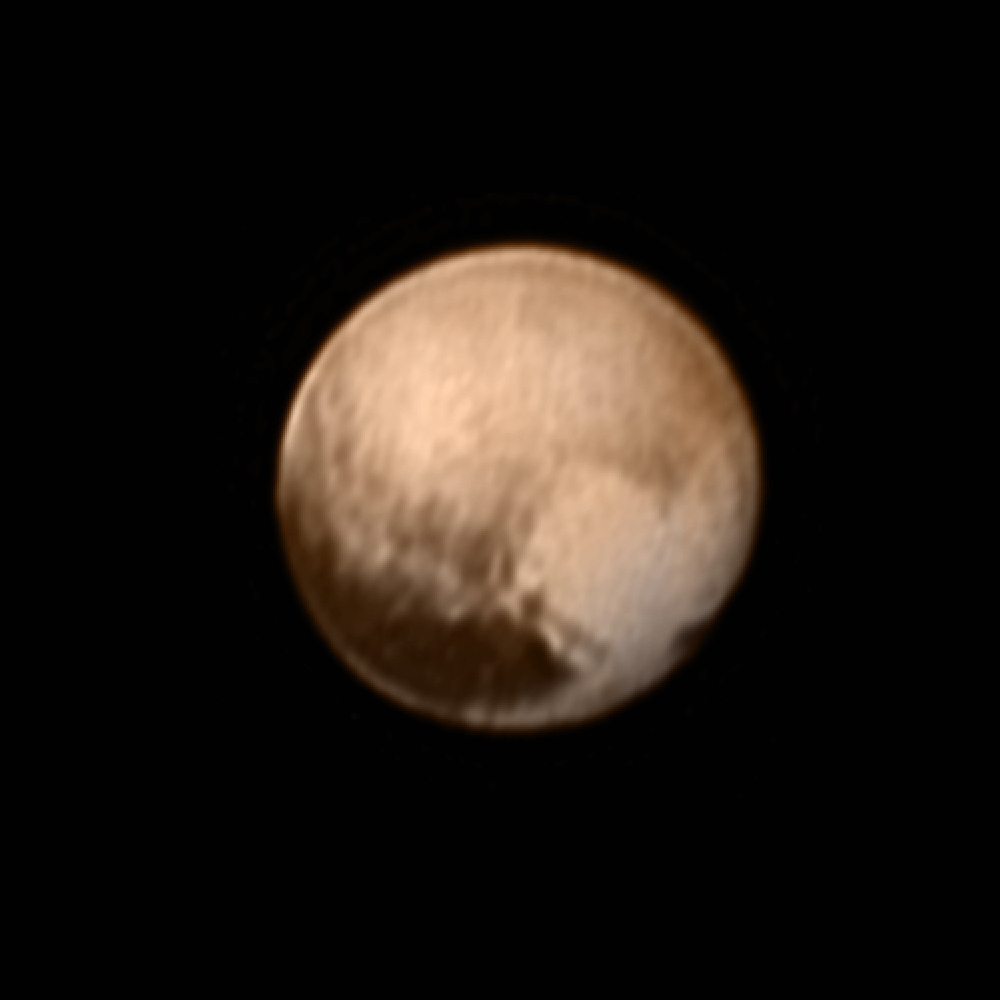
Pluto HEART - 8 July2015
This presentation has been worked on for many months by our friends at the American Museum of Natural History (AMNH) and its Hayden Planetarium. These names are probably familiar to some of you, as we present some of their very high-quality, fulldome programs, including ‘Dark Universe’ and ‘Cosmic Collisions’.As NASA’s New Horizons will be concentrating on gathering images and scientific data at a high rate and continuously changing its orientation in space, it will not be communicating with Earth at the encounter time itself.Consequently, AMNH in conjunction with NASA and the mission team at Johns Hopkins University have invested heavily in creating the special presentation that will be shown with live and accurate visualisations controlled in real-time.AMNH and mission control at The Johns Hopkins University Applied Physics Laboratory will be linked to six other active participant locations around the globe, including Brisbane because of our long association with the AMNH over the decades.  There will also be live crosses to each planetarium and Q&A from each facility.

Key people involved with the mission will be speaking live during this presentation, along with Neil deGrasse Tyson, Director of the Hayden Planetarium and presenter of the updated version of Carl Sagan’s ‘Cosmos’ TV series; Carter Emmart, director of AMNH/Hayden Planetarium programs; and Denton Ebel, curator of AMNH’s huge meteorite collection.

This should be an enthralling, once-in-a-lifetime event as the mission milestones are described in real-time and the images and data received so far are interpreted by some of the best in their fields.Links to the coverage for those not at the various facilities will be carried on a YouTube link:

Curator
Sir Thomas Brisbane Planetarium
Posted in Uncategorized | Tagged | Leave a comment

Science Centre and Planetarium Wollongong’s Astronomy Discovery Night

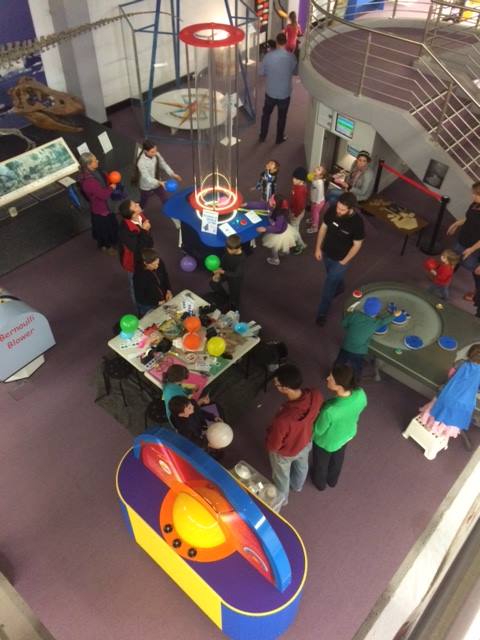
At the end of May, The Science Centre and Planetarium held its Astronomy Discovery night. On the discovery nights, we open up outside of normal opening hours and run planetarium shows and live astronomy presentations, have telescopes set up, and our interns perform science busking (which on the night was making paper rockets)


Shannon

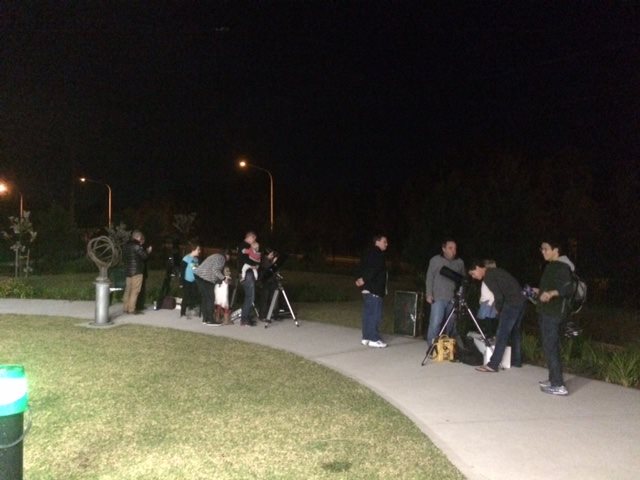
On the night we were supported by the Illawarra Astronomical Society who set up in our garden looking at the moon and Jupiter. The telescopes are always popular with our visitors, with both children and adults always wanting to have a look. We were fortunate this year to have beautiful clear skies as every Astronomy Discovery Night for the past few years has either been rained out or has had lots of cloud cover.

Telesscopes

Here is Wally who is a member of the Astronomical Society and also a Member here at the Wollongong Science Centre and Planetarium. He is setting up this telescope to focus on the moon.

Wally with a telescope

For the evening we also offered a free planetarium show. We debuted the Michigan Science Centre’s ‘Sunstruck’. On the night we ran the show twice and both times they sold out. This show was very popular with everyone who watched it, and we received fantastic feedback about it.


One of our interns also developed a show to run on the night titled “The History of Space Exploration”. This show covered the history of space flight and looked at life on space stations.

Chris's presentation

Here you can see a view of the table we set up where children could design and make their own rocket using materials you can find around the house. They then had the opportunity to test out their creation in our wind tunnel exhibit.

Science busking

This latest Astronomy Discovery Night received a large attendance, with 230+ people. These nights are always valuable to the Science Centre and Planetarium as they offer different activities to what people normally expect from an average day. Many people have since revisited to check out our different planetarium shows that we offer as they enjoyed the presentation on the night. Overall our first Astronomy Discovery Night in over a year was a huge success!
– Amanda – Supervisor, Science Centre and Planetarium Wollongong

Posted in Uncategorized | Tagged | Leave a comment

Sydney Observatory Manager Position

Just in case some of you are not aware, the position of Manager for Sydney Observatory was advertised recently and applications close on 10 June 2015. — Mark Rigby

https://jobsnsw.taleo.net/careersection/all_jobs/jobdetail.ftl?job=00003N21

Posted in Uncategorized | Tagged | Leave a comment

Starlight wins at the Fulldome Festival in Jena

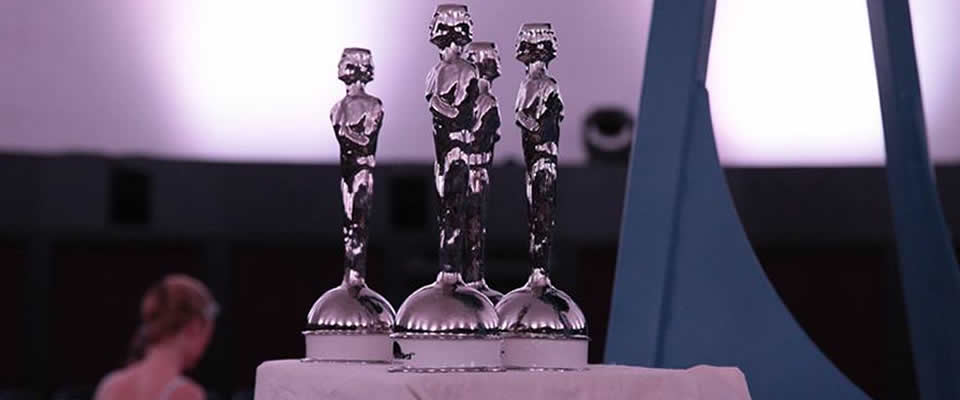
Fulldome award 2015The Melbourne Planetarium is very pleased to announce that Starlight is joint winner of the prestigious Directors Award at the 2015 Fulldome Festival in Jena.  The jury decided to split the award between Starlight and Habitat Earth produced by the California Academy of Sciences.

A full list of all the winners can be found here:
http://www.fddb.org/2015-fulldome-festival-award-winners/


Posted in Uncategorized | Tagged , | 1 Comment

Bendigo Planetarium News

Greetings from the Bendigo Planetarium!

Recently we renewed our Memo Of Understanding with the Bendigo Astronomical Society (BDAS). Amongst other things, this agreement allows for monthly Sidewalk Astronomy nights to continue outside the building the planetarium is located, namely the Discovery Science and Technology Centre.

swa5sept14 007

Sidewalk Astronomy attracts all age groups

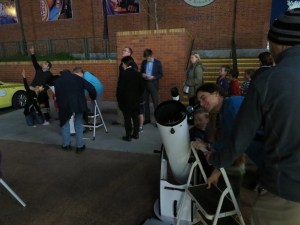
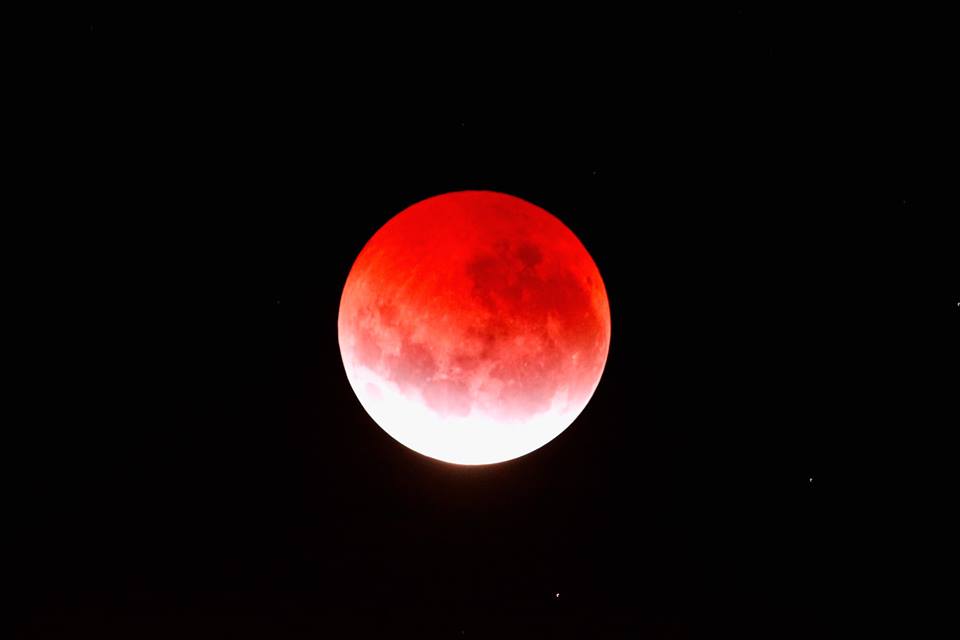
Besides these regular evenings, which attract an average audience of around 20 people, we also held a sidewalk night to view the Total Lunar Eclipse on Saturday 4 April. The night began around 9pm and we ended up leaving just before 1am! A good sized crowd was treated to not only an eclipsed Moon, but also a look at Jupiter and Saturn as well!


image credit; Malcolm Sanders (BDAS member)

image credit; Malcolm Sanders (BDAS member)

The MOU with the BDAS also allows for public presentations to held at the Discovery Centre on the first Wednesday of each month. So far this year we have had David Mould talk about his experience applying for the Mars One project, BDAS member John Wilkinson discuss the highlights of Solar Exploration in 2014, and Ballarat Astronomical Society member Judith Bailey presented ‘Saturn and its Satellites – a close approach’.   All of these meetings have attracted around 30 people.

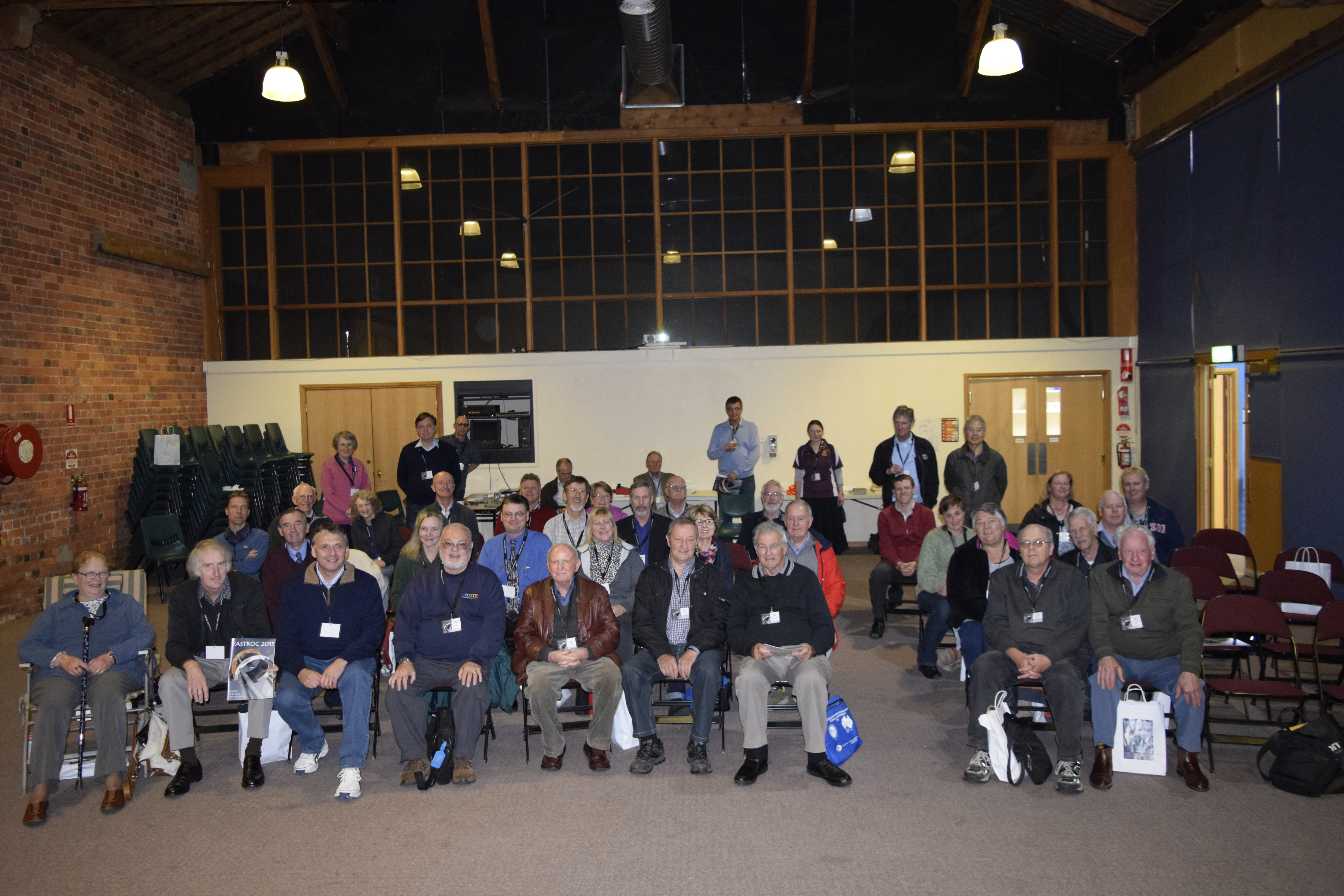
During April the Discovery Centre hosted the Victorian Astronomical Society Convention (VASTROC), which was attended by about 60 people. The weekend included a monster Sidewalk Astronomy night, complete with a Bendigo Planetarium session, a dinner with Clare Williams from the Mt Stromlo Observatory in Canberra, and many presenatations ranging from Black Holes to Cloud Forecasts for Astronomers!
The next VASTROC will be held in Ballarat in 2017.

Attendees at VASTROC 2015

Attendees at VASTROC 2015

Signatures in Space Show

Signatures in Space Show

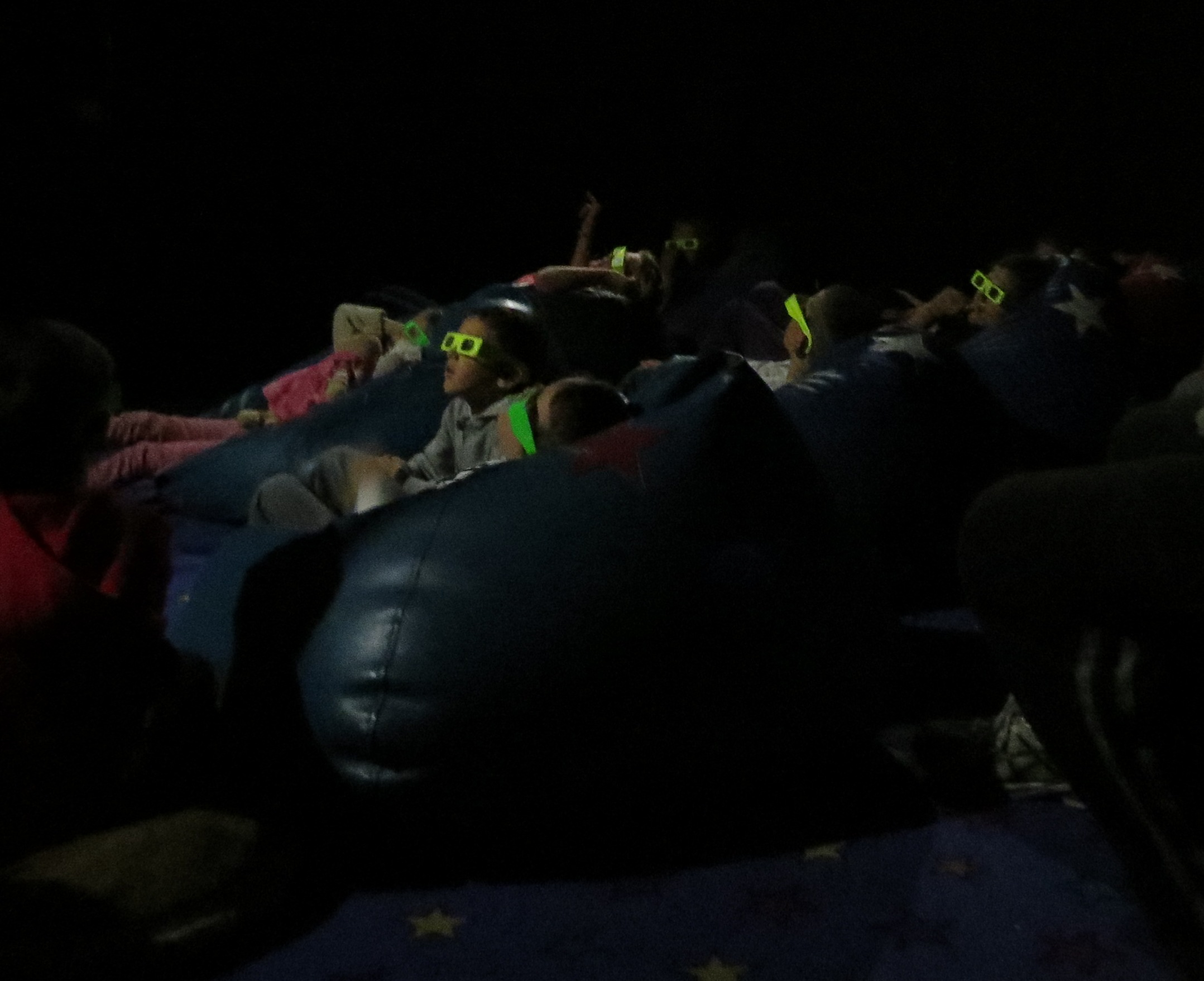
We also ran the ‘Signatures In Space’ planetarium show in the last school holidays, where we showed how light can tell us all sorts of information about stars. This show ran to capacity (about 30 people) three times a day for two weeks and included some ‘hands on’ activities in the dome. This was a change from our usual presentation style, but was well received by both the public and staff alike, and something we plan to do for future planetarium shows.

During the upcoming school holidays we are looking at some of the darkest places in the Universe, and will include plunging the planetarium into complete darkness for a few minutes!

Happy planetaring!
Craig Kendal
Planetarium Coorordinator
Bendigo Planetarium

Posted in Uncategorized | Tagged | Leave a comment

Apollo 13’s 45th Anniversary Event

On April 11, I attended the Astronaut Scholarship Foundation’s Apollo 13 45th anniversary dinner and forum at the Kennedy Space Center (KSC), Florida.

The function began with a cocktail party at the Hilton Cocoa Beach Oceanfront attended by over 100 people. It was an initial opportunity to meet up with Apollo 13 Commander Jim Lovell, Lunar Module Pilot Fred Haise (Command Module Pilot Jack Swigert died in 1982), Flight Directors and others.

Lovell_Rigby11April2015-1 Haise_Rigby11Apr2015_2

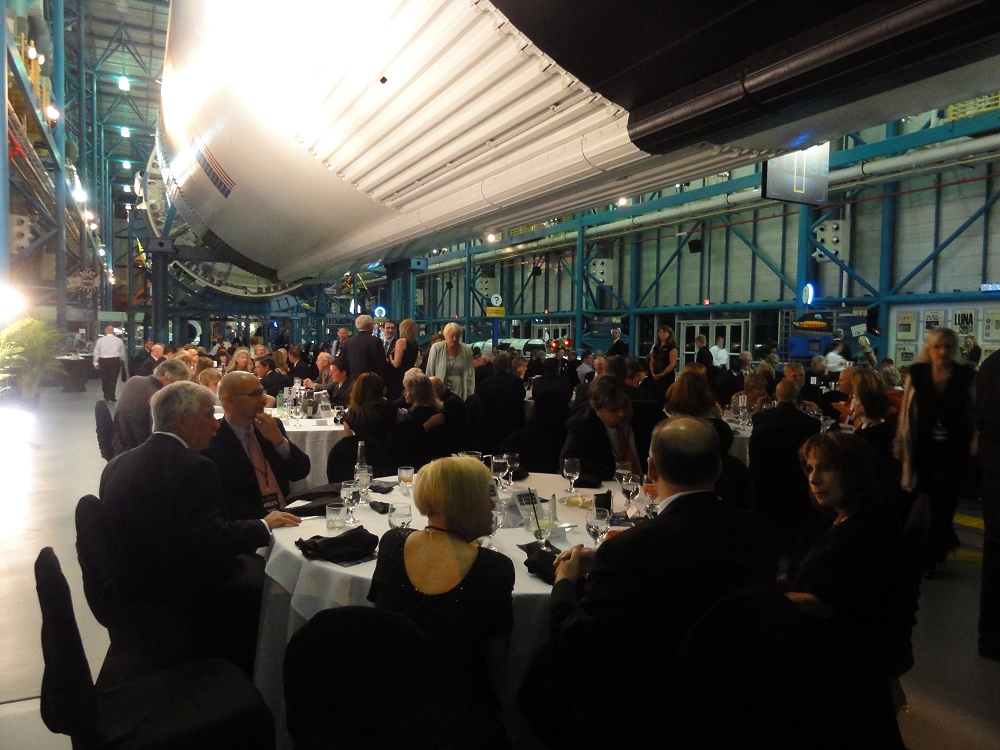
We then boarded three buses for the trip to the Apollo/Saturn V Center just north of KSC’s Vehicle Assembly Building at Launch Complex 39 from where Apollo 13 departed for the Moon 45 years earlier to the day. After a photography session, we all dined under a Saturn V launch vehicle.

Apollo13__Dinner11_Apr2015_1

It was a Who’s Who of space personalities, including KSC Director and space shuttle astronaut Bob Cabana, various other Gemini, Apollo, Skylab and space shuttle astronauts, including Apollo 10 and Apollo Soyuz Test Project Commander Tom Stafford, Apollo 11 Lunar Module Pilot Buzz Aldrin, Apollo 16 Lunar Module Pilot Charlie Duke, and many others.

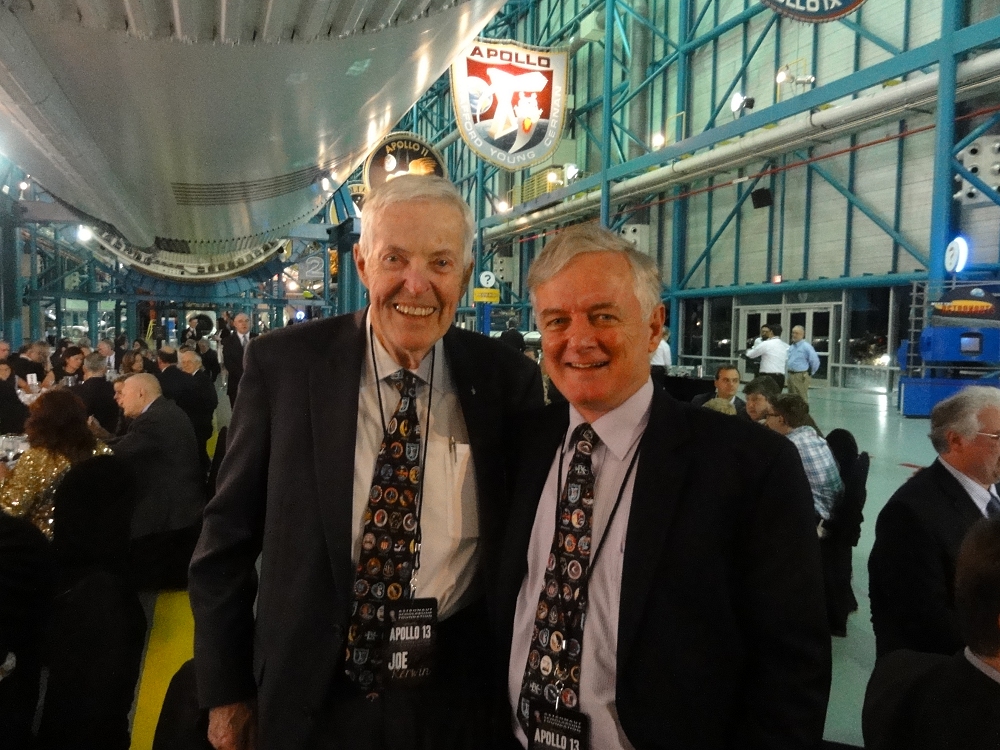
It was particularly nice to meet up again with Skylab Science Pilot Joe Kerwin, who I had many dealings with decades ago. There were also opportunities to chat with Neil Armstrong’s older son Rick and Al Shepard’s eldest daughter Laura.

Kerwin_Rigby11Apr2015_1

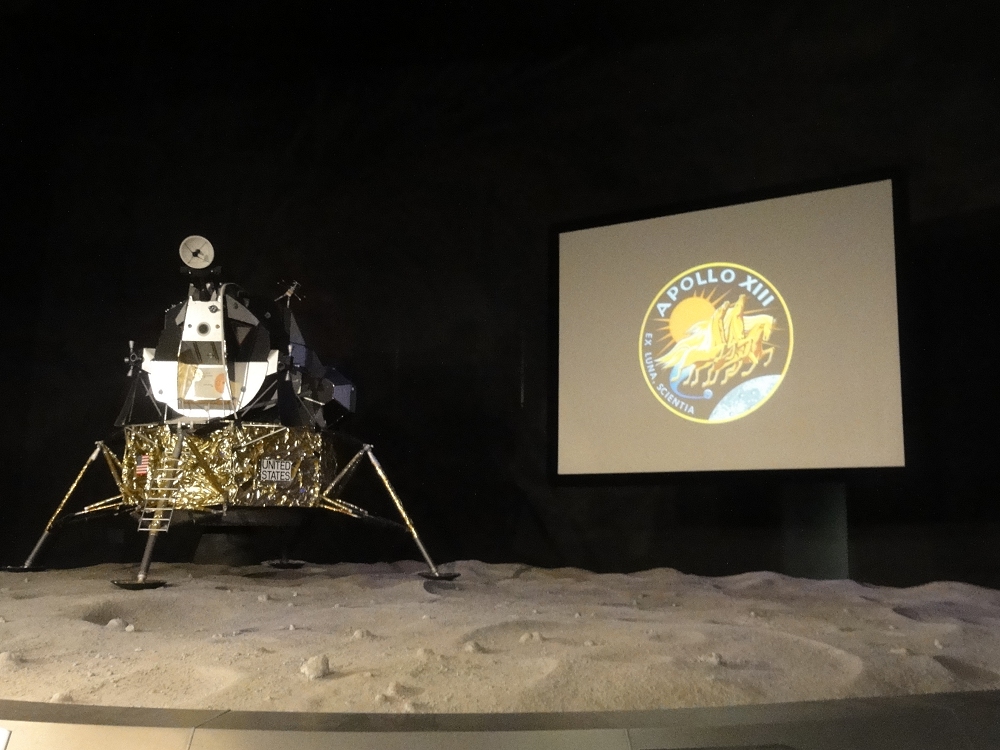
After the dinner’s main course we moved to the Lunar Theater for an excellent panel discussion.

ApolloStage_11Apr2015_1

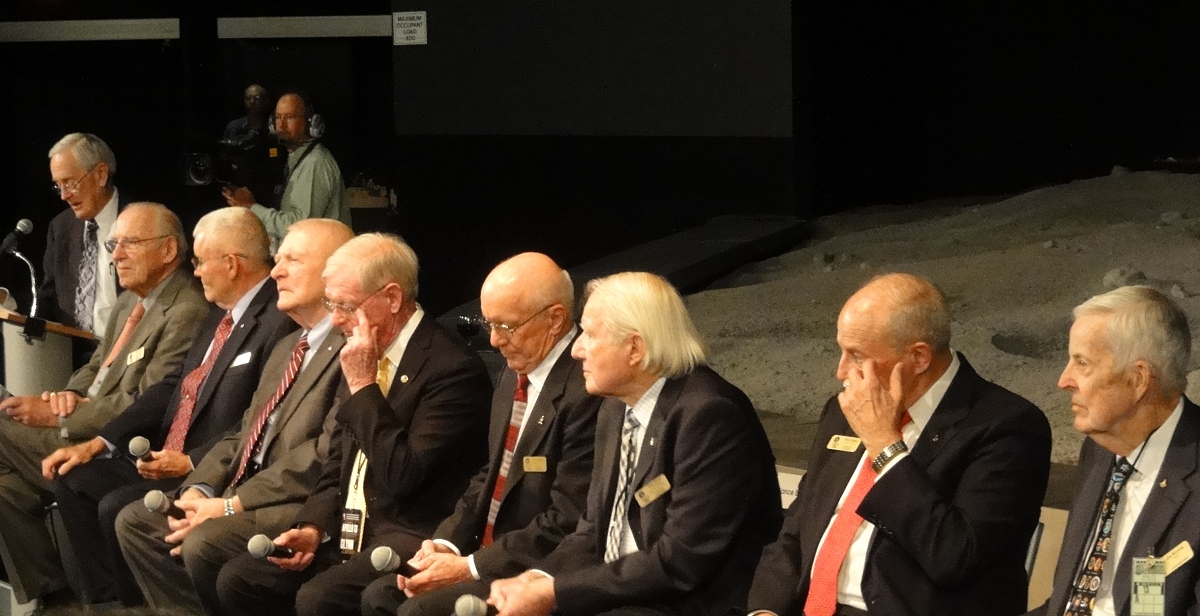
It was moderated by Charlie Duke (Apollo 13’s backup Lunar Module Pilot) and involved Apollo 13 crew members Jim Lovell and Fred Haise, flight directors Gene Kranz, Glynn Lunney and Gerry Griffin; and support crew members Vance Brand, Jack Lousma and Joe Kerwin. 

Panel11Apr2015_2

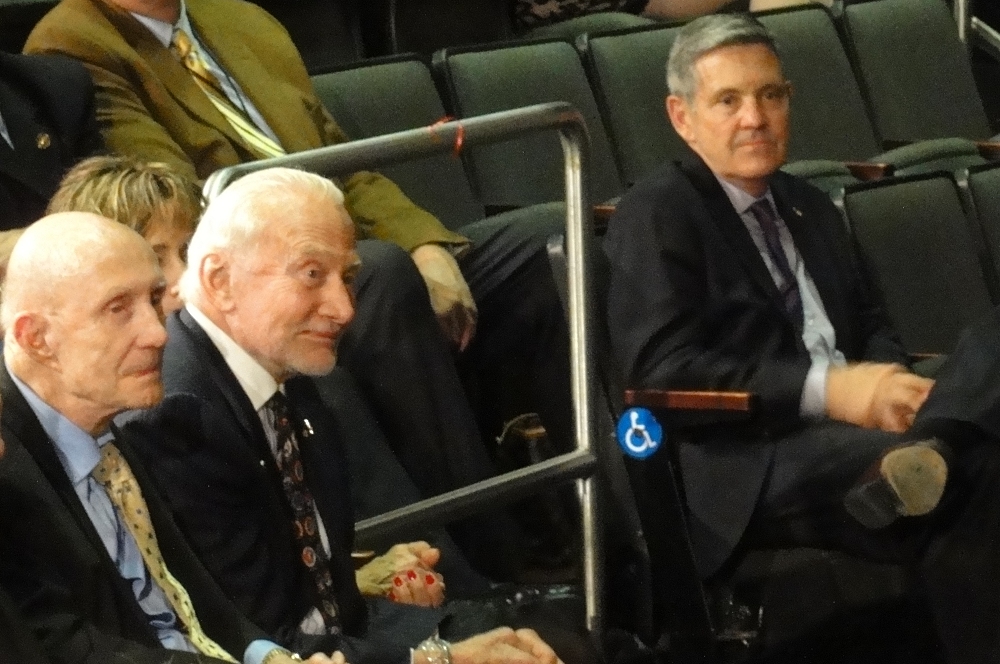
Below – Apollo 10 Commander Tom Stafford, Apollo 11’s now-bearded Buzz Aldrin and KSC Director Bob Cabana.

Stafford_Aldrin_Cabana11Apr2015

If you want to watch the panel discussion, it can be viewed via the following page – http://astronautscholarship.org/asf-celebrates-apollo-13s-45th-anniversary/

Mark Rigby

Posted in Uncategorized | Tagged , | Leave a comment

Dazzled by the bright Southern Lights

The past week saw a fantastic treat for aurora watchers. Generally it is the southern part of the country, Tasmania in particular, that sees the most impressive displays. But this aurora has been so intense that it was even seen across New South Wales and up around Brisbane it added a red glow to the sky.

The aurora australis as seen this week from Tasmania. Credit: Tim Cooper/flickr

The aurora australis as seen this week from Tasmania. Credit: Tim Cooper/flickr

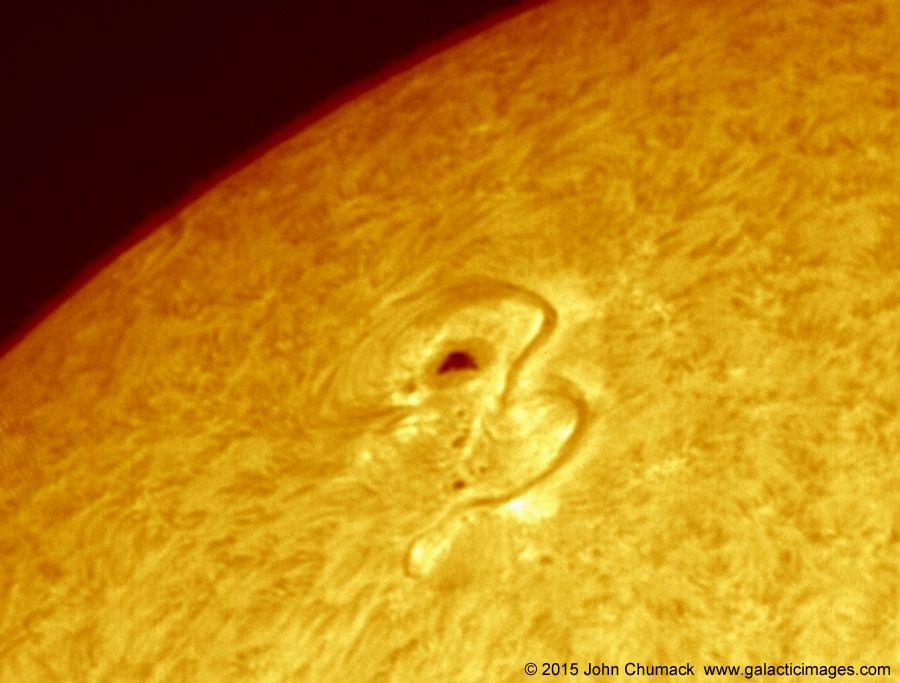
The activity was caused by a sunspot designated AR2297 and it has been crossing the face of the sun for the past fortnight. On March 6 (AEDT), before the sunspot had even come into view, it had produced a number of M-class flares.

Solar flares are ranked into three categories of intensity: X-class flares are the strongest; M-class are moderate; and C-class are the mildest. That these early flares were registered as moderate ones, even though they weren’t yet turned towards Earth, suggests that their true intensity was likely much greater.

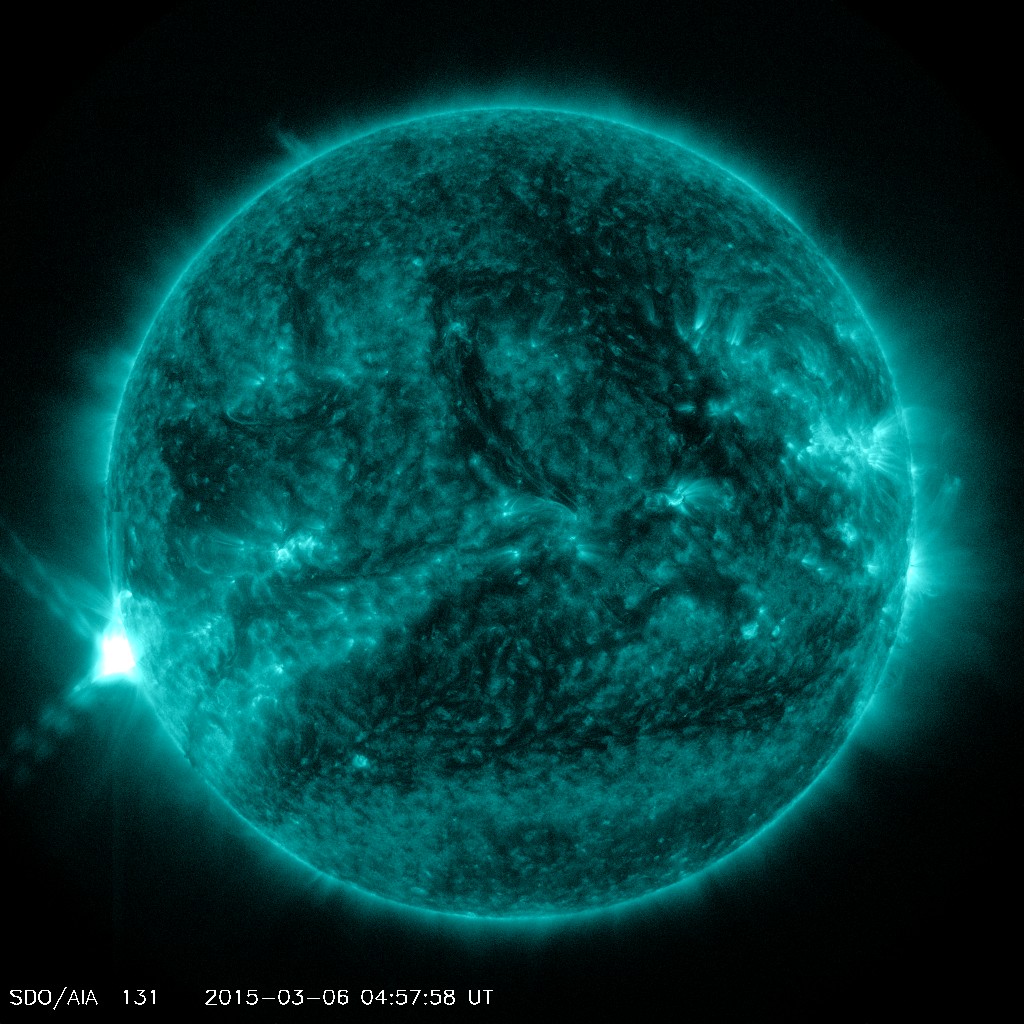
Flare_March06

NASA’s Solar Dynamics Observatory captures a bright burst of UV emission from the sun’s limb. It caused a brief blackout of radio communications over Indonesia on March 6. NASA/SDO

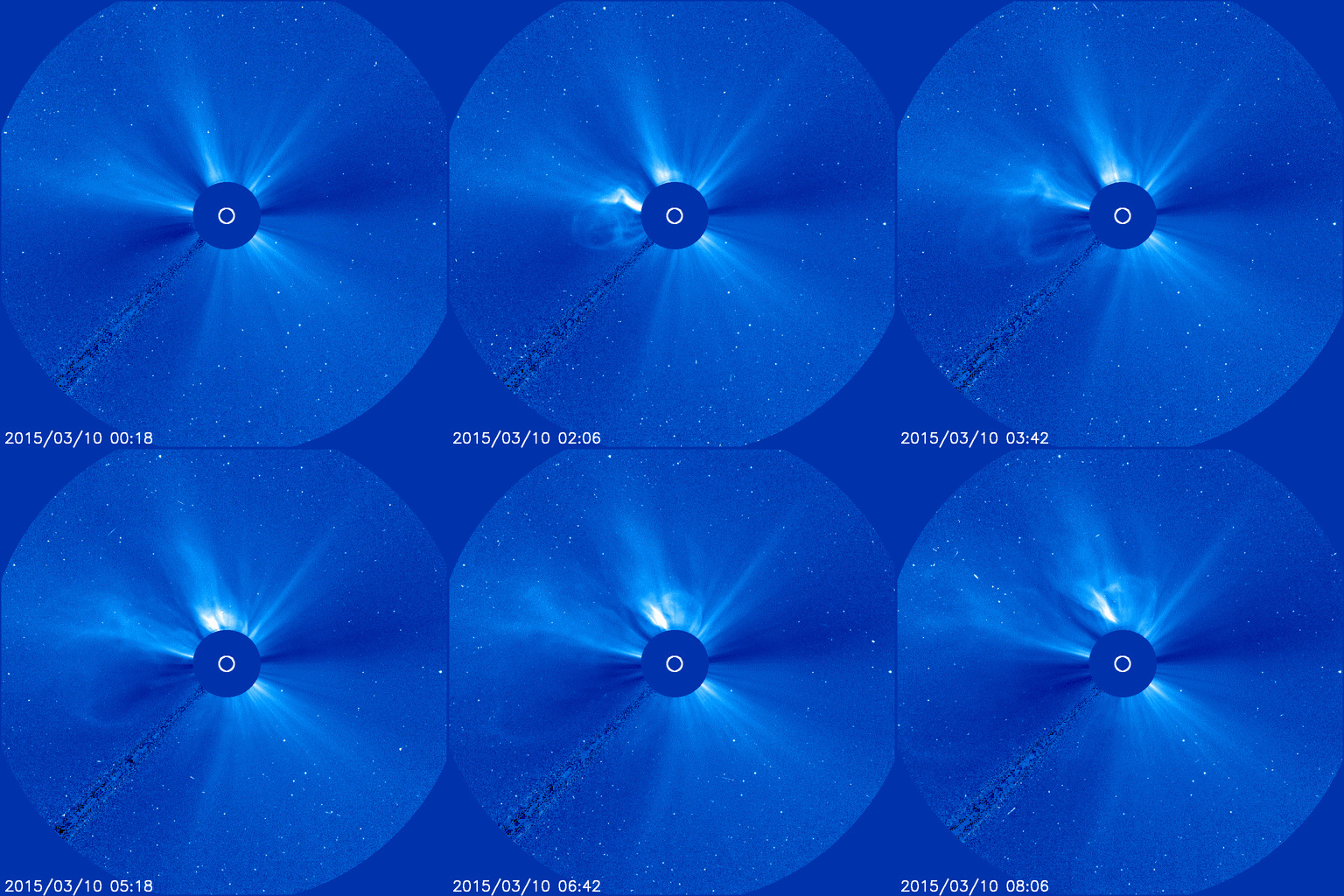
During the early hours of March 12 (AEDT), the sunspot produced an X2-class flare. All this activity had caused giant bubbles of gas to be blown off the sun. Called coronal mass ejections (CMEs), a number of them were expected to hit Earth around March 13.

Surprisingly when a stunning outburst of aurora did occur over the Arctic Circle on March 14 – a little later than expected – it wasn’t due to the CMEs.

As reported by spaceweather.com, these aurora occurred because the interplanetary magnetic field (IMF) around Earth tipped south, creating a crack in the Earth’s magnetic field. The solar wind was able to flow through this opening and interacted with the Earth’s atmosphere to trigger the display.

Sunspot AR2297

The sunspot at the centre of the activity this week, AR2297. SDO/HMI

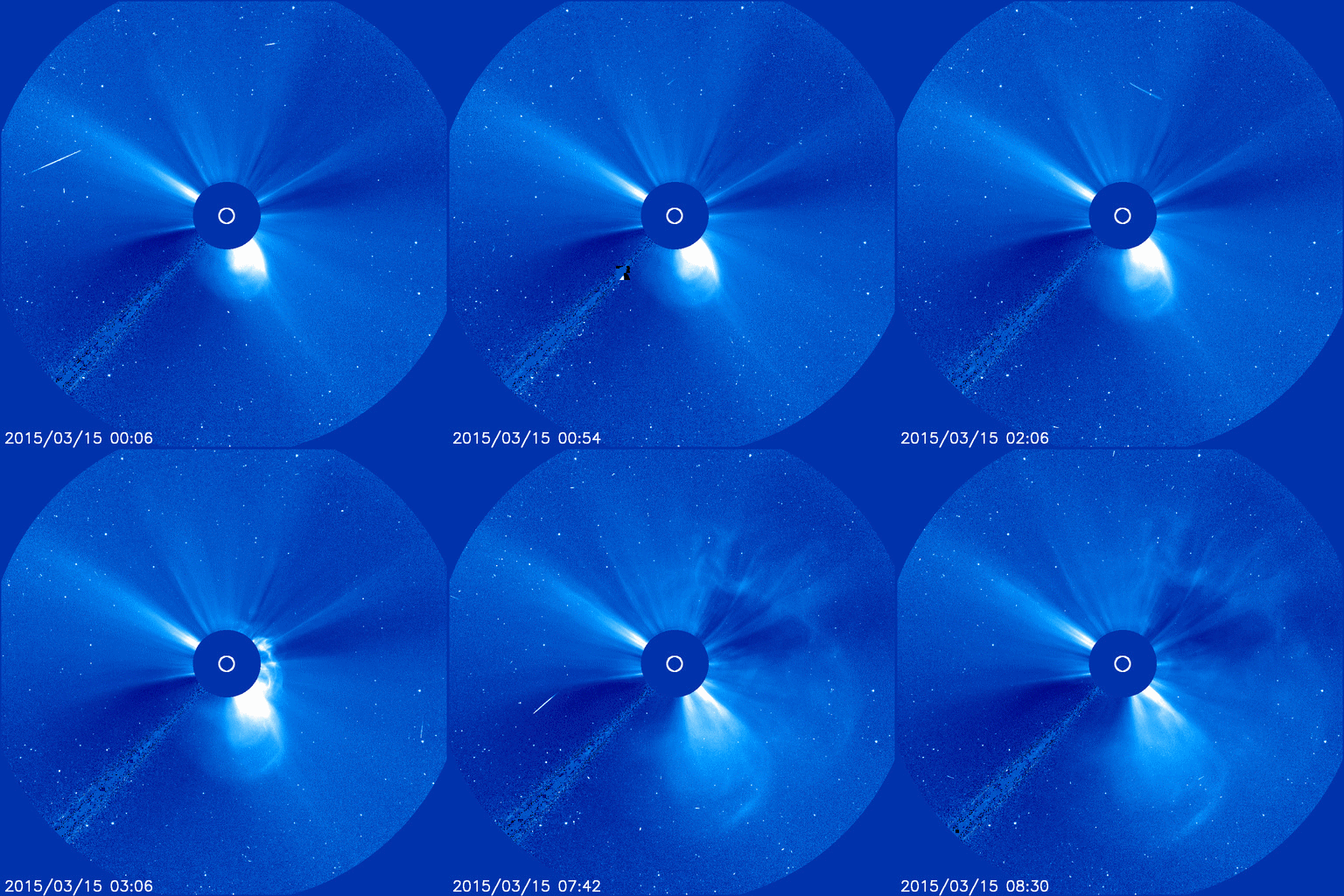
But there was still more to come. On March 15, another CME was ejected from the sun as seen in this movie by NASA’s Solar and Heliospheric Observatory (SOHO).

This eruption impacted Earth’s magnetic field on March 17 at approximately 3:30pm (AEDT) and by that evening had set off the strongest geomagnetic storm of the current solar cycle (designated Solar Cycle 24, it began in 2008 and will continue through until 2021).

The peak of activity lasted for more than nine hours, not only causing the aurora australis to drift north, but the aurora borealis (the Northern Lights) was seen as far south as Kansas and Virginia.

It certainly was fantastic for all who saw this event. Unfortunately the weather in Melbourne was completely overcast, so I can only wait until next time.

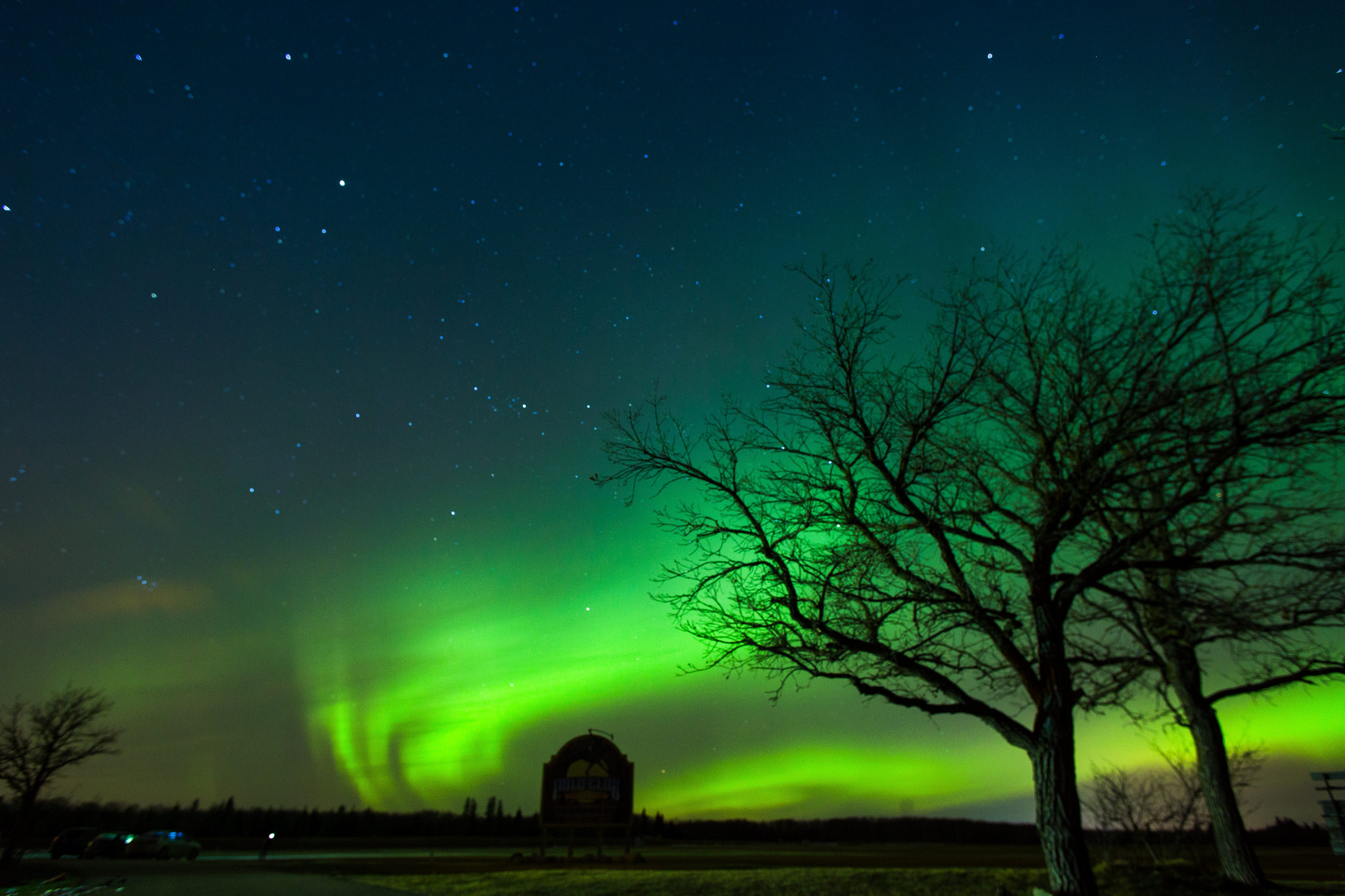
Aurora from Canada

The aurora borealis as seen from Winnipeg, Canada on March 17. AJ Batac/Flickr

The Conversation

This article was originally published on The Conversation by Tanya Hill, Museum Victoria

Read the original article.

Posted in Uncategorized | Tagged , | Leave a comment

International Day of Planetaria

Day_Planetaria

Happy ‘International Day of Planetaria’ to everyone.  The ‘Day of Planetaria’ was first celebrated in Italy in 1990.  While this day is well recognised in Europe it has yet to really catch on in the United States or Australasia.

However I am really pleased to see that the Science Centre of Wollongong is celebrating the day by including a free planetarium show with every admission into the Science Centre.   Further details are on their Facebook page.

Congratulations to the team at Wollongong.   And here’s hoping that more planetariums will come on board next year.

Posted in Uncategorized | Tagged | Leave a comment

Dawn eases into orbit around Ceres

The Dawn mission

Having already explored Vesta, the Dawn spacecraft now enters orbit around Ceres. Credit: NASA/JPL

When NASA’s Dawn spacecraft is captured into orbit around the dwarf planet Ceres on Friday, March 6, there will be no fanfare in mission control. In fact, the spacecraft won’t even be in radio contact. There’s no need, because Dawn’s path is set – this is a spacecraft unlike any other.

What makes Dawn unique is its ion propulsion system, which gives the spacecraft incredible manoeuvrability. Instead of using large bursts of thrust to get where it’s going, Dawn takes the slow and steady approach. Its ion engine delivers a tiny but continuous thrust that can last for days or weeks at a time.

Over the last two-and-a-half years, Dawn has been slowly reshaping its trajectory to bring it near Ceres and, most importantly, to match the dwarf planet’s speed – Ceres travels around the sun at nearly 64,000 kilometres per hour.

For other planetary missions, entering orbit is make or break. It’s an intense moment that hopefully ends in jubilant celebration when all goes as planned and the spacecraft momentously falls into orbit. But Dawn’s slow approach means that it is now right on course to guarantee capture by Ceres’ gravity.

Come Friday, if the spacecraft’s propulsion were to be switched off it would remain under Ceres’ influence but would travel around the dwarf planet in a highly elliptical orbit. So over the next few weeks, Dawn will use its ion thrusters, together with Ceres’ gravity, to slowly draw it into a circular orbit – the first of four such orbital positions around the dwarf planet.

Not for the first time

Ceres, is the second object that Dawn has orbited. Between July 2011 and September 2012, Dawn was in orbit around Vesta, which like Ceres, resides in the Asteroid Belt located between Mars and Jupiter.

This marks the first time that one spacecraft has been able to orbit two different planetary objects. And it’s only possible because of Dawn’s ion engine.

A spacecraft powered in the usual way using chemical propellant, would require ridiculous amounts of fuel to carry out such a mission. And even if it was possible for a spacecraft to carry that much fuel on-board, the cost of the mission would be astronomical.

Dawn's path to Ceres

Dawn was launched in September 2007 and has taken the slow and steady approach to visit Vesta and now Ceres. Credit: NASA/JPL

At Ceres, Dawn will eventually travel in a polar orbit, travelling above the north and south poles. As it moves from north to south it will travel over the daytime side of the planet, and then during the second half of its orbit it will fly above Ceres’ night side.

In its first orbital position, at a height of 13,500km, it will take 15 days for Dawn to complete one orbit. Since the planet takes only nine hours to rotate on its axis, this will allow Dawn to make a good map of the dwarf planet’s surface.

Throughout its 15-month mission, Dawn will vary its orbit three times each one descending closer to the planet at heights of 4,400 km, 1,470 km and 375 km. To change orbits it will move through a complex series of spiral trajectories.

The descent to its lowest orbit will take two months and during that time Dawn will complete 160 revolutions as it constantly reorientates itself to ensure that one of its ion beams is thrusting in the right direction to continue its slow spiral descent.

Dawn's spiral descent

Two months of downward spirals are needed to move Dawn into its lowest orbit – from the High Altitude Mapping Orbit (HAMO) to the Low Altitude Mapping Orbit (LAMO). Credit: NASA/JPL

Better than Star Wars

Ion propulsion systems, like the one that powers the Dawn spacecraft, have long been considered the next big thing for space exploration. In fact, they seemed so futuristic that they appeared in the Star Wars movies powering Darth Vader’s TIE fighters or Twin Ion Engine fighters.

Science fiction to science fact

The TIE fighters in Star Wars had twin ion engines, but Dawn does one better, with three ion engines. Credit: NASA/JPL

Ion engines were first used by NASA on Deep Space 1, which flew past the asteroid 9969 Braille in 1999 and comet Borrelly in 2001.

The Japanese Aerospace Exploration Agency (JAXA) has successfully used ion engines on its Hayabusa asteroid missions, the second of which was launched in December last year.

The Dawn spacecraft is fitted with three ion engines, although only one engine is used at any one time. And true to what we expect from science fiction, the spacecraft does emit a blue-green glow. This is a result of its xenon fuel.

The inner workings of an ion propulsion system.

The inner workings of an ion propulsion system. Credit: NASA

Positively-charged xenon ions pass through two electrically charged grids. This accelerates the tiny ions and they shoot out of the engine at 144,000 kilometres per hour, providing the thrust to propel the spacecraft in the opposite direction.

Ion engines are around ten times more efficient than chemical rockets because the ions are ejected at roughly ten times the speed that a propellant is expelled by a rocket. But the acceleration is much slower.

It would take Dawn around four days to accelerate from 0 to 100 kilometres per hour but the trade off, is that in doing so, it would only use 450grams (or just one pound) of fuel.

Why Vesta and Ceres?

Of course, the reason the technology is so marvellous is because it enables such fantastic science – the exploration of the two most massive objects in the asteroid belt, Ceres and Vesta.

Ceres, February 19, 2015

New images of Ceres, taken February 19 at a distance of 46,000km, show a mysterious double bright spot. Credit: NASA/JPL-Caltech/UCLA/MPS/DLR/IDA

Don’t let their location fool you, these are not space rocks like typical asteroids. They are big worlds and like Earth and the other terrestrial planets, Ceres and Vesta have a layered structure.

Vesta has an iron-rich core, a silicate mantle and a crust made of basalt. While Ceres is thought to have a rocky core, an ice mantle and a dusty surface.

The ice mantle is particularly interesting. It’s thought that around 30% of Ceres’ mass may come from water and potentially some fraction of that could be liquid water. Just last year, the Herschel Space Observatory made detections of what appear to be plumes of water vapour, escaping from slightly warmer regions on Ceres.

The Dawn mission will continue until June 2016 and the latest images will be regularly posted here, while the Dawn mission blog is a great way to keep up-to-date on everything that happens.

Dawn of the Solar System

The space mission was called Dawn because if we think of Ceres and Vesta as protoplanets, then by better understanding these objects, we will gain insight into the early history of our solar system.

Size comparisons

Ceres and Vesta more closely reflect half-formed planets than space rocks like asteroids. Credit: NASA

The planets of our solar system formed by a method of accretion. Starting out as specks of dust that collided and stuck together, they then grew bigger and formed rocks until eventually they were large enough to draw in enough material to form planets.

Vesta and Ceres seemed to have halted mid-way through this process. This is most likely due to the formation of Jupiter and its gravity may have prevented objects in the asteroid belt from coming together to finish off the planet building.

As a result, Vesta and Ceres provide a unique opportunity for understanding the early formation of the planets because they came so close to becoming one themselves.

Dawn of the solar system

The early solar system was born out of a dusty disk encircling the sun. Credit: William Hartmann, Courtesy of UCLA

The Conversation

This article was originally published on The Conversation.
Read the original article.

Posted in Uncategorized | Tagged , , , , | Leave a comment

What will Pluto look like?

Pluto_Lightbox small

Way back in August 2005 I first started working at the Melbourne Planetarium.  I was brought in as an animator on Melbourne Planetarium’s very first, fully-rendered fulldome production ‘The Problem with Pluto’.

At that time the debate was still raging as to whether Pluto should be considered a planet or not.  It wasn’t until September 2006 that the IAU formally reclassified Pluto as a dwarf planet.

My work on ‘The Problem with Pluto’ included designing and building the futuristic spacecraft that would take the show’s hero Lucy on a journey through the solar system.  Another task was to design and model Pluto itself.

But of course there was very little available in the way of visual references for how Pluto looked back then.  There were some images from Hubble and today, these are still the best we have.

pluto-hubble-01

Photo Source: NASA

While we were still in production, the New Horizons spacecraft was launched on it’s mission to Pluto.  That was back in January 2006.  At the time I thought, wow that thing is going to take nine years to get there!  I wonder where I will be then?   Funnily enough, I think it will be right here at the Melbourne Planetarium.

So, what will Pluto look like?  On July 14, the Event Horizon mission will complete the first ever flyby of Pluto and we will finally have an answer.  I for one can’t wait.


Posted in Uncategorized | Tagged , | Leave a comment