
Scitech is seeking an innovative and driven person to join their team as the STEM Visualisation Coordinator.
Full details of the position can be found here: STEM Visualisation Coordinator
Scitech is seeking an innovative and driven person to join their team as the STEM Visualisation Coordinator.
Full details of the position can be found here: STEM Visualisation Coordinator
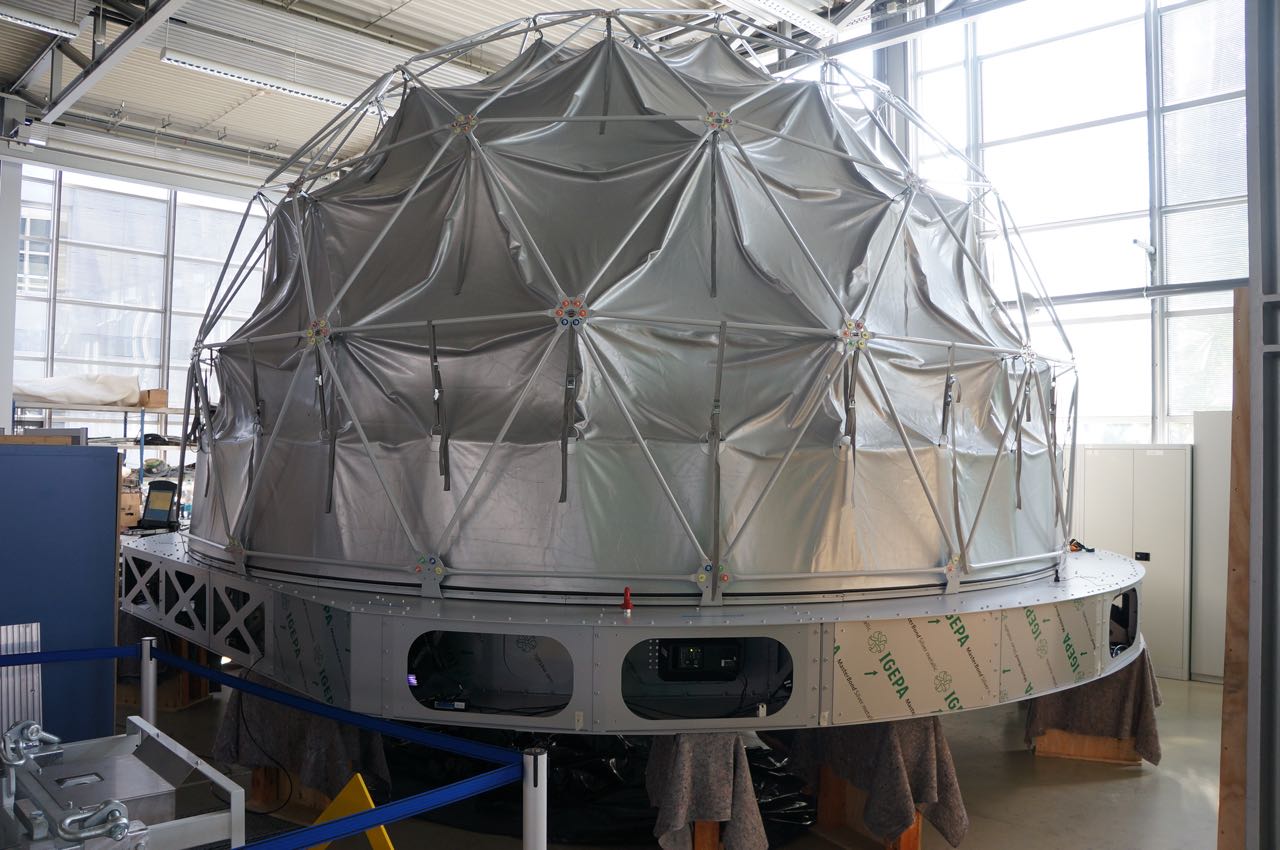
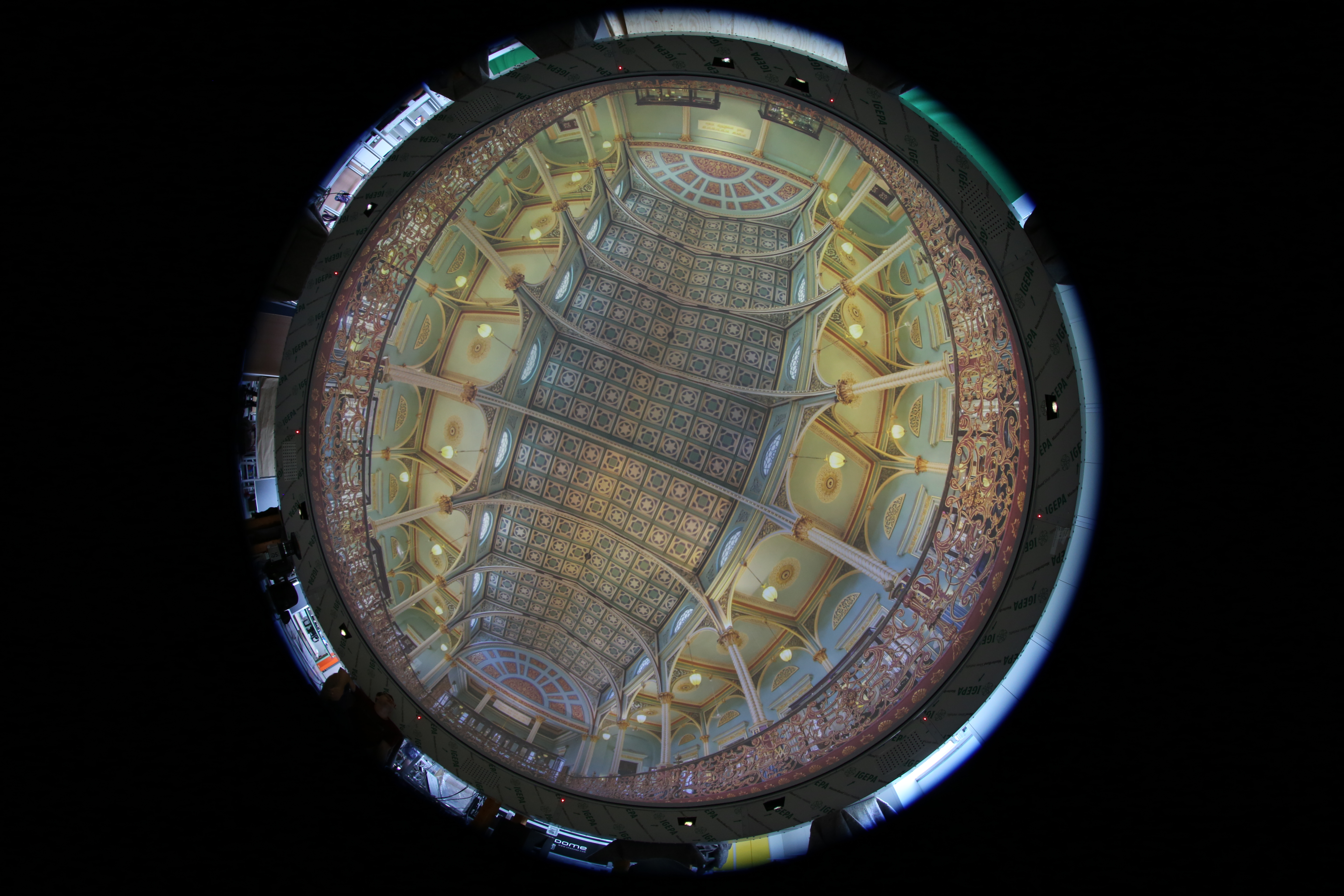
Here is a sneak preview of our new touring dome in the assembly/test area in Germany and currently in boxes on its way to UNSW, Sydney. Just sitting on boxes in this photo, but eventually it sits on legs raising the rim to just above head height giving unconstrained walk-in and out. The legs also allow up to a 20 degree tilt.
Some specifications: the dome is just 6m diameter, negative pressure inner surface, display consists of eight 2560×1600 pixel projectors, driven from a cluster of 4 computers. This means it is the highest resolution dome in Australia, unlike other so called “4K” systems this one actually has 12,000 pixels around the rim. Would be interested in hearing if anyone knows of higher resolution touring domes internationally.
Please drop me a line if you would like to know when it is ready for viewing, initially being setup in a public gallery space on the UNSW campus.
 While my previous post announced the award winners of the Fiske Fulldome Festival, I did not have the opportunity to provide more detail about the festival itself. It was a three day fulldome festival, which focused solely on content, there were no workshops, formal presentations or papers. This worked well allowing the attendees to see a huge range of shows. Interestingly, it was the first fulldome festival in the USA since Domefest at the 2012 IPS conference in Baton Rouge.
Thor Metzinger and the rest of the team at Fiske put together a fantastic festival. The planning of the festival began more than a year ago. The festival included student works, short films, clips from works in production, VJ sets, live performances and even a play.
I was most impressed by the range of live performances they had in the dome. This included:
– Kenji Williams performing Bella Gaia live
– J-Walt performing Spontaneous Fantasia
– Android Jones VJing in the dome along with two other VJs.
– A short play on Vera Rubin hypothesising Dark Matter, which was presented by a local theatre group.
For the VJ sets, the event was listed on Facebook and the 190 available seats sold out in an hour. The vibe in the audience was electric.
It is amazing to think that the festival managed to bring together the leading artists in live fulldome performance.

J-Walt presenting Spontaneous Fantasia
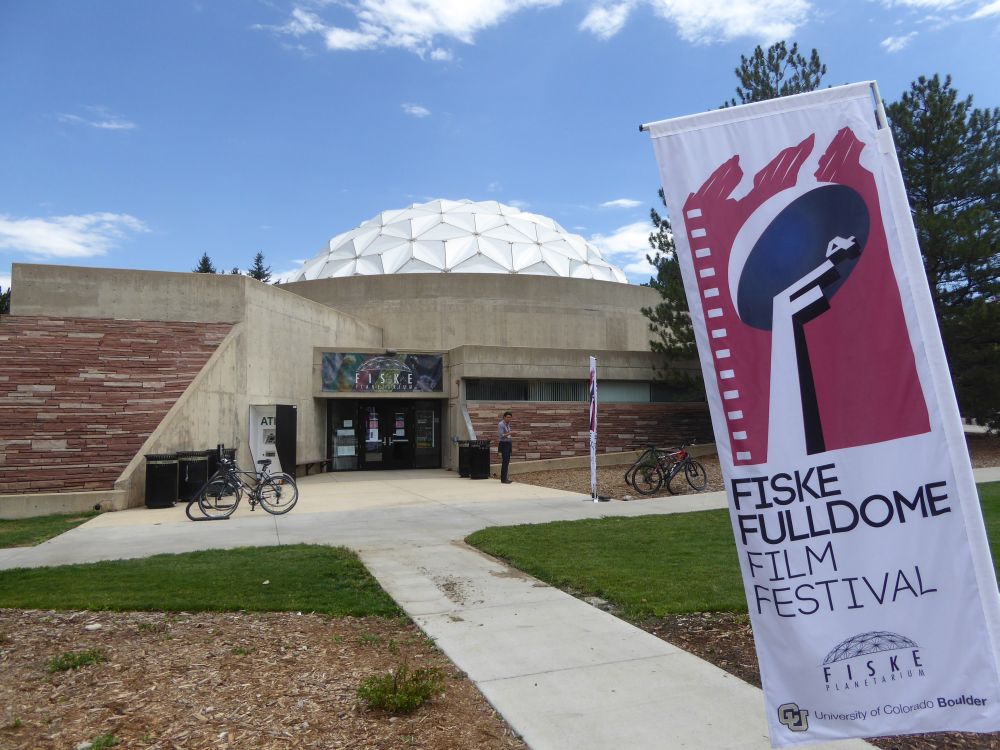
The Fiske Fulldome Festival finished tonight with their Awards Night. It has been a fantastic festival and Thor and the team at Fiske have done a magnificent job.
Five awards were given out and they went to:
Best of Show
Winner: We are Stars, NSC Creative
Runner Up: Habitat Earth, California Academy of Sciences
Best Photography
Winner: Space School, Oceanic Research Group Inc
Best Short
Winner: Samskara, FulldomeLab
Runner Up: LoVR, Lumiere
Best Music
Winner: We Are Stars, NSC Creative
Runner Up: Starlight, Melbourne Planetarium
People’s Choice
Winner: Bella Gaia, Remedy Arts, Kenji Williams
Runner Up: Dark Universe, American Museum of Natural History
Congratulations to all of the winners!

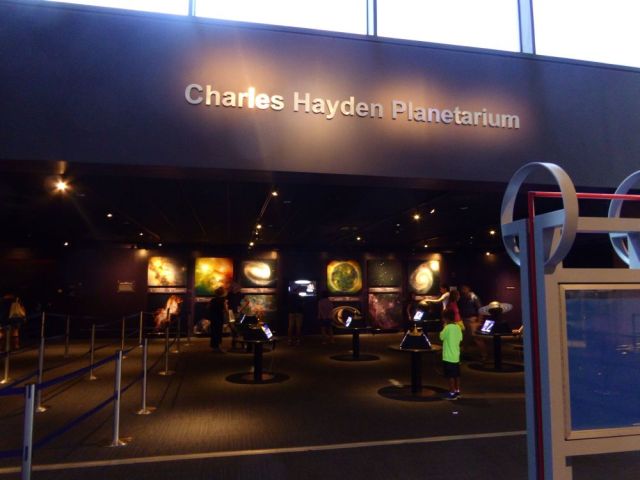
After attending the IPS Council meeting in Montreal, I took the opportunity to visit the Charles Hayden Planetarium at the Museum of Science (MOS) in Boston. This was a particularly interesting visit for me, the Charles Hayden Planetarium is of similar size to the Melbourne Planetarium, attached to a Science Museum, and they produce their own shows.
I was very keen to meet with their Science Visualizer, Jason Fletcher, who is one of the four animators that work on their shows. Jason has been at the planetarium and is a great advocate for sharing his production knowledge. His Fulldome Blog (listed in the sidebar) is an excellent resource for anyone producing fulldome content. It was great to meet Jason and talk production with someone who understands all of its complexities and challenges.
The team at the Charles Hayden Planetarium are great supporters of student production, and for the last few years have worked with students from the Massachusetts College of Art and Design. The Melbourne Planetarium screened their production Sentient at the 2014 Melbourne International Film Festival: MassArts
Jason showed me some of the new work by the students and I was very impressed to see they are now working in 4K resolution.
From Dream to Discovery is the latest fulldome production from MOS, which was screened at the APS conference back in February. Jason showed me quite a number of their production tests, in particular the live action sequences which they captured with a 3d printed 10 camera GoPro rig. I was impressed to see how well they seamlessly integrated the live action footage with their 3D animation.

The Charles Hayden Planetarium has a 57 foot dome with 209 seats in a concentric configuration. Interestingly just across the hallway is an Omnimax dome, which is run by a completely separate department at MOS. While the Omnimax focuses on natural history and earth sciences, they leave all the astronomy to the experts at the Planetarium. It makes for a great synergy.
 The Rio Tinto Alcan Planetarium in Montreal is an architectural delight. Completed in 2013 at a cost of $48 million dollars, it includes two 18 metre domes, a café as well as an exhibition space.
It is located in the Espace pour la Vie (Space for Life) next to the Montreal Olympic Stadium. The Space for Life also includes the Biodome, Botanical Gardens and Insectarium.

Beautifully designed on the outside, it is also looks beautiful on the inside. Throughout the building the architects make great use of contrasting materials, wood, metal and stone. The use of light and dark materials intentionally references the contrast between night and day.
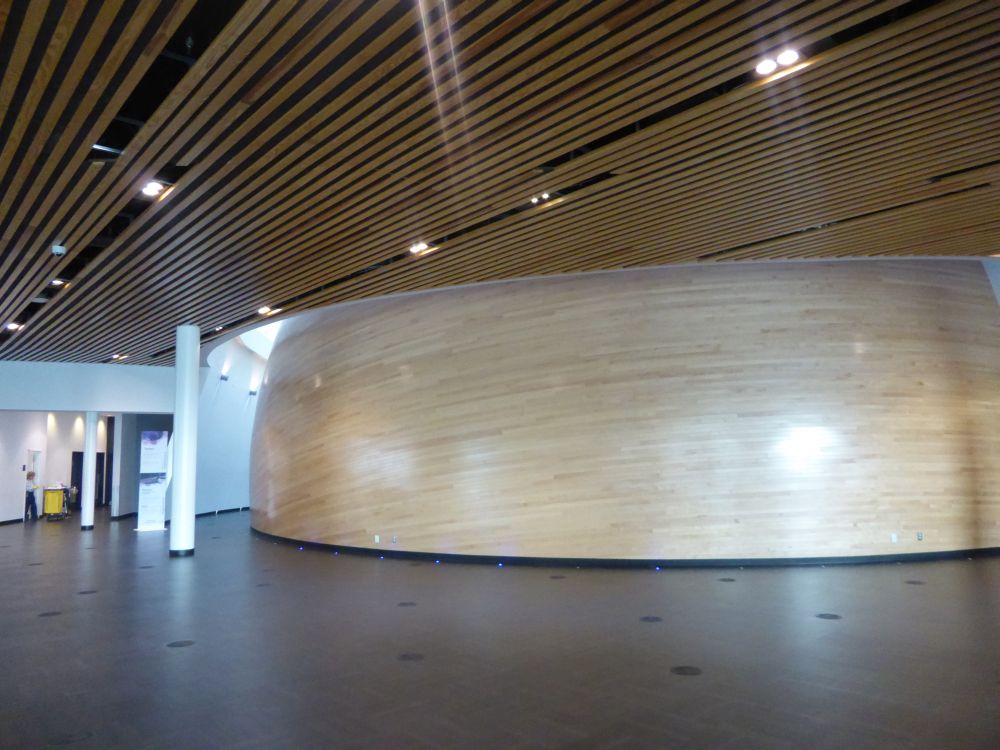
One of the domes has no seating, and simply makes use of a mass of bean bags in the middle of the room. For less agile people they have also provided some seating at the edge of the dome. The second dome has concentric seating and can accommodate 198 people.

Interestingly, an audience will usually see a show in the first dome, and when that has finished they will see another show in the second dome. We saw ‘Dark Universe’ in the first dome, and then this was followed by a realtime show on Pluto in the second dome.
The planetarium, alternates two programs. Their scientific program (as described above) as well as an artistic program, which includes ‘Vertiges- Once upon a time’, and ‘Tempo – The Celestial Dance of Time’. Unfortunately, I did not manage to see this second program.
The Rio Tinto Alcan Planetarium is a beautiful modern facility, and it is fantastic to see how inspiring good architecture can make a space so inviting.

While in Montreal, I had the opportunity to visit the Société des arts technologiques (SAT). SAT is an arts collective that was founded in 1996. It is part self funded and part government funded.
I was fortunate to meet up with Louis-Philippe, their Head of Immersion, who took me on a tour of the facility along with Monika and Maciej from the Warsaw Planetarium. Having shown a number of SAT productions at the Melbourne Film Festival, this was a great opportunity to finally meet him in person. Louis-Philippe kindly showed us around their production facilities.
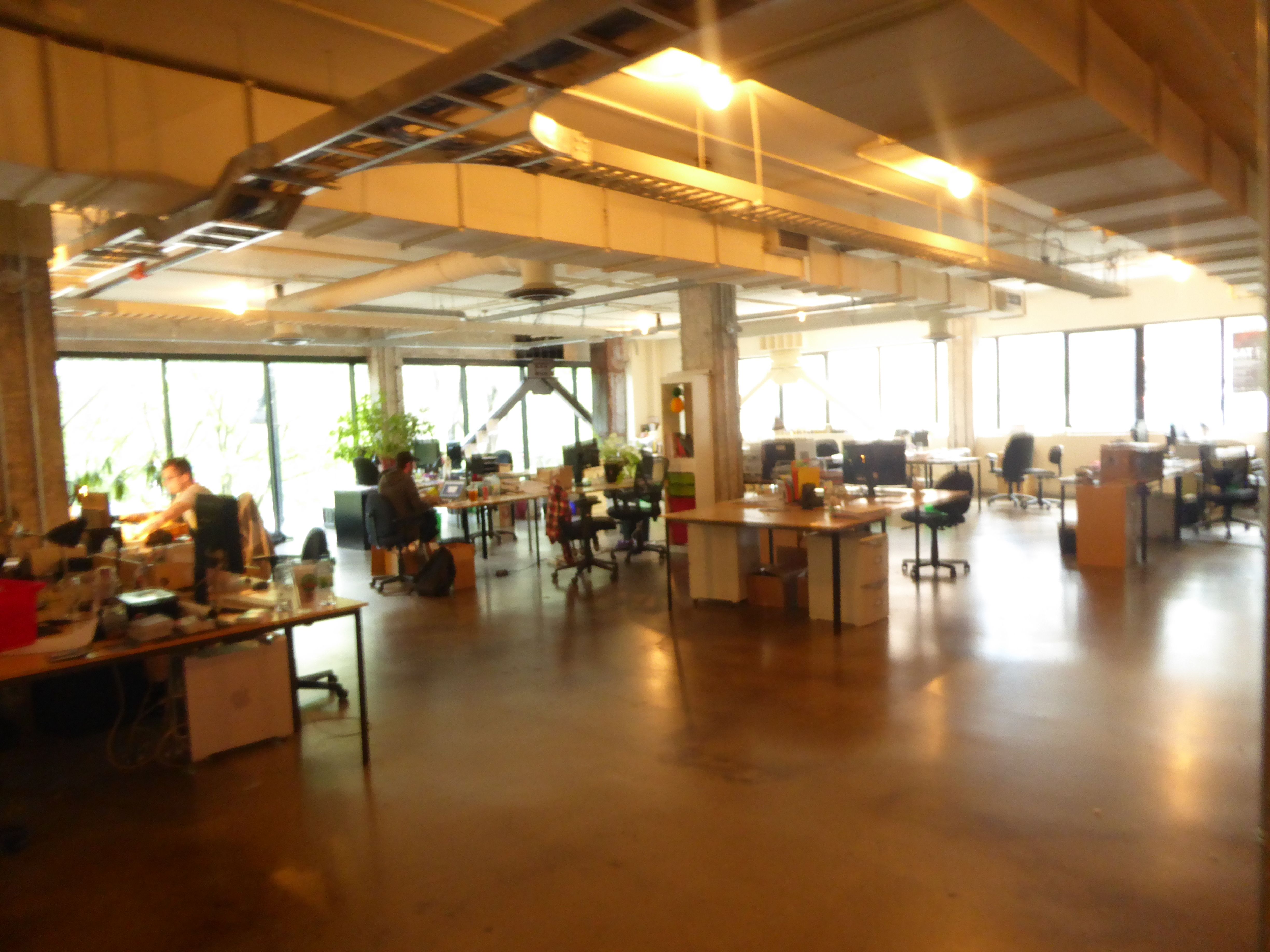

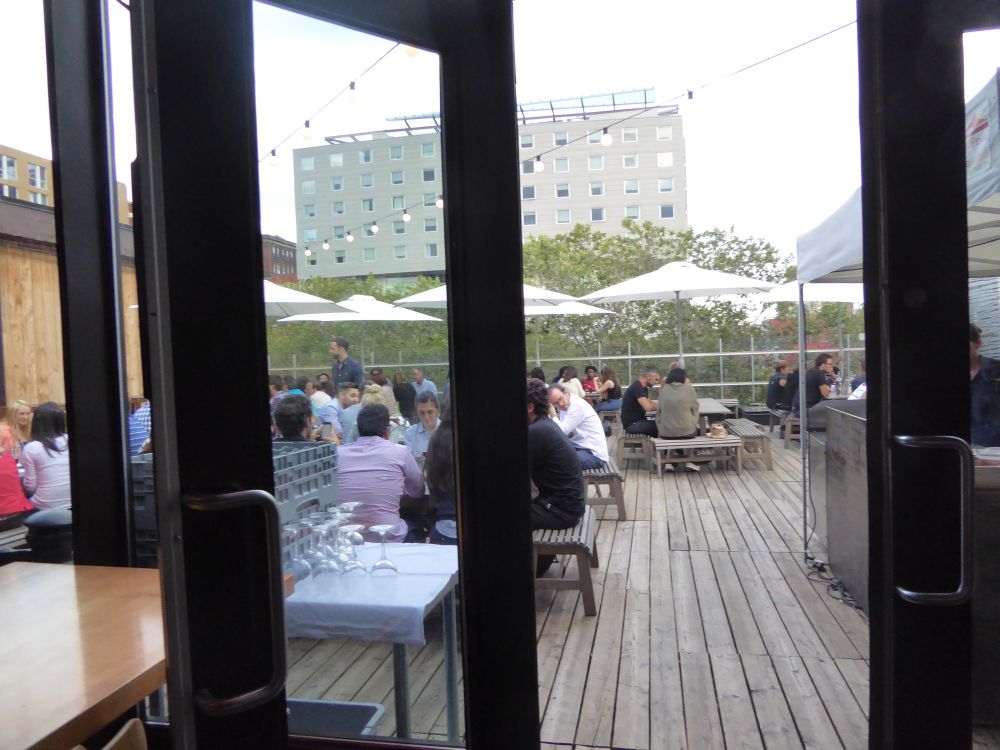
SAT moved to their current building a number of years ago and took over the ground floor. Later they took over the second floor, and finally four years ago the added another floor to the building and built their own 18 metre dome, the Satoshpere, on top. Not stopping there they also added a rooftop restaurant and bar.
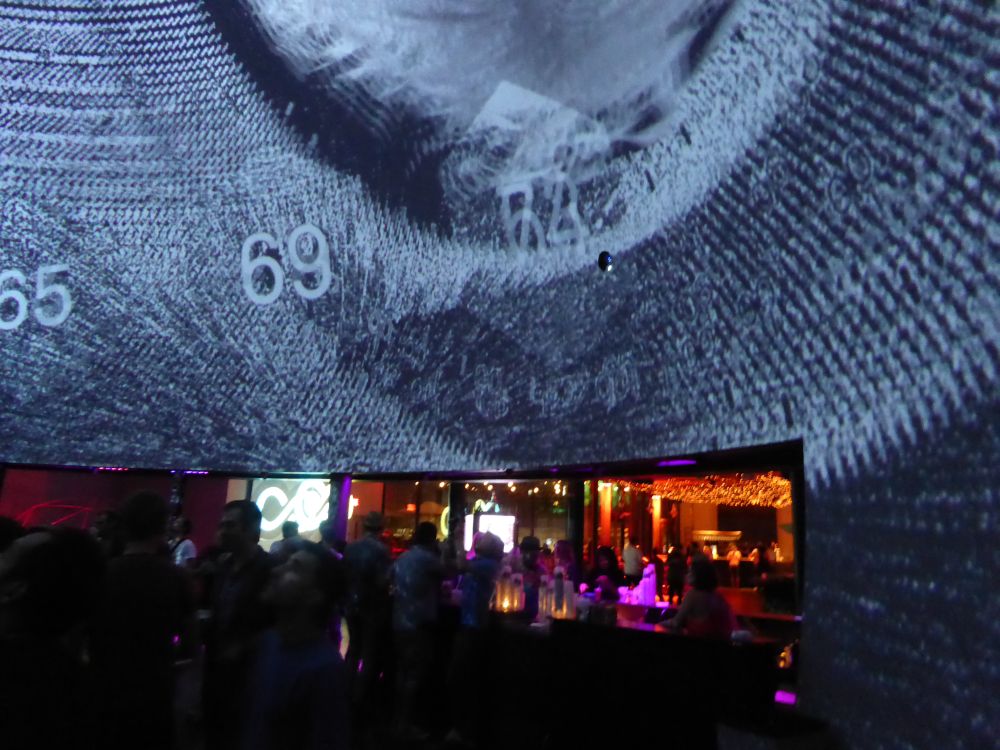
The SAT dome is quite unique. It can be configured to be 180 degrees, 210 degrees, or even 230 degrees, simply by adding and removing panels. Designed as an arts space, it is very dynamic. The sound system is also unique containing some 156 separate speakers and capable of handling up to 39 separate audio channels. The dome has eight Christie projectors and has a resolution of 3K. But the biggest surprise, is that they never have to slice their shows! They can play back 3K rendered shows on the system. However they are trying to move more and more to using realtime systems and game engines such as Touch Designer and Unity. In real time their resolution is limited to 2K.
Monika, Maciej and I were also fortunate enough to be there on one of the nights they have VJ parties in the dome. That night they had over 800 people come along. The sound system is incredible and the atmosphere electric. It was a brilliant night! This is an amazing facility. And I cannot wait to see where they go to next!


As you know their were four sites, bidding to host the 2018 IPS Conference:
Rio de Janeiro, Brazil
Edmonton, Canada
Toulouse, France
Arlington, Texas, USA
After a hotly contested bidding process I am able to announce the winner is Toulouse, France. Congratulations to Marc Moutin and all his team!
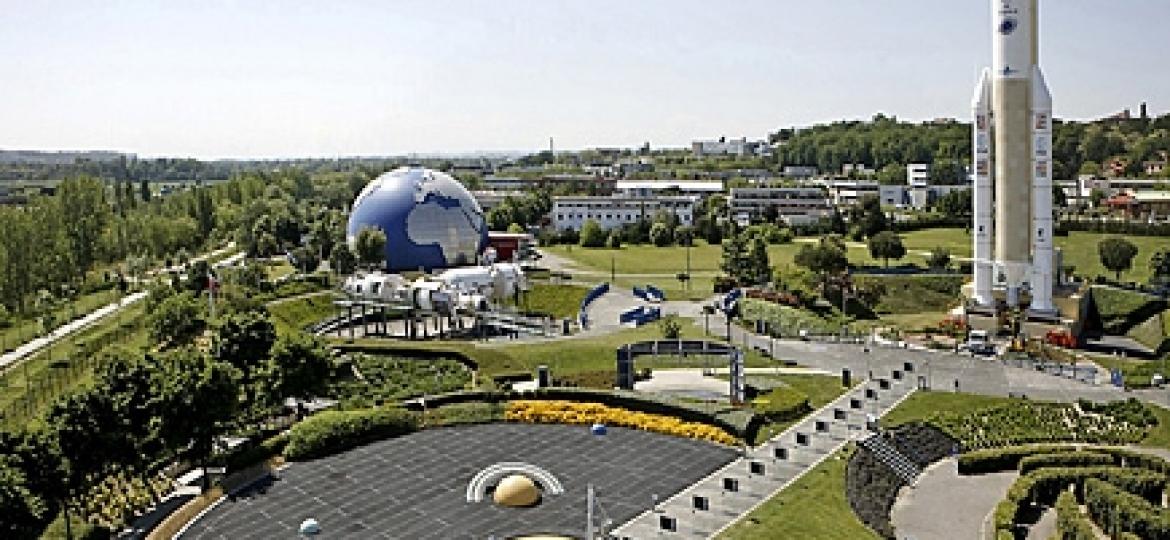
On my way to attend the IPS Council meeting in Montreal, I took the opportunity to visit the Hayden Planetarium in New York at the American Museum of Natural History.
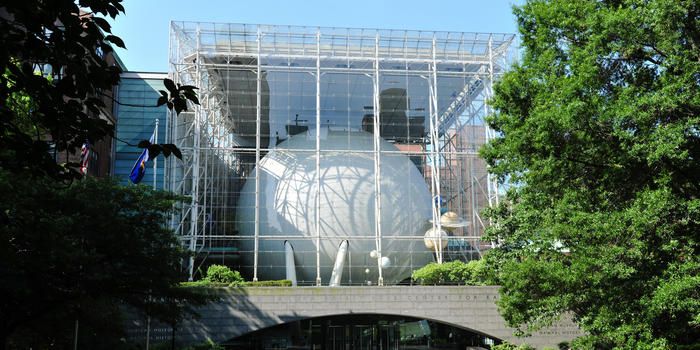
The American Museum of Natural History is massive, one of the largest in the world. It’s earliest buildings date back to 1874, and it is very much a classic museum with many beautiful dioramas and galleries full of dinosaurs.
The Hayden Planetarium was originally built in 1935, but completely replaced by a new facility in 2000. And it is icon of modern architecture. An enormous sphere that appears to float inside a glass cube six stories high.
The planetarium shows are run highly efficiently, every half an hour. The 21m dome seats over 400 people, and they can move them in an out very quickly.
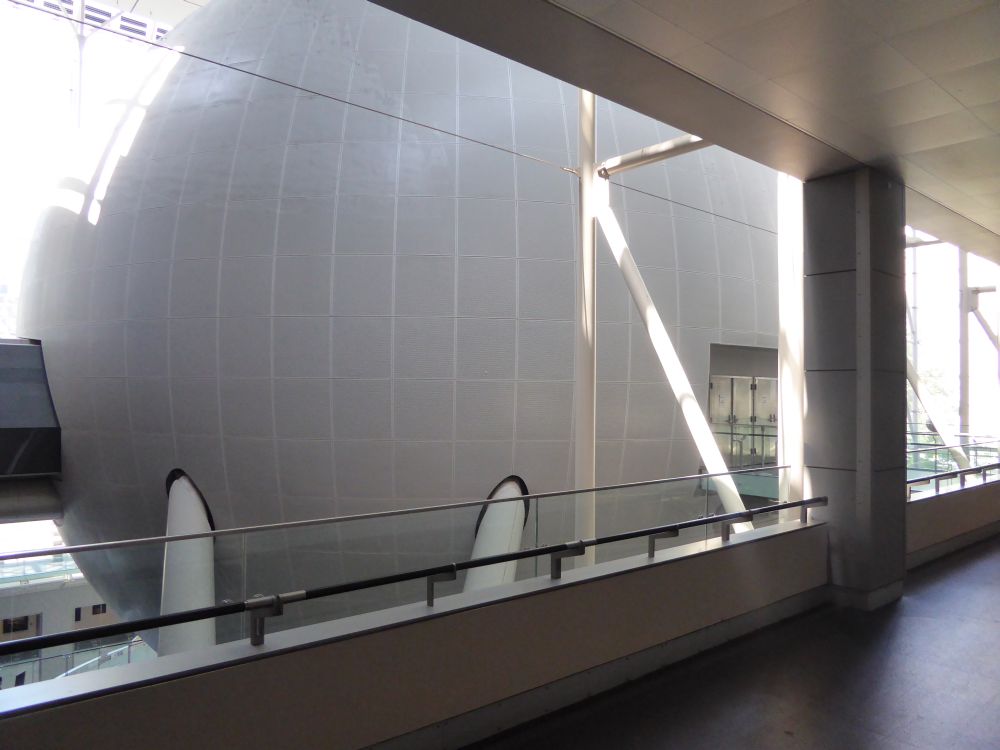
They are currently running ‘Dark Universe’, which I had already seen. However I had never seen it in a planetarium with concentric seating. It was quite interesting to see how this version worked in the dome. The projection system has very good contrast and very good blacks, so images of galaxies and the night sky looked great. However, I did find the images lacked brightness and colour. Fortunately, I have heard they are about to undergo a major upgrade of their system.
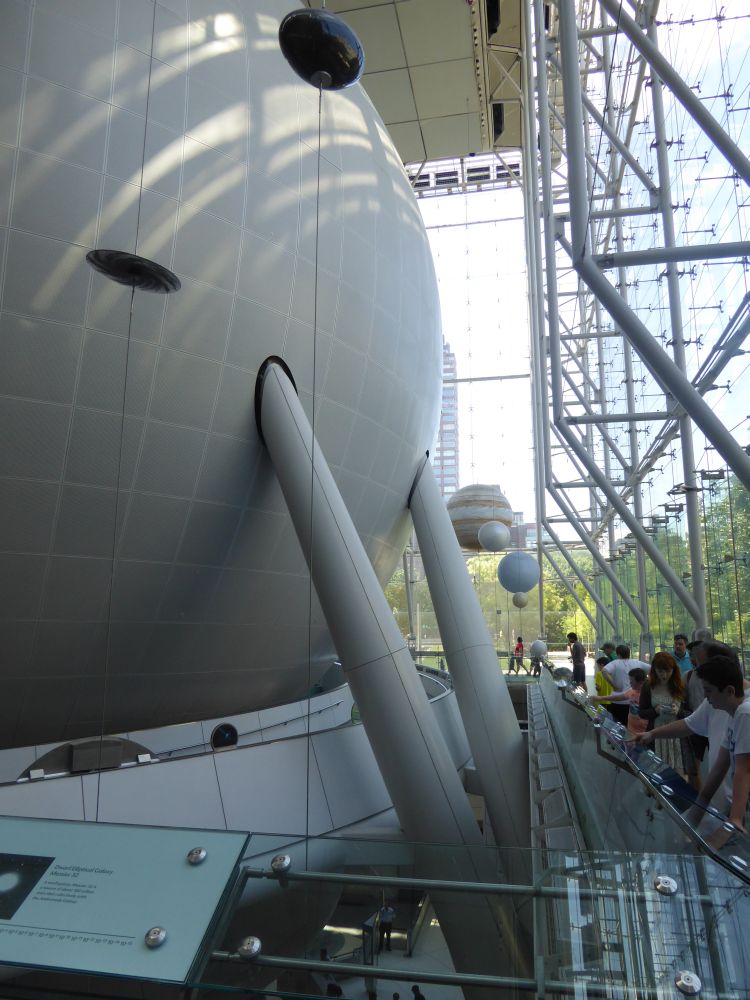
One of the first shows I saw at a planetarium was AMNH’s ‘The Search for Life’ narrated by Harrison Ford. This show really inspired me and opened my eyes to how immersive this medium could be. Since that time I had always wanted to visit the Hayden Planetarium, and I am glad that I have finally had the opportunity. The American Museum of Natural History is a magnificent museum, and the Hayden Planetarium an architectural wonder. A definite highlight of any visit to New York.

Space Place, Wellington, New Zealand. Photo by Mark Gee
I am very pleased to announce that the 2016 APS Conference will be taking place at the Space Place at Carter Observatory in Wellington, New Zealand on the 4th & 5th of April. This is exciting as it will be the first time the APS conference has been held in Wellington. I for one, have never managed to visit there and cannot wait to go.
More details will come in the following months, but for now, please put the dates into your calendar.
 Australasian Planetarium Society