IPS 2016 Conference

International Planetarium Society (IPS) Conference 2016

It is now some 3 weeks since I returned from the IPS2016 Conference in Warsaw and I really did mean to post some blogs on the Conference while I was there.  But somehow it all got to busy.  So here is my post on some of the Conference highlights.

IPS Conference Front

The 23rd IPS Conference took place from the 19th – 23rd of June, 2016 at the Copernicus Science Centre, Warsaw.  This five day conference was attended by over 500 delegates from more than 40 countries.

IPS – Welcome Reception

The conference opened on Sunday the 19th of June with a welcome reception at the Copernicus Science Centre, this also coincided with the 5th anniversary of the centre (so there was a giant birthday cake). Following the reception the conference attendees were invited to be a part of a human star map. Apparently this had been done before when the centre opened and they decided to recreate the event. This involved giving everyone a small led torch and each a set of instructions / coordinates. While it might not have produced the most accurate of star maps, it was a lot of fun: Starmap
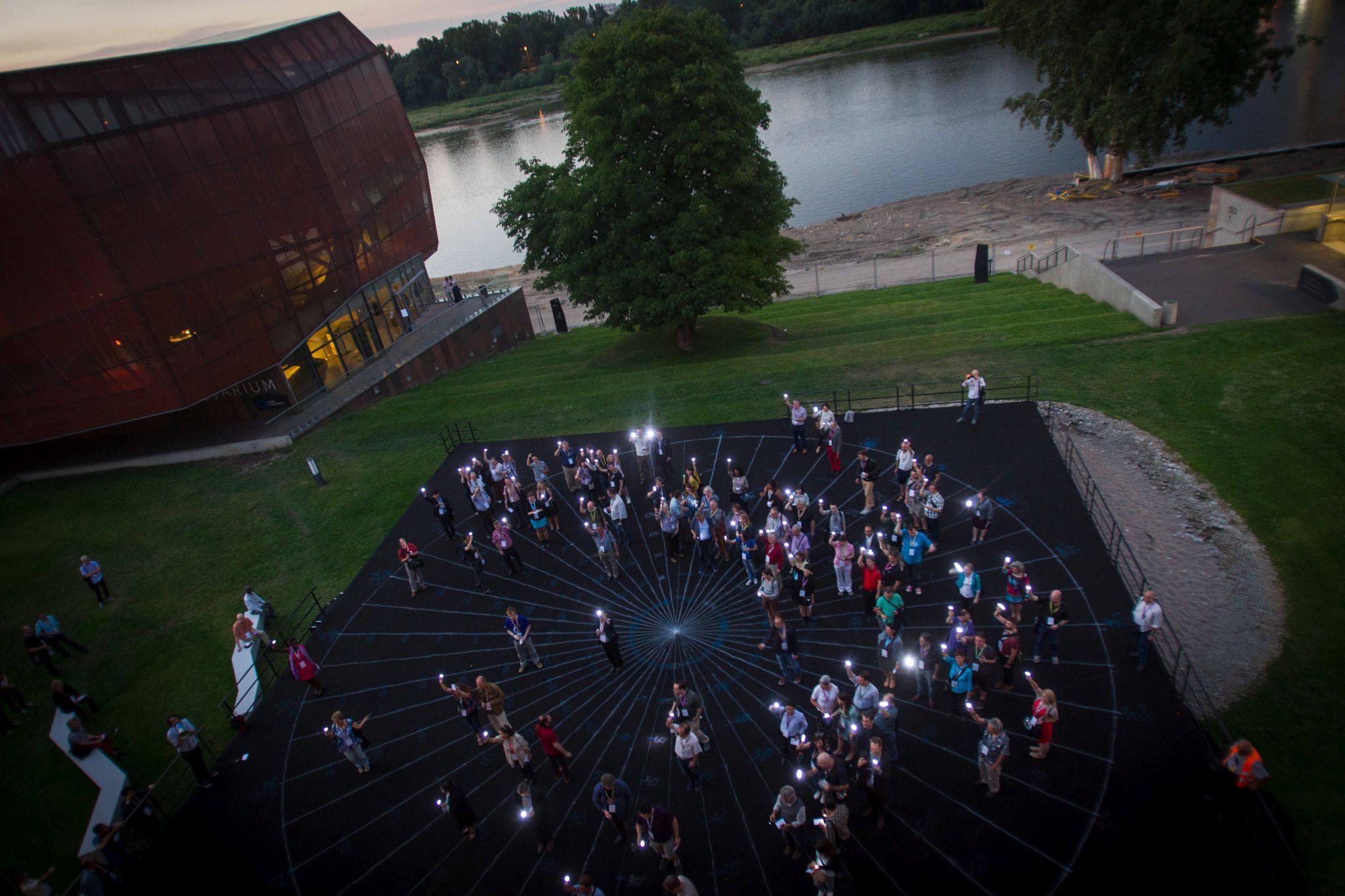
Human Star Map

IPS – Keynote Speeches

Professor Alexander Wolsczan is a Polish astronomer who is currently an Evan Pugh University Professor of Astronomy and Astrophysics at the Pennsylvania State University, best known for his discovery of the first exo-planet in 1992. He gave a very interesting account of the history of the discovery of exo-planets and the techniques used to find them.

Professor Mark McCaughrean a Senior Science Advisor in the Directorate of Science at the European Space Agency (ESA) gave a fascinating account of Rosetta mission in which a space probe and lander module encountered the comet 67P/Churyumov-Gerasimenko in August 2014.

Museum Victoria Presentations

I presented a paper titled – Planetariums and Film Festivals, which was very well received. Many people had questions, and I swapped contact details with a number of participants interested in exploring this idea further.

Sponsor Demonstrations

The Sponsor Demonstrations at IPS2016 were quite different to previous conferences. The Demonstrations were restricted to one hour in length (as opposed to 3-4 hours in Baton Rouge).  This meant there were 10 sponsor demonstrations available to attend across 4 days.  This was great in that it allowed people to only go to the Sponsor Demonstrations that they really wanted to see.

The Sponsor Demonstrations took place in 5 different locations concurrently. So all of the conference participants were divided into 5 separate groups (designated by different colour lanyards).  The concurrent sponsor demonstrations took place either in the main planetarium dome, one of the two lecture rooms, or one of the two 20m portable domes that had been assembled for the conference.

These two domes were very impressive and had managed to survive savage winds (that had brought down trees) a day before the conference. Both domes used negative pressure, meaning that the dome surface inside was very good.  However neither dome had light locks on them.  During the conference, the organisers insisted on starting presentations on time, and to avoid light entering into these domes, would lock out anyone who was late.  On at least one occasion this included the person who was supposed to be presenting!  Given the nature of conferences and everyone’s inability to get to sessions on time, this was a bit problematic.Two Domes

Special Events

A number of special events took place during the conference.

Longest Day Cocktail Party – Monday the 20th of June.  During the cocktail party the entire Copernicus Science Centre was open for everyone to explore.

Night in the Domes – Tuesday the 21st of June.  The conference hosts were very keen to demonstrate how domes can be used for purely entertainment purposes.  For this they made the three domes different entertainment spaces.  The main dome in the Copernicus Science Centre ran a series of live classical music performances in the dome.  One of the 20m domes outside, became a chill out dome, featuring ambient music and visuals.  And the second 20m dome was turned over to a VJ for a full one techno dance party.  To make sure no one was going hungry they also arranged for a group of food trucks to be parked near the outside domes.  The dance party dome was quiet for a while, but eventually a few people started dancing, and soon there were some 40 people having a great time.  It was great to see people enjoying the space in this way.IPS Banquet

Conference Banquet – The conference banquet took place in an old warehouse in an old industrial complex called the Soho Factory. Within the complex is the Neon Museum and the Museum of Life Under Communism, both of which had remained open for the IPS participants.  Following the banquet the back section of the warehouse was turned over to a dance party.  The DJ for the night was a 77 year old lady apparently quite famous in Poland.  It really was quite amazing seeing some 150 planetarians going crazy on the dance floor.  This was without a doubt the biggest, best and most fun finish to an IPS conference ever.

Summing Up

As with all conferences, this was a great opportunity to meet new people, forge new friendships and foster established networks. Invaluable discussions covered everything from public outreach, show production through to planetarium technology.

Overall the conference facilities were excellent and IPS2016 was an fantastic opportunity for networking. It was also a lot of fun as the hosts put a lot of thought and effort into creating entertaining events.  Warsaw is a very easy city to navigate and there is a lot to see and do. Congratulations to the conference hosts, they did a spectacular job.

Posted in Uncategorized | Tagged , , | Leave a comment

MIFF Fulldome Showcases

It’s that wintry time of year again when the Melbourne International Film Festival arrives to warm the hearts of Melbourne filmgoers.  And for the seventh year running, the Melbourne Planetarium will again be screening the best of fulldome cinema as part of the festival.  This year there are two fulldome showcases to choose from.  The showcases will be screening on Saturday the 30th of July at 7pm and 9pm, and Saturday the 6th of August at 7pm and 9pm.

SAMSKARA-Gallery-1600-800_07

Samskara


Fulldome Showcase One features two amazing musical artworks.

Samskara is a stunning visual journey into the mind of the acclaimed digital artist Android Jones.

Loco Dyna Morphics is an audiovisually spatial-animated play that takes the audience on a journey through the realms of universal number harmonics.

wfa_frame_2

Waiting Far Away


Fulldome Showcase Two is all about the journeys.

Cycle explores the natural environment and is a subtle mediation on how a small shift in our perception of time can heighten our awareness of the intricate ecosystem surrounding us.

Waiting Far Away is the tale of a cosmic explorer who has travelled too far and can’t find home.  Great mysteries are uncovered while journeying deep into intergalactic space.

The Unknown Between is a mesmerizing exploration of hypnagogia – the moment between wakefulness and sleep, when dreamlike imagery can fill the mind.

Jules Verne Voyages is inspired by the novels ‘From the Earth to the Moon’, and ‘Around the Moon’.  Three independent artists Ralph Heinsohn, Rocco Helmchen and Tobias Wiethoff have joined forces to create an artistic music show that brings the ideas and the spirit of Jules Verne to life.

For more information and tickets go to:

http://miff.com.au/program/film/fulldome-showcase-1

http://miff.com.au/program/film/fulldome-showcase-2

Posted in Uncategorized | Tagged , | Leave a comment

IPS Fulldome Festival Awards

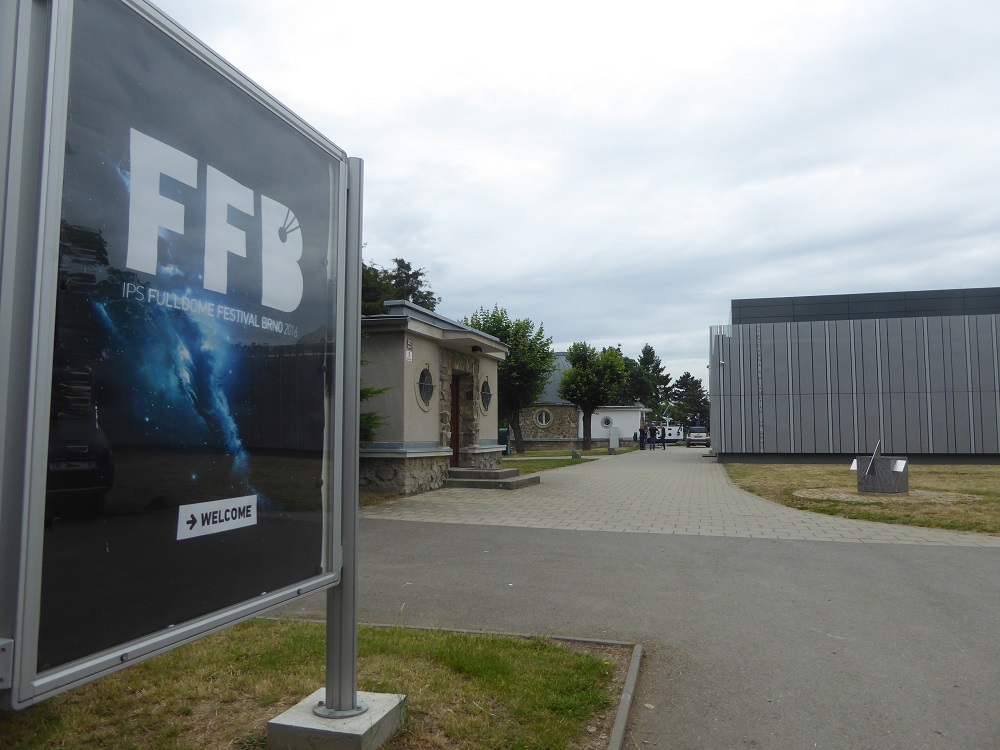
Brno Poster

The IPS Fulldome Festival in Brno wrapped up last night with their Gala Evening and the presentation of awards.  The festival has been fantastic and Jiri and his team at the Brno Observatory and Planetarium have done a brilliant job.  So who won?

The Best Educational Production award went to The Man From the 9 Dimensions. A breath taking examination of the elusive nature of a Theory of Everything.

9 dimensions

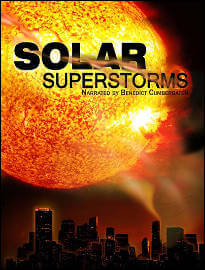
The audience choice award for the Best Movie Award went to Solar Superstorms.

solar-superstorms

And the final prize of the night, the Festival Director’s Award went to the latest production from the California Academy of Sciences, Incoming!

incoming_wordmark

Congratulations to the winners!

And now onto Warsaw.

Posted in Uncategorized | Leave a comment

IPS Fulldome Festival Brno 2016

Brno Planetarium  The IPS Fulldome Festival in Brno is now under way.  The Brno Planetarium is a really impressive facility.  Located at the observatory on a hill top above Brno they have two domes.  The larger dome is 17metres,     with a 7 degree tilt, seats 189 and runs an RSA Cosmos system.  The smaller dome is only 6 or 7 metres and uses a optical star projector. The entire facility was completely upgraded around four years ago.  They have done a fantastic job, the planetarium theatres are both really comfortable (excellent seats) and the building is modern and beautifully designed.

One other great feature is their rooftop deck which includes observing telescopes that have a retractable roof.

Brno Rooftop

The festival have been under way and the schedule has been intense.  There are 66 shows (over 26 hours worth) in the competition. And the shows have been running from 9am until 10pm.  What is great to see is that the festival has been so well attended.  The festival organisers have done a fantastic job, and they have managed to get a really good number of sponsors involved.

Today is the last day of the festival and the gala awards will be announced tonight.


Posted in Uncategorized | Leave a comment

STEMpunk podcast | Planetaria

STEMpunk_profilepic

Warik Lawrence was interviewed by STEMpunk, Shane Hengst, as part of a campaign in raising the awareness of STEM to the public.  Warik talks about his work at Melbourne Planetarium, Science works as a production designer.  He gives interesting insights into STEM, in particular, how the art of story telling is crucial in communicating simple messages.

What is STEMpunk?
Science outreach from USYD, UTS and UNSW have combined forces to unleash STEM! What is STEM? Why is it important? What are the benefits? Tom Gordon, Christie McMonigal and Shane Hengst discuss topics that they are passionate about in attempt to raise the awareness of STEM to the public. This hopefully will be an ongoing podcast with various guests to help boost the audience numbers and attention.

More information can be found at: https://www.facebook.com/STEMpunkpodcast/

Posted in Uncategorized | Leave a comment

Domelab Masterclass

Advanced Immersive Visualisation and Interactive Engagement with DomeLab

DomeLab is the first mobile ultra-high resolution fulldome in Australia. Learn from leading experts Prof. Sarah Kenderdine, Prof. Paul Burke, A/Prof Stefan Greuter and Dr Christopher Barker about the challenges and opportunities of ultra HD fulldome visualisation. The Master class discusses content development methods based on a number of case studies involving film/animation, real-time visualisation and games followed by a tour behind the scenes of Domelab and experience a selected number of Domelab works in a private session.

The Centre for Game Design Research is an interdisciplinary centre for research and the creation of games and playful design interventions based in the School of Media and Communication at RMIT University in Australia. The Centre brings together scholars, artists, designers, engineers and students across Schools and Research Centres at RMIT as well as participants from other Universities and Industry. We design, analyse and critique electronic games and playful activities, to grow our knowledge and appreciation of electronic games and play in modern culture. We also investigate how problems can be solved through the design of new gameful experiences and test these with participants.

WHEN: Monday, 2 May 2016 from 10:00 AM to 5:00 PM (AEST)

WHERE: RMIT Design Hub – Level 3 Lecture Theatre cnr Swanston and Victoria Streets, Carlton, VIC 3000

https://www.eventbrite.com.au/e/masterclass-designing-for-domelab-tickets-23510150493

Posted in Uncategorized | Leave a comment

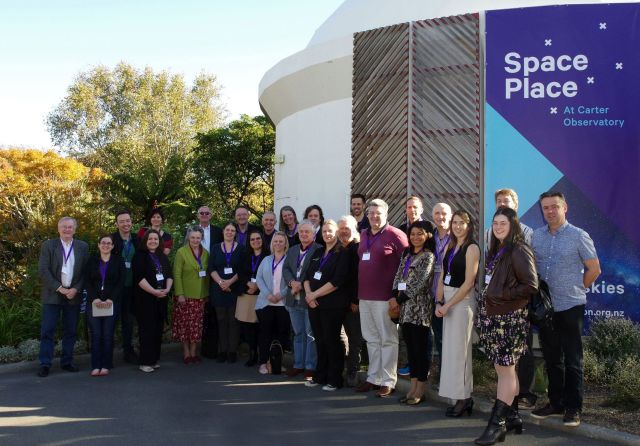
APS2016 Group Photo


APS2016 Group Photo

Many thanks to Claire and all the staff at the Space Place at Carter Observatory for hosting a fantastic conference.  Wellington is a beautiful city and we all had a great time.  Now..  what’s the collective noun for a group of planetarians?  Peck? Pride? Sphere?


Posted in Uncategorized | Tagged , | 2 Comments

Yuri’s Night

Yuri

Each April the world stops to mark the anniversary of Yuri Gagarin who in 1961, was the first human launched into space. This year Scienceworks and Melbourne Planetarium will play host to our first official Yuri’s Night Space Party on Friday the 22nd of April.

The night will include DJs. drinks, a talk from Mars One astronaut candidate Dianne McGrath, and  special planterium screenings of Dawn of the Space Age.

For more information head over to the Scienceworks website: https://museumvictoria.com.au/scienceworks/whats-on/yuris-night-space-party/

Posted in Uncategorized | Tagged , | Leave a comment

Sir Thomas Brisbane Special

Brisbane Presentation01

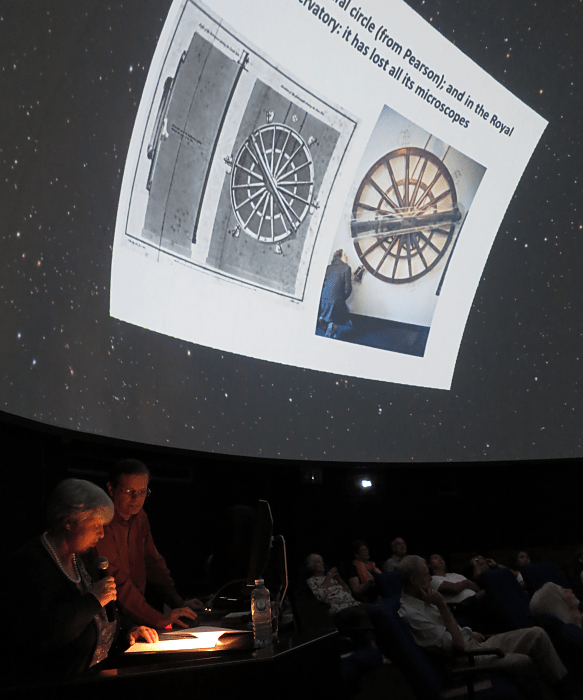
On Saturday, April 9, the Sir Thomas Brisbane Planetarium hosted a free public session entitled “The Soldier-Astronomer: Thomas Makdougall Brisbane’s Scientific Work.” It was presented by Alison Morrison-Low, who has recently retired as a History of Science Curator at the National Museums of Scotland and is now a Research Associate there. Alison is also a recipient of the Royal Scottish Society of Arts Brisbane Medal. We projected the presentation in three directions on the dome to cater for our concentric seating, while we had the stars visible from the latitude of Sir Thomas’s home in Largs, Scotland, drifting by slowly.

Brisbane talk1

Alison covered the life and work of Sir Thomas Brisbane, touching on his service in the British Army, his nearly being shipwrecked in the West Indies and consequently deciding to learn how to navigate by the stars, his observatories in Scotland and Australia and his influence on the scientific community in the 19th century. She also provided an update on plans to restore Sir Thomas Brisbane’s observatory, which has been cleared of overgrowth since I was in Largs in 2011.

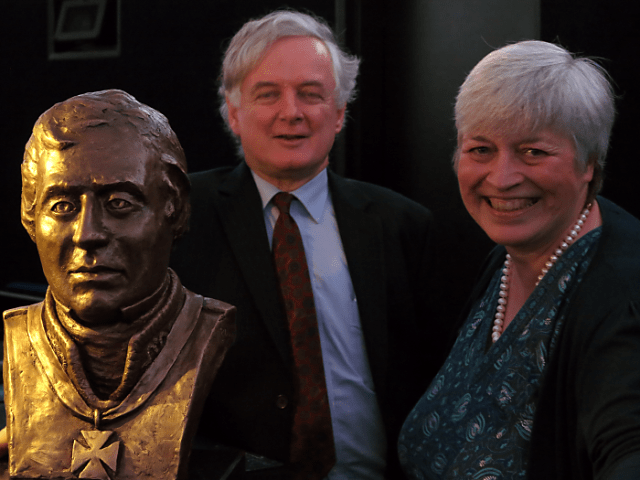
After Alison’s presentation, a just-completed bronze of Sir Thomas Brisbane was unveiled by Brisbane local physiotherapist and sculptor Peter Dornan. Peter had thought about doing a bust of Sir Thomas after he and his wife attended our Valentine’s Day special show last year and I related how one day I would like to see a full-size Sir Thomas outside the Planetarium. Peter completed two copies of the bust – one to keep and one may end up in Brisbane City Council’s City Hall.

Brisbane_Mark_Alison

Above: Sir Thomas Brisbane Planetarium Curator Mark Rigby and guest presenter Alison Morrison-Low with the bronze of Sir Thomas Brisbane completed this week. (Images here by Duncan Waldron.)

Brisbane_Dornan.png

Above: The bronze of Sir Thomas Brisbane with its creator Peter Dornan.

I still hope that one day, a statue of Sir Thomas will grace the lawn outside of the Sir Thomas Brisbane Planetarium to join our bronze of Konstantin Tsiolkovsky, Founder of Cosmonautics, which is extremely popular with visitors.

Mark Rigby

Posted in Uncategorized | 1 Comment

MCIC: Michael Crough Innovation Centre

DomeLab at the MCIC (Michael Crough Innovation Centre)
Shows during the Michael Crough Innovation Centre exhibition at UNSW

Posted in Uncategorized | Leave a comment