DigitalSky Academy – Imiloa, Hawaii

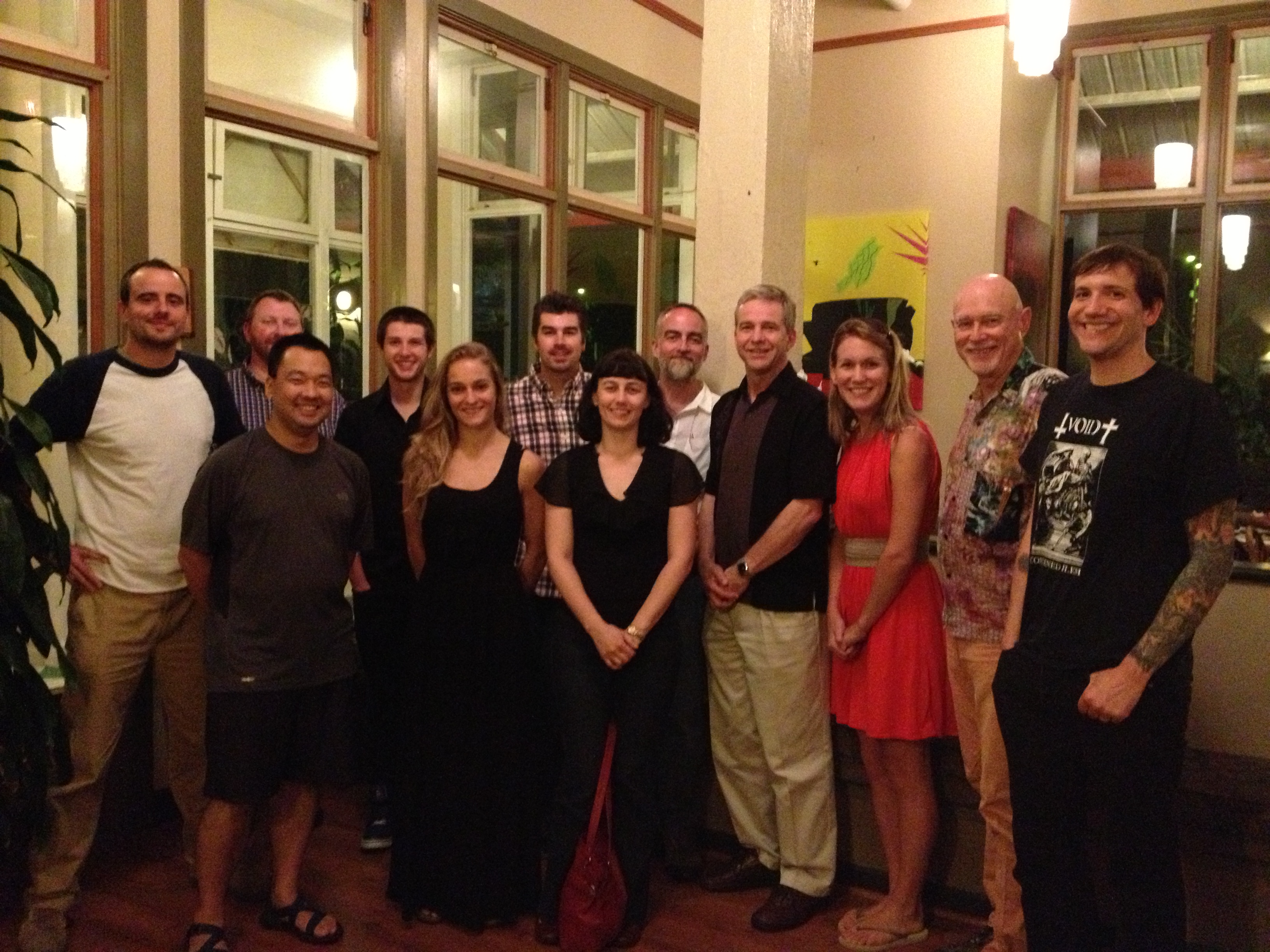
Dinner after a fun two day DSA, hosted by Martin Ratcliffe, with Brent Tully as special guest.

Dinner to mark the end of a successful DSA, hosted by Martin Ratcliffe, with Brent Tully as special guest.

Earlier this week, I attended a fantastic two day DigitialSky Academy, here in beautiful Hawaii.

It was just a small group of us, led by Martin Ratcliffe from Skyskan and consisting of the team from Fiske Planetarium – Matt, Chris, John and Beth; Toshi from Lawrence Hall of Science, Matt from California Academy, Troy and Doug from Skyskan, Shawn from Imiloa and myself.

It was great to see the Fiske team really stepping up to the DigitalSky challenge – they are in the process of upgrading their planetarium from analogue to 8K digital with a Megastar. It’s a pretty exciting time for them as they had only turned on their system last Friday, then hopped on the plane to Imiloa. But they have been programming with DS offline, since March and are already producing some really great content as they convert their tertiary astronomy material into DS.

Toshi presented “How big is the Universe”, one of the Interact Astronomy Teaching modules that he has produced. It’s great to see interaction and demonstrations going on in the dome environment, and we all did a mexican wave to demonstrate measuring distances using radar.

The theme of the workshop was exploring galaxy datasets, and we were treated to two special guest speakers – Jean-Charles Cuillandre from CFHT and Brent Tully from the University of Hawaii. The amount of extragalactic data being gathered is just extraordinary, and it was such an amazing experience to see the Tully Dataset in 3D and have Brent take us through all the structures. Brent is keen for us to start showing how galaxies are moving, which would be brilliant. I compare it to the days when we were first able to show precession of the stars – hopefully one day, we’ll be able to go forward and backward in time, watching how galaxies move and influence each other.

Delving into galaxy datasets in DS.

Delving into galaxy datasets in DS.

Posted in Uncategorized | Leave a comment

Max Valier Observatory

Max Valier Observatory

Although I have now returned from my recent trip to Italy, I feel remiss that I never included a post on the Max Valier Observatory in South Tyrol. Located about a 10 minute drive from the Planetarium South Tyrol is the Max Valiers Observatory. This observatory was established in 2002 and contains two domes and a small classroom. It is run by the Association of Amateur Astronomers Max Valier. The larger 6m dome has a Cassergrain reflecting telescope with an 80cm main mirror and an 8m focal length. The smaller 4.2m dome contains the Peter Anich sun observatory with an 190mm APO refractor.

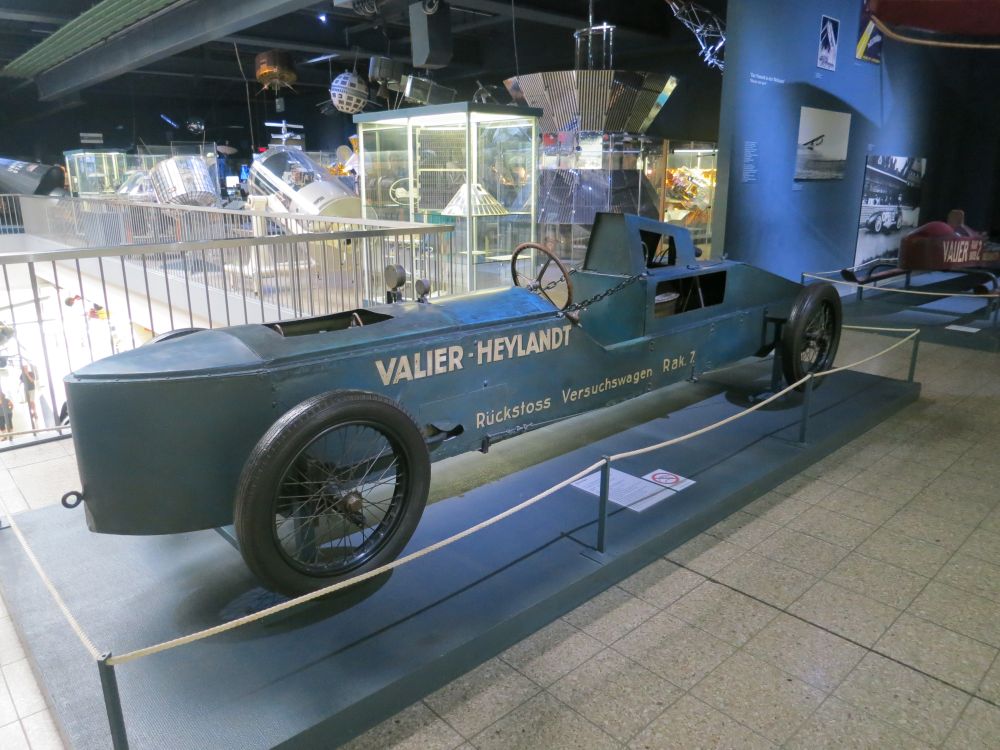
So who was Max Valier? Max Valier, was a pioneer in rocket technology who was born in Bolzano. His early experiments in rockets inlcuded the creation of the first rocket propelled car and rocket propelled sled. Both of which are on display in Deutsches Museum.
Rocket Car
The IPS council visited the Max Valier Observatory during the day and met a few of the volunteers. Then the following night a small group of us went to view the night sky as well as the Perseids meteor shower. It was my first opportunity to see a clear view of the northern hemisphere stars and I was not disappointed. I was surprised by how large and dominant the big dipper appeared close to the horizon. The meteor shower was less rapid than predicted with only around 10 or more per hour. The volunteers arranged viewings of several different objects through the telescopes including the ring nebula, the double star Albireo as well as the Andromeda galaxy. It was wonderful to see these beautiful astronomic objects and made it an unforgettable evening. I would like to thank all the volunteers for all their hard work in making this wonderful facility available to the public.

Posted in Uncategorized | Tagged , | Leave a comment

Congratulations to Warsaw

Copernicus Science Centre

Congratulations to the Copernicus Science Centre, who are the successful bidders to host the IPS conference in 2016. Maciej and Monika, did a terrific job in their final presentation for the Heavens of Copernicus Planetarium at the IPS council meeting. This will be an exciting opportunity for the International Planetarium Society to engage with planetarians from across Eastern Europe.

Posted in Uncategorized | Tagged , | Leave a comment

Milan Planetarium

From the newest planetarium in Italy to the oldest. While the Planetarium South Tyrol has only been open a few weeks, the Milan Planetarium opened in 1930 and was the very first planetarium in Italy. This was my last stop on my itinerary. On the morning of my visit, I met Alberto, their administrator, and two of their technicians.

Milan Exterior

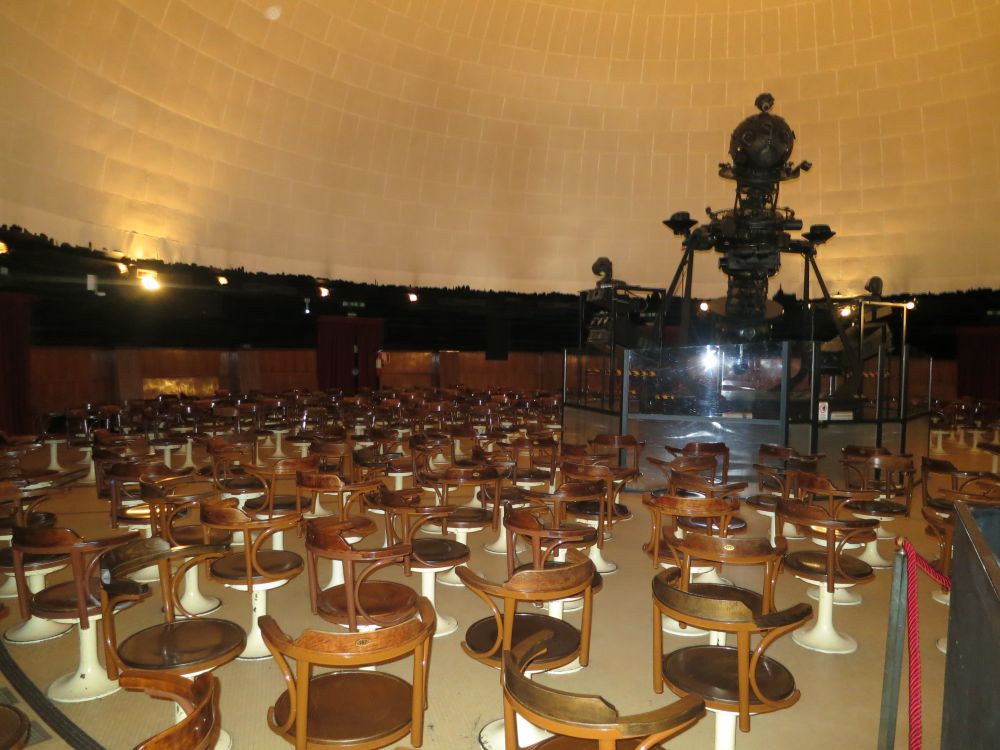
The planetarium is a wonderful looking building and is set in a park alongside the Milan Natural History Museum (which has some wonderful diaoramas). The planetarium is almost all original. The interior with its tiled floor, bespoke chairs and wood panelling exude a warm charm.

Milan Seats

The star projector is a Zeiss Mark IV, which was installed in 1968, the only time they have ever done an upgrade. During the war the original star projector was removed from the planetarium and stored in the basement of a church to prevent any damage from ally bombing. This was quite fortunate as a bomb did hit near by, and the original dome caught fire and was burnt to the ground. The rest of the building was saved.

Milan Interior

It was great to see and hear their star projector in action and see their night sky. I must say I was well impressed with their control panel.

Milan Control Desk

It is funny to think that in this day and age of fulldome, we are all becoming obsessed with upgrading our equipment. Yet, I love the Milan Planetarium as it is, it is a Living Museum. Certainly a city as large as Milan deserves a fulldome planetarium. But I hope that instead of upgrading this one, they keep it as it is, and build a fulldome planetarium right alongside it.

Posted in Uncategorized | Tagged , , | Leave a comment

Planetarium South Tyrol

IMG_3373

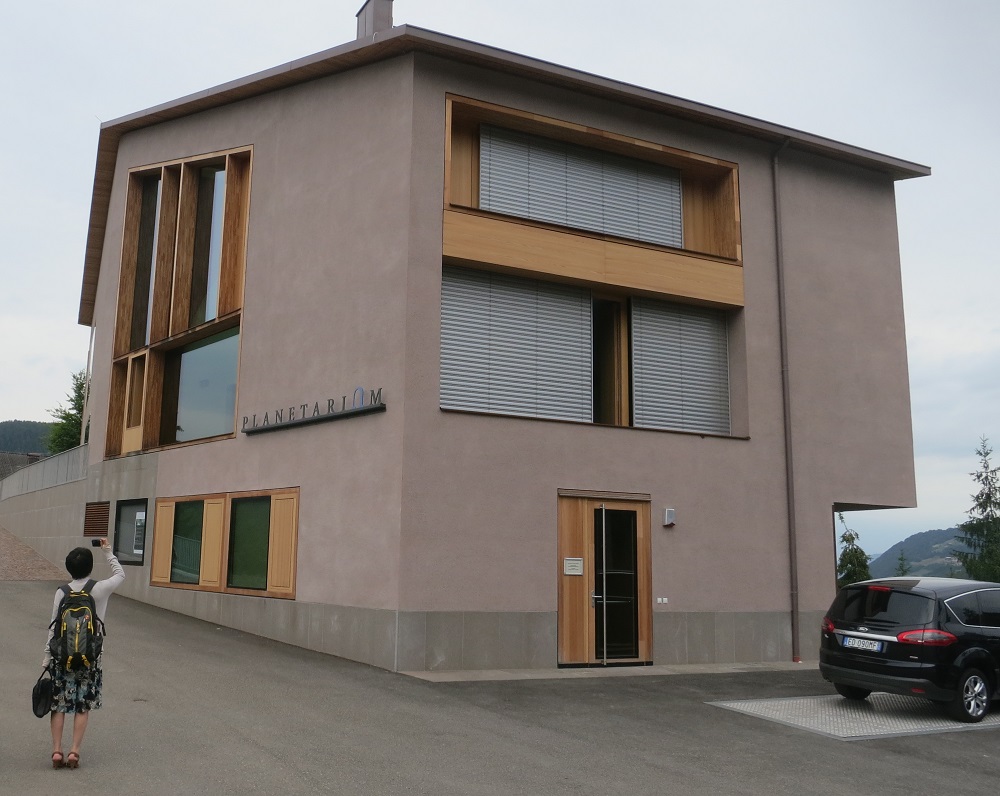
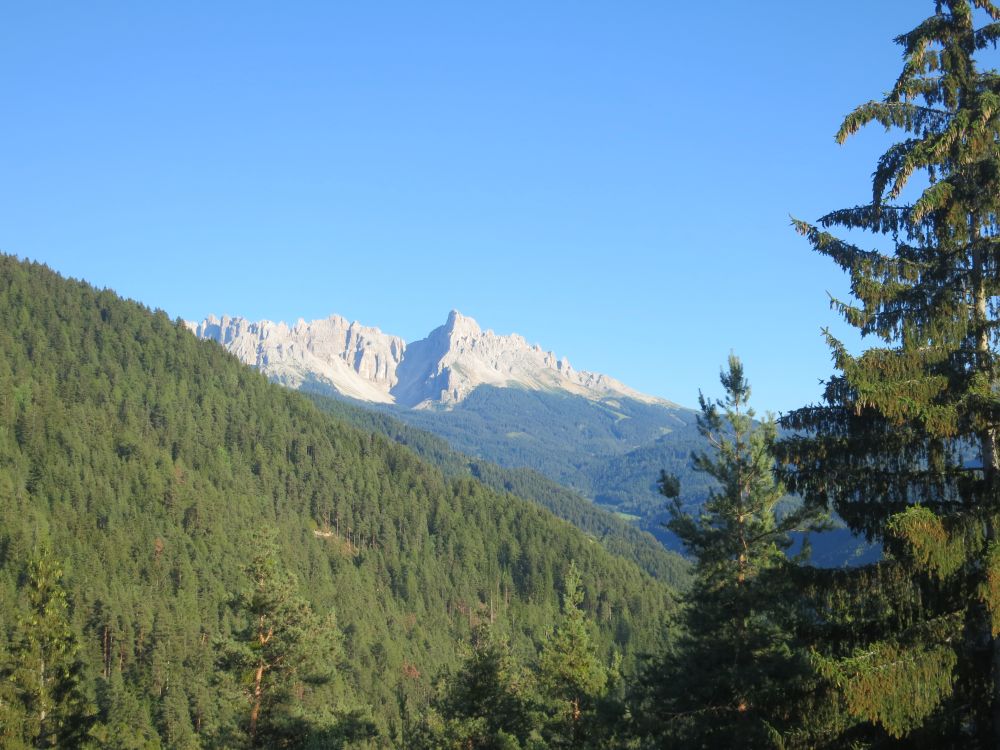
The 2013 IPS council meeting took place at the Planetarium South Tyrol. The planetarim is located in the idyllic village of San Valentino just north of Bolzano and has a spectacular view of the Dolomite Mountains.

IMG_3576

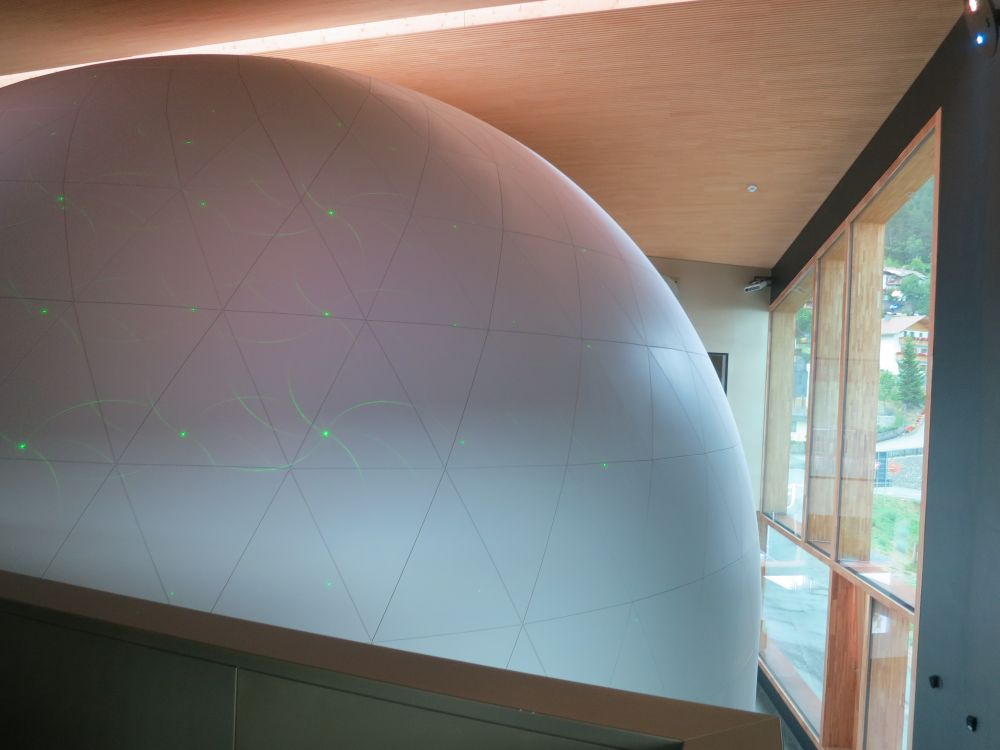
It was delightful to meet the young and enthusiastic staff who presented their first ever show in English to the IPS council. Architecturally, the building and dome look fantastic. It is a simple, almost stark design however the natural timber used throughout the building give it a warm and rich feel.

IMG_3450

The planetarium seats 55, has a 7.1 surround sound system, and uses five F35 Projection Design projectors. The projectors run at 120Hz, this means that they can also project a 3D stereoscopic image at 60Hz.

This small planetarium is very well equipped, beautifully designed and built, and has stunning scenic views. What more could you ask for? Bravo!

Posted in Uncategorized | Tagged , | 3 Comments

The Grand Daddy of them all

Zeiss Mark I
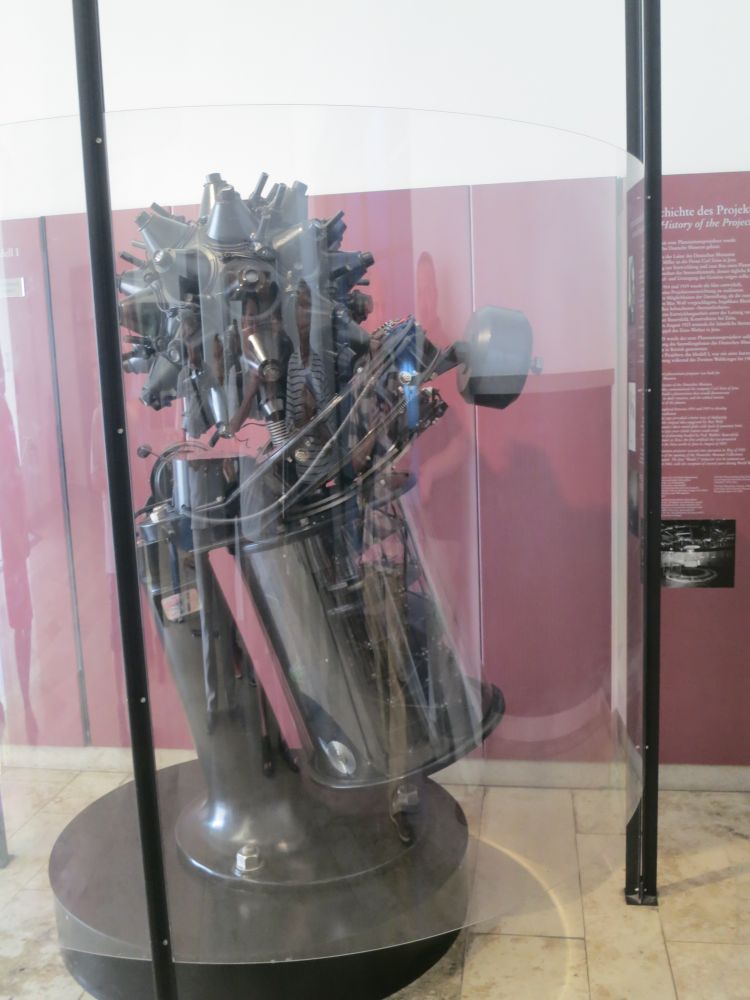
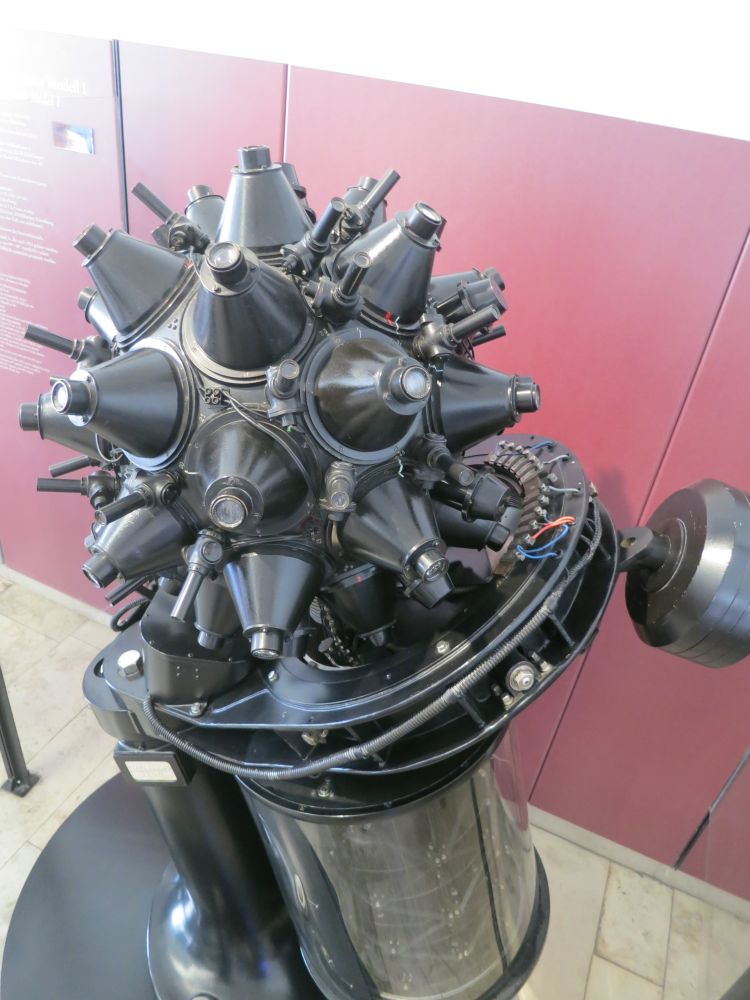
The IPS council meeting is scheduled to take place in a few days time in Bolzano. A couple of tours have been organised prior to the meeting including a visit to the famous Deutsches Museum in Munich. The Deutsches Museum is the oldest Science and Technology Museum in the world and it is enormous, with over 50,000 square metres of exhibition space. The highlight of this brief tour was a visit to the world’s first planetarium projector.
Zeiss Mark I_2

In 1913 the director of the Deutsches Museum, Oskar no Miller, commissioned the company of Carl Zeiss of Jena to design and build a planetarium that would demonstrate the starry sky, its daily rotation, and the orbital motion and appearance of the planets. After many years of planning headed by Professor Walther Bauersfeld, a design engineer at Zeiss, the first artificial sky was projected onto a dome at the Zeiss works in Jena August of 1923. The first planetarium projector was put into operation in May of 1925 on the occasion of the opening of the Deutsches Museum Collections building in Munich.

How fabulous it is, that this incredibly significant piece of technology that revolutionised astronomy education remains intact today, and there for all to visit. While it is somewhat ironic that Munich currently has no operating planetarium, this will soon change as the Deutsches Museum is currently undergoing a massive redevelopment that will see a fulldome planetarium installed back onto the rooftop of the building.

Posted in Uncategorized | Tagged , , | Leave a comment

Fulldome Showcases at the Melbourne International Film Festival

KilpisjärvelläThe Melbourne International Film Festival is coming up again soon.  The Melbourne planetarium has again been invited to run Fulldome Showcases that display the best of Fulldome Cinema.  These showcases are always popular.  There are two showcases screening on Saturday the 3rd of August, and then there will be a repeat screening of both showcases on Saturday the 10th of August.  The first Fulldome Showcase presents the films White Room: 02B3 a science fiction thriller, followed by Kilpisjarvella  where two men trek through the tundra to see the Northern Lights, and finally the ground breaking Six Mil Antennas.  The second fulldome showcase has a mathematics theme and features Eshcer’s Universe followed by Chaos and Order – A Mathematics Symphony.

For more information or to book tickets go to the MIFF website at: http://miff.com.au/

Posted in Uncategorized | Tagged , , | Leave a comment

Sydney Observatory Planetarium

I’ve posted this from Sydney Observatory’s page on Facebook. — Mark Rigby

Image

“The Sydney Planetarium is now installed and ready for the school holidays. How many digital planetaria around the world have a marble fireplace? The sky is always clear, the sunsets spectacular and Elton John’s ‘Rocket Man’ music video about the history of space flight is inspirational.”

Posted in Uncategorized | Tagged , | Leave a comment

Russia / Kazakhstan Trip

Last week, I returned from my latest trip to Russia and my first to the Baikonur Cosmodrome in Kazakhstan for the most recent Soyuz crew launch to the International Space Station. It was a long-time dream to go to Baikonur and the 2:31am launch was from the same pad used for Sputnik 1 and Yuri Gagarin. The rollout was amazing and I also visited Gagarin’s basic cottage in the middle of the night that was used for his last night on Earth before his flight. Unlike past US space shuttle launches with their hundreds of thousands of people in the area to see them, there were probably only a couple of hundred (NASA, Roscosmos, ESA, Japan for backup crewman, families & some friends of the crew, and some media) for the Soyuz. Much more invoved and expensive getting to Baikonur. — Mark Rigby

Rollout003

Rollout004

Mark with Soyuz

Pad04

SuitedSoyuzCrew1

SoyuzLaunch01

SoyuzLaunch02_Rigby

SoyuzLaunch03_Rigby

SoyuzLaunch05_Rigby

Posted in Uncategorized | Tagged , , | 1 Comment

Melbourne Planetarium Upgrade – Part 4

Projector On_sm

..and then there was light! And what a fantastic light it is. On Monday the Melbourne Planetarium re-opened to the public with new projectors and audio. The image looks terrific, it is much brighter, the colors are much more vivid, and the higher resolution makes it look crisper and sharper.

The audience reaction to the new system has been quite incredible. The school groups have been squealing with delight at the opening scenes of TILT and remain much more engaged throughout the show. It is very rewarding to see details in the shows which we always knew were there but could not see on our old CRT projectors.

The install went incredibly smooth and thanks go out to Jack White, Steve Savage and all of the install team from Sky-Skan for getting it all done ahead of schedule. I would also like to thank Andy Greenwood from Museum Victoria, he oversaw the entire upgrade process and without his vision and drive it would never have been acheived.

Posted in Uncategorized | Tagged , , , | 2 Comments