Eclipse Megamovie Project

Hope everyone is gearing up for Australia’s solar eclipse. It’ll be my first chance of totality, so I’ve got fingers crossed that the clouds will stay away.

I wanted to let you know about the Eclipse Megamovie Project. It’s about using smartphones to upload images and videos of the Sun during totality and the Space Sciences Laboratory in California will combine the footage to create the first ultra-high time resolution movie of a solar eclipse. It’s sure to be spectacular, showing the evolution and dynamics of the corona and photospheric prominences, and we can help make it happen.

This project is supported by the US National Science Foundation and is a collaboration between the University of California and the High Altitude Observatory at the National Center for Atmospheric Research in Colorado. It’s the first time this has ever been attempted, and they’re got the technology side all sorted, now they just need to get the word out and encourage contributions!

Good luck everyone with your eclipse endeavours and please help spread the word.

Posted in Uncategorized | Tagged | Leave a comment

Fisheye filming

Further to my earlier post on filming with the Red Scarlet and fisheye lens, we finally took it out on the road. The following with the gorilla mount is my favourite shot since it looks so parasitic on the front of the vehicle. In the end though it was to “wobbly” so the second option was used … rock solid.

ImageImage

Summary: 30fps, 2300 circle fisheyes, 20 minutes on a 64GB SSD.


Posted in Uncategorized | Tagged , , , | 2 Comments

Sir Thomas Brisbane Planetarium in 1977

Sir Thomas Brisbane Planetarium in 1977

Thirty five years ago, this was the Sir Thomas Brisbane Planetarium under construction in Brisbane. It was officially opened on 24 May 1978.

Posted in Uncategorized | Tagged , | 1 Comment

APS 2013 Meeting Preliminary Notice

During the first three months of 2013, the Sir Thomas Brisbane Planetarium will undergo a major upgrade, which will culminate with APS 2013 on either the weekend of 23/24 March or the Sunday/Monday, 24/25 March. APS members will preview the upgrade a week before the public. Major aspects of the upgrade include a new projection dome and installation of the first Megastar-IIB optical star projector in the APS region. We hope to see you at APS 2013.  N.B. APS 2013 has now been moved to 22/23 April.

Mark Rigby
Curator, Sir Thomas Brisbane Planetarium
APS Treasurer

Posted in Uncategorized | Tagged , | Leave a comment

Melbourne Festival

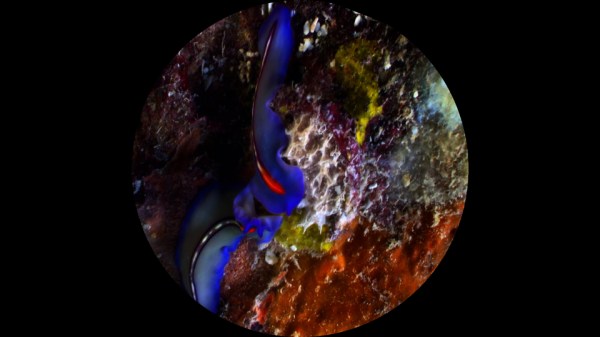
The Melbourne Planetarium is pleased to announce that it will be involved with the upcoming Melbourne Festival. On Monday the 15th of October, the planetarium will be screening Lynette Wallworth’s entrancing fulldome film Coral: Rekindling Venus.

Australian installation artist Lynette Wallworth has spent the last five years surveying the majesty of our coral reefs for Coral: Rekindling Venus, an immersive, kaleidoscopic journey through the glowing underwater forests of Australia, Papua New Guinea and Indonesia. Coral: Rekindling Venus takes us deep into a world that only a handful of humans have ever seen before – the infinitely complex, vibrant aquatic kingdoms of this planet’s coral reefs.

Featuring jaw-dropping cinematography from Emmy Award-winner David Hannan and a hypnotic, ethereal soundtrack featuring specially recorded songs from Antony (of Antony and the Johnsons), legendary film composer Max Richter and our very own Gurrumul, Coral: Rekindling Venus is a staggering cinematic experience and an ecological call-to-arms.

For more information go to the Melbourne Festival

Tickets available through Ticketmaster

Posted in Uncategorized | Tagged , , , , | Leave a comment

Adelaide Planetarium comes to Melbourne

Image

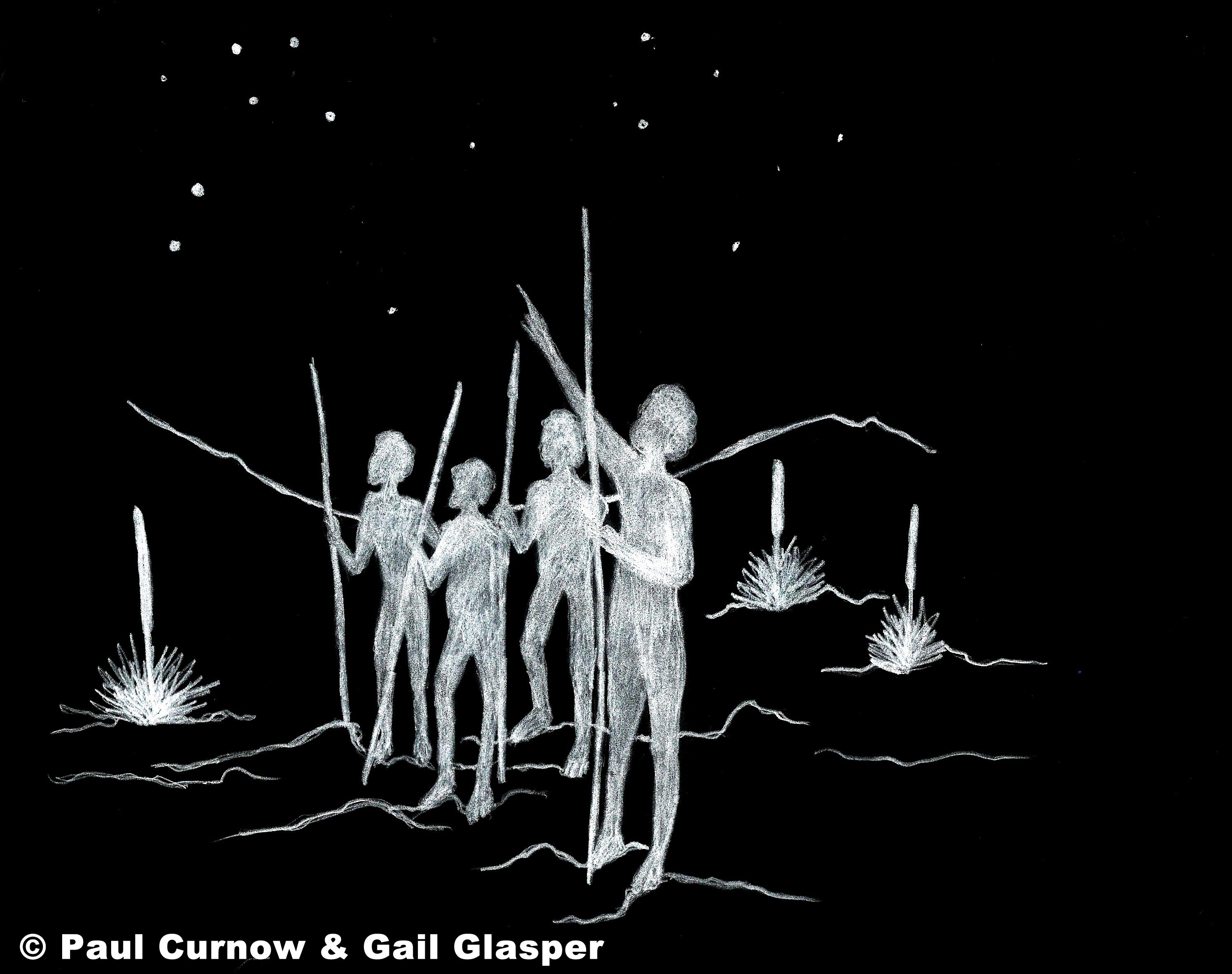
We had a great treat at the Melbourne Planetarium last night. Paul Curnow from Adelaide Planetarium was visiting and gave a fantastic planetarium lecture entitled “Beneath Australian Skies”.

The audience was mainly members of the public but also included many Melbourne Planetarium presenters as well as the team from Bunjilaka, the Aboriginal Cultural Centre at Melbourne Museum. Caroline Martin of the Boon Wurrung and also the Manager of Bunjilaka attended and shared many of her own stories with Paul.

It was also particularly inspiring for the Planetarium team and has renewed our energy for including more indigenous Australian stories into our own What’s in the Night Sky? presentations. And personally, it was lovely to see someone else take charge of “my” planetarium, allowing me to simply sit back and enjoy the experience! I highly recommend it! 

All told, it was a wonderful evening of building cross-cultural respect and understanding. There is so much we can learn from each other if we work together with respect to knowledge and people.

For extensive information on Aboriginal Astronomy see Paul’s website: http://sa.apana.org.au/~paulc/loreaussie.html

Posted in Uncategorized | Tagged , , , | Leave a comment

Tribute to Neil Armstrong

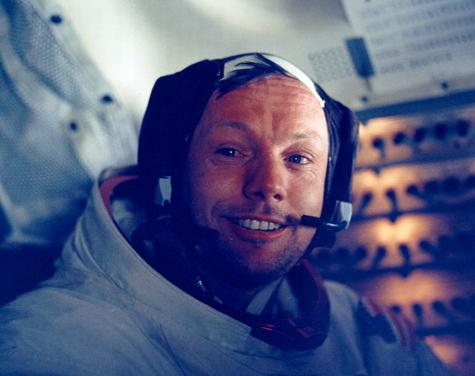
I was sad to hear the recent news that Neil Armstrong had passed away.

Neil Armstrong in Apollo Lunar Module after his historic moonwalk in July 1969.
Source: NASA

It was just last week that I had been talking about the Apollo missions to a group of Grade 3 students. It was my son’s class and they had asked me to talk about life on Mars. They were studying the idea that over time, living things need to adapt in order to survive, and so they were thinking about what people would need to live on Mars one day.

As we spoke about things like the need for water and oxygen, along with the differences between Mars and Earth, I asked if they’d ever seen what happened when the astronauts walked on the Moon. The group, including my son, looked at me blankly and I realised that they had never heard of the famous Moon landings.

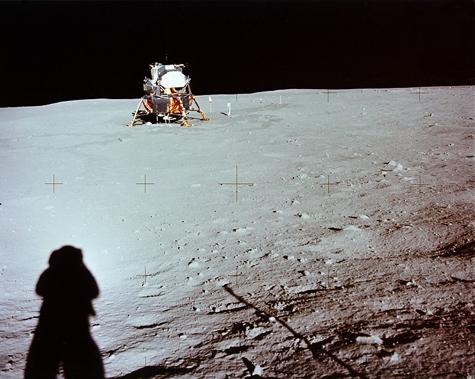
So we checked out the NASA clips of Apollo 11’s landing and those great action shots of astronauts bouncing around on the Moon due to its weak gravity. The kids were astounded!

Apollo Lunar Module on the Moon with Armstrong’s shadow in the foreground.
Source: NASA

I was born just as the Apollo missions were coming to an end. Even so, it was always a part of my world. The Apollo astronauts were amazing men and my tribute to Neil Armstrong will be to make sure that young generations know of the incredible things he and his fellow astronauts did. May they always be an inspiration to all.

Posted in Uncategorized | Tagged , , | Leave a comment

Melbourne Planetarium meets the Morrison Planetarium

On our recent trip to IPS, three of us from Museum Victoria, took the opportunity to stop over in San Francisco to visit the Morrison Planetarium at the California Academy of Sciences. One of the largest natural history museums in the world, the California Academy of Science was completely rebuilt in 2008 (the buildings were significantly damaged by an earthquake in 1989). The Morrison is one of the most pre-eminent planetariums in the United States, they produce their own planetarium shows and they have an extensive, state of the art, production facility.
As the Melbourne Planetarium is currently investigating a system upgrade, this proved a good opportunity for Dr. Tanya Hill (Astronomer), Andy Greenwood (Technical Services Manager) and Warik Lawrance (Production Designer) to gather information and forge a relationship with the team from the Morrison.
And it is a great team they have putting their productions together. For their latest show ‘Earthquake’ they had a production team of twenty, which includes three people who used to work for George Lucas’s company Industrial Light and Magic (ILM). This experience shows, as Earthquake is visually stunning, with an opening sequence that incredibly includes a complete reconstruction of San Francisco as it appeared in 1906. This sequence alone is worth the trip to the Museum.
We were fortunate to spend time with quite a few of the production team including Cheryl Vanderbilt (Production Coordinator), Tim Horn (Producer Climate & Earth Science Visualization), Tom Kennedy (Head of Production, Michael Garza (Planetarium & Production Engineering Manager)& Matt Blackwell (Technical Director). They were very gracious in showing us around the Museum as well as their production facilities. And they were very generous in sharing information on everything including operations, planetarium hardware, staffing models, production pipeline and more.
One of the great things about this stopover was that we had more people to run into at IPS. Here Tanya and I caught up with Tom Kennedy and Matt Blackwell for dinner at Stroubes Chophouse.
So if you have the opportunity to visit San Francisco, then make sure you include the Morrison Planetarium on your must see list.

Posted in Uncategorized | Tagged , , | Leave a comment

Experiments with cameras for fulldome

To kick things off I thought I would outline some photography and filming options I have been experimenting with. They generally involve a camera (still or video) along with a fisheye lens. This is certainly not intended to be an exhaustive survey, only the combinations I have recently employed.

The easiest is stills, there are a number of fisheye lens options for SLR cameras but many lenses are out of productions leaving one to troll through ebay. Sunex have a 185 degree fisheye for Nikon and Canon APS-C sensors, they are fairly “soft” and it seems the quality also varies on a per lens basis. My favourite lens at the moment is the (newish) Canon 8-15mm fisheye for a full frame sensor. It is unusual for a fisheye to be able to zoom, this lens goes from a full fisheye to about 170 degree diagonal (similar to the GoPro lens). Example from the Moodabidri temple near Manipal, fisheye diameter is about 3600 pixels.

Image

I use a Canon 5D MKII and in combination with this lens it is ideal for capturing 360 full spherical panoramas, some examples in a virtual environment related to rock art in the Pilbara can be found here: http://paulbourke.net/fun/RockArt/

The Canon 5D (and other) can record HD video but since they use only a portion of the sensor the image is truncated top and bottom, and of course the fisheye result is only around 1K diameter.

Another option is the LadyBug-3 video camera. This was used in the production of “Dark”, see example frame below. The result is about  2.4K fisheye but of course it (like most video cameras) uses a lossy video compression so the effective resolution is somewhat less. One of the nice things about the LadyBug-3 is that it captures 360 degrees horizontally by about 150 degrees vertically, this means the exact angle of the fisheye can be adjusted in post production.

Image

And finally there is the Red series of cameras, I am currently exploring the Red Scarlet and the Sigma 4.5mm fisheye. The Scarlet has an APS-C sensor as does the Sigma lens but the full sensor size is only available at 5K recording mode which is limited to 12fps. At 30fps the highest resolution is 4Kx2K pixels and since it uses a portion of the sensor there is a slight truncation top and bottom of the fisheye. There are of course ways around this, slightly rotating the fisheye in post or using the camera on the side, or cheating and just cropping to the largest inscribed fisheye. Camera and fisheye shown below.

Image

A sample frame from the video is given below to illustrate the degree of clipping, please note this is a single frame from a video, not a still shot. The fisheye circle is 2320 pixels in diameter.

Image

Hope some of this is of interest. Filming for fulldome is certainly still a challenge. In my case much of this is for the iDome so fisheye resolutions around the 2K range are adequate. The next test is with the Coastal Optics fisheye lens, but it priced such that purchasing for testing is a little tricky, doesn’t anyone have one they would consider loaning?

Posted in Uncategorized | Tagged , , , | 2 Comments

MIFF returns to the Melbourne Planetarium

Image

The Melbourne International Film Festival returns again to the Melbourne Planetarium to show the latest works in Fulldome Cinema.  Two Fulldome Showcases will be presented on Saturday the 4th of August.  At 7pm for the music lovers there will be Visualiszt featuring short works inspired by the music of Franz Liszt and Space Opera a journey through the solar system accompanied by Gustav Holst’s orchestral suite ”The Planets Op.32′.  This will be followed at 9pm by a celebration of Life, starting with Life: A Cosmic Story and then from the acclaimed international artist Lynette Wallworth, her new ground breaking work Coral: Rekindling Venus.  For further information, or to purchase tickets, head over to the MIFF website: http://miff.com.au/specialevents/planetarium_fulldome_showcase

Posted in Uncategorized | Tagged , , , | Leave a comment